
Sacituzumab govitecan shows improved survival and quality of life in advanced triple-negative breast cancer, outperforming standard chemotherapy in recent trials.


Your AI-Trained Oncology Knowledge Connection!
Sacituzumab govitecan shows improved survival and quality of life in advanced triple-negative breast cancer, outperforming standard chemotherapy in recent trials.
A study reveals the gut microbiome's role in predicting multiple myeloma outcomes, highlighting butyrate-producing bacteria as key indicators of patient survival.
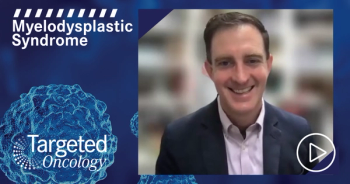
Andrew M. Brunner, MD, discusses the most notable outcomes of the phase 2/3 IMerge trial of imetelstat in patients with low-risk myelodysplastic syndrome.

Discover groundbreaking updates in lymphoma and CLL treatments, including innovative therapies and promising trial results from Dr Krish Patel.

ASH 2025 highlighted groundbreaking advancements in multiple myeloma treatment, focusing on bispecific T-cell antibodies for improved patient outcomes.

Matthew Matasar, MD, discusses real-world data on treatment options for diffuse large B-cell lymphoma.
Early results from the OLYMPIA-3 trial reveal odronextamab plus CHOP chemotherapy shows promising efficacy for untreated DLBCL patients, without rituximab.

The Olympia-3 study explores odronextamab as a promising chemo-free treatment for untreated diffuse B-cell lymphoma patients.

Dr Robert Orlowski highlights strategies to prevent infections in patients with multiple myeloma treated with linvoseltamab, emphasizing antiviral prophylaxis and IVIG use.
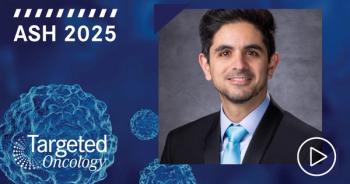
Fadi Haddad, MD, discusses the use of asciminib in patients with chronic myeloid leukemia.

Explore the significance of MRD negativity in cancer prognosis and its implications for treatment strategies in community-based practices.
A recent study highlights asciminib's effectiveness in treating newly diagnosed CML, showing promising molecular response rates and safety profiles.

Martin F. Dietrich, MD, discusses the use of the CDK4/6 inhibitor trilaciclib to address myelosuppression associated with chemotherapy in small cell lung cancer.

A phase 2 study reveals promising efficacy and safety of TKI and inotuzumab ozogamicin therapy for newly diagnosed Ph+ ALL, achieving high response rates.
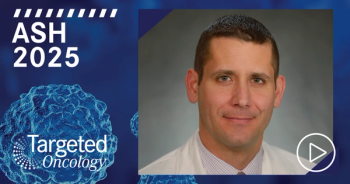
Researchers explore the safety and efficacy of consolidating cevostamab with BCMA CAR T therapy for relapsed multiple myeloma, highlighting management protocols.

Discover how a remote therapeutic monitoring system enhances patient care and streamlines clinic operations, reducing hospitalizations for hematologic malignancies.

Outpatient CAR T-cell therapy shows promising efficacy and manageable safety in treating relapsed multiple myeloma, with high response rates and minimal long-term toxicity.
Discover the nuances of CAR T-cell therapy eligibility and its advantages over traditional chemotherapy for long-term patient outcomes.
Long-term follow-up of the TRANSFORM study reveals liso-cel's impressive efficacy and safety in treating relapsed large B-cell lymphoma.
The ACCESS study reveals that posttransplant cyclophosphamide improves survival rates for patients with mismatched unrelated donor transplants, expanding donor options.
Heather Stefanski, MD, PhD, discusses the unmet needs for patients undergoing bone marrow and stem cell transplants.

Peter Voorhees, MD, discusses the evolving treatment landscape for smoldering multiple myeloma, highlighting new therapies and clinical trial opportunities.
Dr. Peter Voorhees discusses risk stratification in smoldering multiple myeloma, highlighting the IMWG criteria and the benefits of daratumumab treatment.
Peter Voorhees, MD, discusses groundbreaking AQUILA study results, highlighting daratumumab's significant impact on high-risk smoldering multiple myeloma treatment.

Che-Kai Tsao, MD, MS, discusses new approaches that could change the standard of care for metastatic hormone-sensitive prostate cancer.
Peter Voorhees, MD, discusses the AQUILA study's impact on treating patients with high-risk smoldering multiple myeloma, paving the way for new therapies.
Emerging MRD tests show promise in enhancing breast cancer treatment by improving risk stratification and clinical outcomes for patients.
Expert explores innovative strategies for managing early stage breast cancer, focusing on minimal residual disease and potential treatment adjustments.
Early-stage breast cancer patients face challenges with ctDNA detection, highlighting the need for clinical trials to improve outcomes and reduce recurrence risks.
Explore the advancements in minimal residual disease (MRD) assays, comparing tumor-informed and tumor-agnostic methods for enhanced cancer detection and treatment strategies.
