

LYMPHOMAS
Latest News
Advertisement
Latest Videos




CME Content

































Advertisement
More News
Treatment with the CD19-directed CAR T-cell therapy KTE-C19 showed a complete remission rate of 73% for patients with aggressive, chemorefractory primary mediastinal B-cell lymphoma and transformed follicular lymphoma, according to findings from the multicenter phase II ZUMA-1 study.
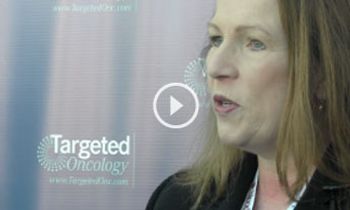
Kathryn Kolibaba, MD, associate chair of hematology research program, US Oncology, discusses an ongoing phase 2 study of brentuximab vedotin (Adcetris) with as frontline therapy in patients with high-intermediate/high-risk diffuse large B-cell lymphoma (DLBCL).<br />
Combining obinutuzumab (Gazyva) with chemotherapy in the first-line setting reduced the risk of disease progression or death by 34% versus rituximab (Rituxan) plus chemotherapy in patients with follicular lymphoma, according to findings from the phase III GALLIUM study.
Brentuximab vedotin (Adcetris) induced responses lasting at least 4 months in 56% of patients with cutaneous T-cell lymphoma versus 13% in patients receiving physician’s choice of standard therapies, according to findings from the phase III ALCANZA trial.

The FDA has granted a priority review to a supplemental biologics license application (sBLA) for pembrolizumab (Keytruda) for use as a treatment for patients with refractory classical Hodgkin lymphoma.
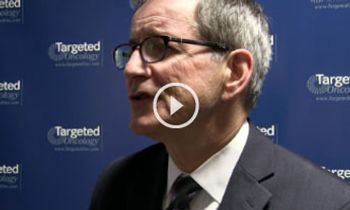
Thomas E. Witzig, MD, hematologist-oncologist, Mayo Clinic, discusses some of the issues that still need to be addressed in diffuse large B-cell lymphoma.
The FDA has granted a breakthrough therapy designation to the brentuximab vedotin for the treatment of patients with CD30-positive mycosis fungoides or primary cutaneous anaplastic large cell lymphoma following at least 1 prior systemic therapy. <br />
Studies testing immune checkpoint inhibitors in combination with other agents for the treatment of both Hodgkin and non-Hodgkin lymphoma are garnering attention among researchers.
Castleman Disease with Corey Casper, MD




Updated data from the CheckMate-205 trial demonstrated that nivolumab (Opdivo) had an objective response rate (ORR) of 73% in a cohort of patients with classical Hodgkin lymphoma.
Loretta J. Nastoupil, MD, discusses ongoing lymphoma clinical trials and how practitioners can better identify high- and poor-risk patients with large cell lymphomas.
Two oncologists from Emory University School of Medicine faced off to determine if molecular markers should play a role in the treatment of subgroups of patients with diffuse large B-cell lymphoma.
According to findings from a multicenter randomized trial, chemoradiation for early-stage, low-grade follicular lymphoma led to significant improvement in progression-free survival (PFS) compared with involved-field radiotherapy alone (IFRT).


MCD with David Fajgenbaum, MD, MBA, Msc
Advertisement
Advertisement
Trending on Targeted Oncology - Immunotherapy, Biomarkers, and Cancer Pathways
1
NCCN Survey Finds Persistent Cancer Drug Shortages Across US Centers
2
Risk-Adapted Quadruplet Therapy Sustains 5-Year Survival Benefit in High-Risk Myeloma
3
FDA Grants Final Approval to Cabozantinib Capsule Formulation
4
Subcostal Robotic Surgery Cuts Thoracic Pain
5