
Oncology and primary care unite to enhance patient care through improved communication and collaboration, addressing the challenges of siloed practices.

Oncology and primary care unite to enhance patient care through improved communication and collaboration, addressing the challenges of siloed practices.

Cancer care evolves as financial navigation becomes essential. Experts highlight the need for empathy, communication, and routine screenings to support patients effectively.

Andrea Ledford, PharmD, MBA, BCOP, BCSCP, FASHP, FHOPA, discussed a comprehensive pharmacy program presented at the 2025 ACCC Annual Meeting & Cancer Center Business Summit.
David M. Waterhouse, MD, MPH, and Molly Mendenhall, MBOE, LSSBB, BSN, RN, discuss how the implementation of Lean Six Sigma methodology at Oncology Hematology Care in Cincinnati, Ohio, has transformed clinical operations and elevated the quality of patient care.
In this episode of Targeted Talks, Douglas Flora, MD, LSSBB, FACCC, discusses the transformative impact of artificial intelligence in oncology.

Findings from 3 quality improvement initiatives presented at the ACCC National Oncology Conference shed light on the feasibility and importance of these projects at the community level.

Premal Thaker, MD, discussed the ACCC Ovarian Quality of Care Project aiming to bridge the gap to improve ovarian cancer care for patients in the US.
Andrew Kuykendall, MD, discusses recent approvals seen for patients with myeloproliferative neoplasms.

In an interview with Targeted Oncology, Matthew Manning, MD, FASTRO, discussed the many radiation oncology tasks that have been improved with AI and its prospective utility in cancer diagnosis and treatment decisions.
Andrew Kuykendall, MD, discusses some of the recent changes there have been for patients with myeloproliferative neoplasms.
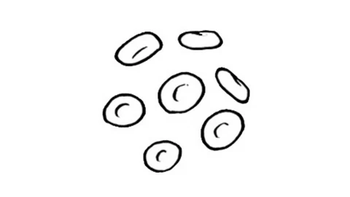
In an interview with Targeted Oncology, Andrew Kuykendall, MD, discussed the most recent approvals for MPNs, practice changing abstracts presented at ASH 2022, and what he expects to see in 2023.
The Association of Community Cancer Centers is announcing the release of a new tool intended to facilitate education and adoption of new clinical and technological advancements in diagnosis, staging, and treatment of cancer.
The Association of Community Cancer Centers (ACCC) is grateful that Congress is poised to address many of our year-end policy priorities in its proposed fiscal year 2023 omnibus appropriations package released this week
ACCC launched Transforming Complex to Clear, a promotional campaign to raise awareness about our expanding portfolio of precision medicine resources, in November 2021.
The American Society of Clinical Oncology and the Association of Community Cancer Centers released 2 resources to help research sites increase the racial and ethnic equity, diversity, and inclusion cancer clinical trials.
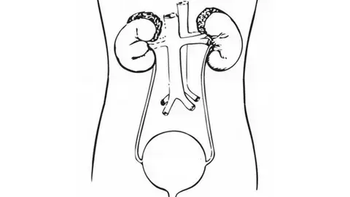
In an interview with Targeted Oncology, Shawn Dason, MD, discussed existing disparities in prostate cancer, the impact of the COVID-19 pandemic on the issue, and achieving health equity for patients with prostate cancer in the future.
Each 2021 ACCC Innovator Award program recipient will deliver a presentation on its winning program at ACCC’s 38th National Oncology Conference, according to the organization.
In an interview with Targeted Oncology for Metastatic Breast Cancer Awareness Day, O’Regan discussed how the metastatic breast cancer landscape has changed and suggested potential regimens that could further that change.
ACCC announces the release of five abstracts to be presented during the ongoing ASCO Quality Care Symposium.

The Association of Community Cancer Centers released the results of their 2020 ACCC IO survey that showed how oncology professionals are looking to understand and take advantage of the growing immunotherapy treatment landscape.
As June is Cancer Immunotherapy Month, Mehmet Akce, MD, discusses the future of immunotherapy in HCC in an interview with Targeted Oncology.
The Association of Community Cancer Centers announced the launch of CANCER BUZZ TV, its video podcast channel aimed at informing oncology professionals of the latest developments in cancer care.
Findings from the Trending Now in Cancer Care 2020 report spotlights the impact of the coronavirus 2019 pandemic, a plummet in cancer screenings, health inequities, and more.
At a panel at the ACCC 47th Annual Meeting and Cancer Center Business Summit, several oncology professionals discussed the many changes to cancer care that COVID-19 has accelerated and what challenges still lie ahead.

Robert Coleman, MD, FACOG, FACS, discusses the research model he utilizes to bring more patient research to the lung cancer field, a topic he presented on during the Association of Community Cancer Centers Annual Meeting.
As the population ages and the rate of cancer screenings fall due to the coronavirus disease 2019 pandemic, the lack of rural oncologists underscores the need for advanced practitioners.
Only 61% of patients completed therapy fully with checkpoint inhibition as planned, while treatment was delayed or discontinued in 22% due to immune-related adverse events, according to findings from a quality improvement research study conducted by the Association of Community Cancer Centers.
The Association of Community Cancer Centers National Oncology Conference each year helps community oncologists approach both unique and typical challenges with innovative strategies. This year, one of the challenges addressed that has been increasingly raised throughout the year was the topic of disparities in the medical field.

Randall A. Oyer, MD, discusses the importance of the ACCC community during the unprecedented coronavirus disease 2019 pandemic.
The impetus for taking a closer look at cancer drug spending starts with their costs. But the other side of the equation, the revenue coming in, can also be a factor that requires adjusting.