Following the FDA approval of vusolimogene oderparepvec plus nivolumab, melanoma specialists are preparing for real-world clinical use while rethinking how to design future intratumoral therapy trials.

Following the FDA approval of vusolimogene oderparepvec plus nivolumab, melanoma specialists are preparing for real-world clinical use while rethinking how to design future intratumoral therapy trials.
Johns Hopkins Medicine develops a free immune atlas of pancreatic cancer trials, spotlighting blood-based signals to build stronger pancreatic cancer immunotherapy combinations.

Cancer survival hits 70% as early screening and immunotherapy advance—yet survivorship needs and Indigenous disparities demand urgent action.

Cancer breakthroughs surge, but trials and novel therapies stay out of reach for many. See how community care, policy, and design can close gaps.

A virtual collaborative care model enhances mental health support in oncology, improving patient outcomes and addressing care disparities in underserved populations.

For Nutrition Awareness Month, we highlight the importance of tailoring dietary strategies to patients with cancer to improve outcomes and quality of life.
Molecular oncology is revolutionizing cancer care by using genetic profiling to tailor personalized treatments, improving efficacy, minimizing adverse events, and paving the way for advanced therapies.
Findings from 3 quality improvement initiatives presented at the ACCC National Oncology Conference shed light on the feasibility and importance of these projects at the community level.
In this preview, we highlight the key late-breaking abstracts to be presented at the 2024 ESMO Congress across various tumor types that may impact clinical practice.
CAR T-cell therapy is a game-changing treatment, but it is not without the potential for serious adverse effects. Researchers and physicians still wonder about the incidence and prevalence of these risks.
As the clinical utility of ctDNA continues to be assessed, it is becoming a valuable tool for various cancer types, including gastrointestinal cancers, blood cancers, and other solid tumors.
In the final part of our 3-part series, a roster of developing antibody-drug conjugates gives clinicians and patients hope in hard-to-treat cancers.
In part 2 of our 3-part series, antibody-drug conjugates like enfortumab vedotin and tisotumab vedotin offer novel options for difficult-to-treat tumors.
In part 1 of our 3-part series, antibody-drug conjugates are revolutionizing oncology, targeting cancer cells precisely. Agents like T-DM1, T-DXd, and sacituzumab govitecan continue to change the field.
Cellular therapies are an effective option in hematologic malignancies but have been slower to develop in AML, but identifying new targets paves the way for evolving treatments.

Lifileucel's FDA approval marks a breakthrough in melanoma treatment, offering hope with promising antitumor activity. While its potential extends to various solid tumors, challenges persist.
AI is seemingly everywhere, and while its applications in cancer care have increased, it still faces challenges.
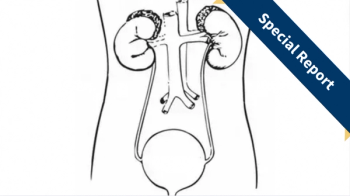
Francesca Jackson-Spence, PhD, and Matthew Young, MD, delved into the major advances in genitourinary cancer treatment, including breakthroughs in immunotherapy, targeted therapies, and early detection that offer new hope for patients.
Though climate change threatens everyone’s health and safety, those with cancer are increasingly vulnerable.
More work is needed in the community oncology setting to improve barriers to care and enrollment in clinical trials which are often due to geographic location, awareness, and eligibility criteria.

As a monotherapy, bispecific antibodies have demonstrated antitumor activity in heavily pretreated patients with B-cell and T-cell hematologic malignancies, but much work is needed to determine the optimal setting.

While many underlying factors contribute to drug shortages, the biggest contributor remains economic in nature.

Robert Dreicer, MD, MS, MACP, FASCO, acknowledges that there have been substantial developments in therapies and strategies for treating prostate cancer, leading to heightened expectations of breakthroughs in the field.
Amid the ongoing chemotherapy drug shortage in the United States, experts like Nathan Bahary, MD, and Anne LaCasce, MD, MMSc, push for the passing of legislation, yet keep their patients their top priority.

According to experts, genomic testing is a key tool impacting treatment decisions for physicians treating patients with non–small cell lung cancer.

Though the radioligand therapy lutetium Lu 177 vipivotide tetraxetan was approved in 2022 for PSMA-avid patients, several practical considerations have limited its use among patients with prostate cancer.
Though scientific advances have been encouraging in the thyroid cancer space, there is much more work to be done to figure out exactly how to tailor the right therapy, or combination of therapies, for individual patients.
As we better understand the use of artificial intelligence in oncology, experts can improve outcomes, develop approaches to solve problems, advance the development of treatments that are made available to patients with cancer, and more.
With a plethora of chemotherapy agents currently unavailable for patients with solid tumors and hematologic malignancies, experts are calling for the FDA and pharmaceutical companies to make important changes.

Encouraging results in melanoma have led experts to explore the gut microbiome in colorectal cancer. The next hot topic in research may be the gut microbiome's role for the prevention, progression, and management of colorectal cancer.