scout

Evolving Paradigms in Oncology

Two experts featured in this series.

Expert clinicians discuss best practices in implementing more widespread and comprehensive biomarker testing in early-stage non-small cell lung cancer (NSCLC). Practical considerations are discussed that can be integrated into future clinical practice decisions.

Two experts featured in this series.

Early-stage squamous cell carcinoma of the esophagus can often be managed with minimally invasive treatments. Endoscopic resection techniques, such as endoscopic mucosal resection (EMR) or endoscopic submucosal dissection (ESD), are preferred for superficial, localized tumors without lymph node involvement. For patients unsuitable for endoscopic therapy, esophagectomy remains the standard surgical option. In select cases, chemoradiotherapy may be considered as a non-surgical alternative. Careful staging, patient selection, and multidisciplinary evaluation are crucial to achieve optimal outcomes.

1 expert in this video

Tara Graff, DO, discusses how chronic lymphocytic leukemia treatment has evolved beyond the traditional “this or that” approach to include personalized therapy selection based on patient preferences, genetic risk factors, and disease characteristics, with new all-oral combination regimens offering fixed-duration options that are particularly transformative for high-risk patients with TP53 mutations or 17p deletions.

Virginia Kaklamani, MD, DSc; and Megan Kruse, MD, discuss how advances in hormone receptor-positive metastatic breast cancer treatment, including ESR1 mutation testing and elacestrant therapy, help physicians optimize patient care and improve outcomes through personalized treatment selection.

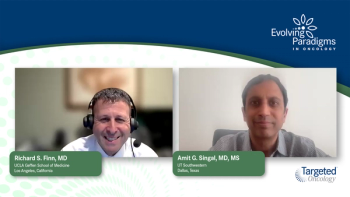
Richard S. Finn, MD; and Amit G. Singal, MD, MS, discuss how systemic therapy plays a growing role in hepatocellular carcinoma (HCC) management, particularly in embolization-eligible and advanced stages. Combining systemic therapies with locoregional treatments like transarterial chemoembolization has shown potential in overcoming resistance mechanisms. Trials like LEAP-012 and EMERALD-1 support this approach, indicating enhanced efficacy. Tyrosine kinase inhibitor (TKI)+immune checkpoint inhibitor combinations offer advantages over TKI monotherapy, but challenges remain in clinical adoption. Lenvatinib, a key player in first-line treatment, shows promise across stages and may extend to second-line therapy.

Robert Motzer, MD, Elizabeth Plimack, MD, MS, and Brian Rini, MD discuss recent treatment updates for patients with advanced renal cell carcinoma (RCC) and their implications for the RCC treatment landscape and clinical practice.

Experts on FL

Two expert hematologist-oncologists review treatment options for patients with follicular lymphoma and consider how to select the appropriate therapy based on patient and disease factors.