



GENOMIC TESTING
Latest News
Advertisement
Latest Videos


















































Advertisement
More News


According to findings released ahead of the 2018 ASCO Annual Meeting, the use of next-generation sequencing (NGS) for patients with metastatic non–small cell lung cancer (NSCLC) can save Center for Medicare and Medicaid Services (CMS) payers $1.4 million to $2.1 million. The findings additionally showed that NGS saved commercial insurance providers more than $250,000.<br />






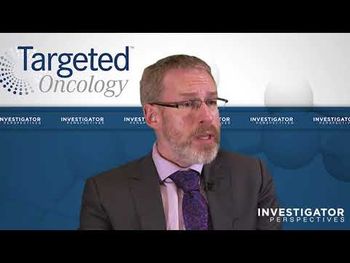



Lawrence D. Wagman, MD, FACS, executive medical director of St. Joseph’s Hospital, discusses the future of precision medicine and genetic testing in the community.<br />

The day when oncologists can order a Medicare-covered next-generation sequencing diagnostic test may be near at hand, but once this change goes into effect, will oncologists be limited to certain tests, labs, and cancer settings? The answer is unclear.
With genetic screening for mutations and biomarkers gaining more prevalence in diagnosing and treating cancer, genetic testing and counseling for patients with prostate cancer is becoming a pressing concept that urologists need to better understand. At the 2017 LUGPA Annual Meeting, Leonard Gomella, MD, gave a presentation stressing the importance of integrating genetic testing into clinical practice.

John L. Marshall, MD, chief, Division of Hematology/Oncology, Medstar Georgetown University Hospital, director, Otto J. Ruesch Center for the Cure of Gastrointestinal Cancer, discusses when to order next-generation sequencing for a patient with metastatic colon cancer.
As the breast cancer genome continues to be unraveled, a host of new targetable alterations outside of HER2 and the estrogen receptor are beginning to emerge, providing the exciting potential for development of new therapies.

Advancements made in the field of molecular genetics for patients with myeloproliferative neoplasms may be increasingly incorporated into treatment decisions, according to a presentation by Ann Mullally, MD, during the 2017 SOHO Annual Meeting.
Comprehensive genomic testing is not yet widespread, but a French study presented at the 2017 ASCO Annual Meeting suggested that DNA profiling can be of important value in advancing personalized medicine. Patients who received molecularly targeted agents based on genomic profiles had longer 3-year and 5-year overall survival than those who did not.
Advertisement
Advertisement
Trending on Targeted Oncology - Immunotherapy, Biomarkers, and Cancer Pathways
1
FDA Oncology Recap: Approvals, Designations, and Decisions in September 2026
2
Plinabulin Receives FDA Fast Track Designation in Post-ICI NSCLC
3
Denosumab Biosimilar Approved For Existing Oncology Indications
4
CEPHEUS and Frontline Treatment in Newly Diagnosed Multiple Myeloma
5