

GENOMIC TESTING
Latest News
Advertisement
Video Series




Latest Videos

Shorts
0:45
Unlocking HER2 Beyond Breast Cancer
17 days ago
by
Aditya Shreenivas, MD, MS

0:30
How Genome Sequencing Changed Cancer Research
4 months ago
by
Joyce Ohm, PhD
0:31
Is Knowing Too Much About Your DNA Actually Dangerous?
4 months ago
by
Joyce Ohm, PhD
0:28
From Generic to Personalized Cancer Care in Hours
5 months ago
by
Joyce Ohm, PhD
Podcasts











































Advertisement
More News
Large Ontario cohort study finds lifetime breast and ovarian cancer risk varies sharply by BRCA1/BRCA2 test result, including in those with inconclusive or negative findings.

Large genomic study shows BRCA2 breast cancers rapidly lose RB1, resisting CDK4/6 therapy; PARP inhibitors may work better and move to first line.

The PTEN IHC CDx is a companion diagnostic approved by the FDA to determine patients' eligibility for capivasertib in metastatic prostate cancer.

Genome sequencing speeds tumor mutation discovery, boosting targeted cancer therapies and cell/gene treatments while raising urgent questions about data ownership, reporting uncertainty, and ethics.
MammaPrint in the FLEX registry predicts which HR+/HER2– early breast cancers benefit from anthracyclines—guiding safer, personalized chemo.
Advanced genomic profiling in community oncology uncovers actionable cancer mutations and trial options—yet insurance denials still block access.
New data show precision cancer testing still lags for Black, Hispanic, low-income, and Medicare/Medicaid patients, delaying targeted treatment decisions.
New study reveals a blood-based test effectively detects cancers in survivors, bridging the surveillance gap and enhancing long-term monitoring.
The FDA approves a new diagnostic kit for identifying acute leukemia patients eligible for the groundbreaking Menin inhibitor, revumenib.
A groundbreaking study reveals that Guardant Reveal's liquid biopsy detects immunotherapy responses earlier, enhancing treatment decisions for advanced cancer patients.
A recent study highlights the rising yet inadequate rates of biomarker testing in advanced cancers, emphasizing the need for improved access to optimize patient outcomes.

Advancements in cancer care focus on precise detection of measurable residual disease, enhancing monitoring and relapse prediction through innovative technologies and AI integration.

Manmeet Ahluwalia, MD, MBA, FASCO, discussed the significance of National Cancer Research Month and highlighted how ongoing cancer research directly impacts patient care.

The ODAC deemed the results from TALAPRO-2 are not sufficient to conclude a favorable benefit-risk profile for adding talazoparib to enzalutamide in non-HRRm mCRPC.
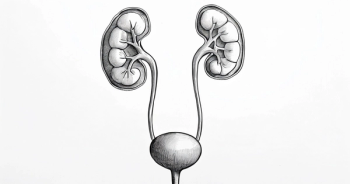
Lisa Herms, PhD, discussed findings from a retrospective analysis from the US community oncology setting on biomarker testing for bladder cancer.
Manmeet Ahluwalia, MD, MBA, FASCO, discussed the importance of Brain Cancer Awareness Month for a community oncologist audience.
Nini Wu, MD, MBA, discusses the future of technology in community oncology, particularly highlighting the pervasive topic of artificial intelligence.
Data from the phase 2 ROME trial were presented by Andrea Botticelli, MD, during the ESMO Targeted Anticancer Therapies Congress 2025.
Nini Wu, MD, MBA, discusses how community oncology practices can leverage technology to maximize efficiency and reduce administrative burdens.
Dong Chen, MD, PhD, discusses the obstacles and opportunities for growth in posttreatment cancer detection.
Dong Chen, MD, PhD, discusses the most recent advancements in posttreatment cancer detection.
Colin P.N. Dinney, MD, PhD, discussed updated analyses of the BOND-003 and CORE-001 trials in bladder cancer.
Colin P.N. Dinney, MD, provides some background on translational analyses from the BOND-003 and CORE-001 trials.

Rapid breast cancer research offers new hope, as discussed by Joyce O’Shaughnessy, MD, regarding HR+/HER2– and HER2+ disease.
A phase 1 open-label trial is underway, evaluating the safety and efficacy of CT-95 in patients with mesothelin-expressing advanced solid tumors.
Advertisement
Advertisement
Trending on Targeted Oncology - Immunotherapy, Biomarkers, and Cancer Pathways
1
FDA Oncology Recap: Approvals, Designations, and Decisions in September 2026
2
Plinabulin Receives FDA Fast Track Designation in Post-ICI NSCLC
3
Denosumab Biosimilar Approved For Existing Oncology Indications
4
CEPHEUS and Frontline Treatment in Newly Diagnosed Multiple Myeloma
5