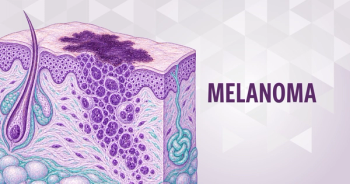
ESMO data show the phase 3 INTerpath-001 trial of intismeran autogene plus pembrolizumab improved recurrence-free survival in resected stage IIB to IV melanoma.

Dr Khaddour reviews neoadjuvant immune checkpoint inhibitor evidence in melanoma and adjuvant cemiplimab in high-risk resectable cutaneous squamous cell cancer.
“The most significant advance in the past couple of years has been the incorporation of systemic therapies in earlier stage disease. That is the nonmetastatic resectable skin cancers, including melanoma, but also cutaneous squamous cell cancer. We currently have evidence from several trials of using immune checkpoint inhibitors in the neoadjuvant setting in melanoma from two big studies.”
Karam Khaddour, MD, MS, a physician at Dana-Farber Cancer Institute and instructor in medicine at Harvard Medical School, discusses systemic therapy in earlier stage resectable skin cancers, including melanoma and cutaneous squamous cell cancer (cSCC).
In this video interview, Khaddour reviews where systemic therapy now fits before and after surgery for melanoma and cSCC. He points to 2 studies as the main evidence for neoadjuvant immune checkpoint inhibitors (ICIs) in melanoma. He also describes recent insights on adjuvant anti-PD-1 therapy in high-risk resectable cSCC.
Khaddour describes the incorporation of systemic therapies in earlier stage disease as the most significant advance of the past couple of years. The shift applies to nonmetastatic resectable skin cancers. These include melanoma and cSCC.
For neoadjuvant ICIs in melanoma, Khaddour notes evidence from several trials, with two big studies leading it. The first is the
In S1801, neoadjuvant plus adjuvant pembrolizumab improved event-free survival compared with adjuvant pembrolizumab alone (HR, 0.58; 95% CI, 0.39-0.87; P = .004). The 2-year event-free survival rate was 72% vs 49%.1 NADINA compared neoadjuvant ipilimumab plus nivolumab (Opdivo) with standard adjuvant nivolumab in patients with macroscopic stage III melanoma.2
Khaddour also cites recent insights from the past couple of years on adjuvant immunotherapy in high-risk resectable cSCC. This work used anti-PD-1 therapy with cemiplimab (Libtayo) in the adjuvant setting. In the published C-POST trial (NCT03969004), estimated 24-month disease-free survival was 87.1% (95% CI, 80.3%-91.6%) with cemiplimab and 64.1% (95% CI, 55.9%-71.1%) with placebo.3
Khaddour has also discussed this earlier stage theme in a separate video interview on
In the interview, Khaddour says the addition of a personalized cancer vaccine to pembrolizumab improved recurrence-free survival and distant metastasis-free survival compared with placebo plus pembrolizumab. He described the results as proof of concept for a personalized cancer vaccine in the adjuvant setting.
INTerpath-001 is a randomized, double-blind, placebo- and active-comparator-controlled phase 3 trial. It has an estimated enrollment of 1089 participants with surgically resected cutaneous melanoma of stage IIB or IIC, III, or IV. The primary end point is recurrence-free survival, with distant metastasis-free survival and overall survival among the secondary end points.
In the same interview, Khaddour discusses tumor-infiltrating lymphocyte (TIL) therapy, which is currently approved for melanoma refractory to anti–PD-1 therapy. He noted cell therapies are generally more intensive regimens requiring substantial multidisciplinary coordination and may be better suited to earlier lines of therapy.
Khaddour also describes data from a small cohort study of TIL plus anti–PD-1 therapy in patients with melanoma not previously treated with anti–PD-1 therapy. The regimen produced an objective response rate of about 60%, a complete response rate of about 30%, and a median duration of response of 26 months. Khaddour calls the findings hypothesis-generating and noted TIL-based treatment could move into earlier lines when patients are more fit to receive it.
Khaddour emphasizes making innovative treatment available in a rational, personalized way rather than offering every treatment to every patient. His remarks span neoadjuvant ICIs in melanoma, adjuvant cemiplimab in cSCC, adjuvant intismeran autogene, and earlier-line TIL therapy.