
SARCOMA
Latest News
Advertisement
Latest Videos







































Advertisement
More News

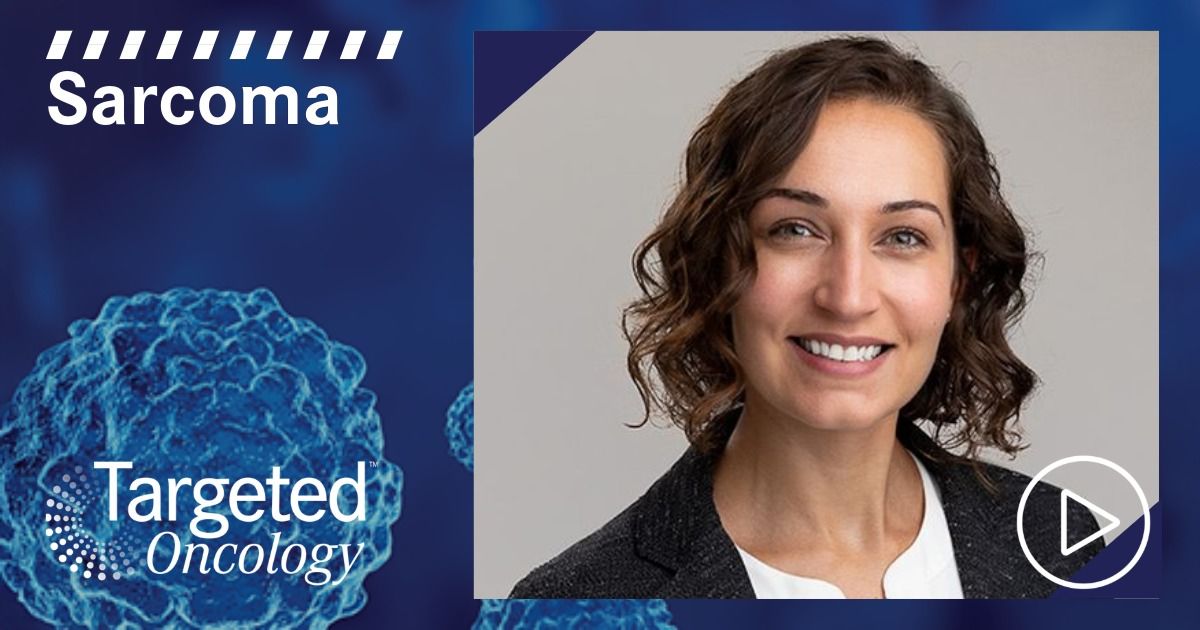
Erica Pimenta, MD, PhD, discussed the goals and key findings from her and her colleagues’ research into IGF-1 and GLP-1 signaling pathways in liposarcoma.
Tumor-infiltrating lymphocyte therapy yielded favorable results in a small cohort of patients with soft tissue sarcoma, leading to plans for a larger trial.
Cabozantinib plus temozolomide led to favorable short-term progression-free survival in a single-arm trial of patients with advanced leiomyosarcoma.
The FDA gave breakthrough therapy designation to bezuclastinib plus sunitinib in imatinib-refractory gastrointestinal stromal tumors.
The FDA granted Orphan Drug Designation to LP-284, a small molecule targeting DNA damage repair mechanisms, for soft tissue sarcoma.
FDA fast tracks ADCE-D01, a promising treatment for soft tissue sarcoma, aiming to expedite patient access and improve survival rates.
During a live event, Steven I. Robinson, MBBS, discussed guideline-concordant active surveillance and systemic therapies for managing desmoid tumors.
FDA grants fast track designation to CLD-201, an innovative therapy for soft tissue sarcoma, enhancing its development and review process.
ASCO 2025 showcased breakthroughs in sarcoma treatment, emphasizing precision medicine, immunotherapy, and promising new therapies for rare cancers.
A phase 2a trial shows tigilanol tiglate achieves an 80% response rate in soft tissue sarcoma, offering hope for effective treatment options.
During a live event, Hari Deshpande, MD, and participants discussed the DeFi trial and the management of nirogacestat in progressive desmoid tumors.
The EFTISARC-NEO trial of eftilagimod alfa with radiotherapy and pembrolizumab in resectable soft tissue sarcoma achieved its primary end point.

THE001, a thermosensitive doxorubicin liposome for soft tissue sarcomas, received FDA orphan drug designation, offering development benefits.
A phase 2 study showed that giving maintenance regorafenib could delay disease progression in patients with non-adipocytic soft tissue sarcomas.
During a live event, Richard F. Riedel, MD, discussed key efficacy and safety outcomes from the phase 3 DeFi trial in patients with progressing desmoid tumors.
During a live event, Richard F. Riedel, MD, discussed Desmoid Tumor Working Group and NCCN guidelines for treating patients with desmoid tumors.
The phase 3 INVINCIBLE-3 study of INT230-6 for soft tissue sarcomas continues without changes following Data Monitoring Committee safety review.
The FDA’s breakthrough therapy designation for GSK’227 underscores its potential to address the critical unmet needs of patients with relapsed/refractory osteosarcoma.
Elraglusib is undergoing investigation in an open-label, multicenter, phase 1/2 trial for the treatment of patients with Ewing sarcoma.
In an interview with Targeted Oncology, Jacob Stein, MD, MPH, discussed nab-sirolimus and its impact on patients with advanced PEComa.
The FDA granted orphan drug designation for elraglusib, a novel drug for treating advanced soft tissue sarcoma.
A Prescription Drug User Fee Act target action date of February 17, 2025, has been set for a decision on the vimseltinib application.
In this episode of Targeted Talks, Edwin Choy, MD, PhD, discussed the FDA approval of afamitresgene autoleucel for the treatment of patients with advanced synovial sarcoma.
The study will evaluate silmitasertib, a novel agent, for the treatment of pediatric and adult patients with relapsed/refractory solid tumors.
Advertisement
Advertisement
Trending on Targeted Oncology - Immunotherapy, Biomarkers, and Cancer Pathways
1
Denosumab Biosimilar Approved For Existing Oncology Indications
2
Plinabulin Receives FDA Fast Track Designation in Post-ICI NSCLC
3
FDA Oncology Recap: Approvals, Designations, and Decisions in September 2026
4
Giredestrant Plus Everolimus Improves PFS in ER+ Advanced Breast Cancer
5