


SARCOMA
Latest News

November 16th 2018
By Kelly Davio
The investigational agent avapritinib demonstrated encouraging response rates in patients with advanced gastrointestinal stromal tumors and PDGFRα D842V-driven GIST, according to findings presented during the 2018 Annual Meeting of the Connective Tissue Oncology Society in Rome, Italy.
Advertisement
Latest Videos




CME Content













Advertisement
More News
A new drug application for larotrectinib has been granted a priority review by the FDA for the treatment of adult and pediatric patients with locally advanced or metastatic solid tumors with an <em>NTRK</em> gene fusion, according to Bayer and Loxo Oncology, the codevelopers of the pan-TRK inhibitor.

When findings of larotrectinib, a pan-TRK inhibitor co-developed by Bayer and Loxo Oncology, that generated significant excitement for the treatment of both adult and pediatric patients with TRK fusion cancers, were presented during the 2017 ASCO Annual Meeting, the small molecule was lauded as a future standard of care for patients with advanced solid tumors harboring a TRK fusion.
In a precision medicine success story, crizotinib (Xalkori) demonstrated a 50% objective response rate and a 100% disease control rate in patients with <em>ALK</em>-positive advanced, inoperable inflammatory tumors, in findings from the CREATE study presented at the 2018 AACR Annual Meeting.
According to findings from a phase I/II study published in <em>The Lancet Oncology</em>, there was an “unprecedented” objective response rate of 93% with larotrectinib in patients with TRK fusion–positive solid tumors.
In an interview with <em>Targeted Oncology</em>, Pollack, assistant member, Clinical Research Division, assistant professor, Division of Oncology, University of Washington, and attending physician at Seattle Cancer Care Alliance, discussed some of the advancements his lab is making in the field of sarcoma.
The new drug application for larotrectinib (LOXO-101) for treatment of patients with locally advanced or metastatic solid tumors that harbor an NTRK gene fusion has been completed.
In the sarcoma field, the potential benefit of immunotherapy is currently challenged not only by the heterogeneity of each patient, but also by the heterogeneity of each histologic subtype. William D. Tap, MD, discussed the role for immunotherapy in patients with soft tissue sarcomas and gastrointestinal stromal tumors (GISTs) during a presentation at the 2018 ESMO Sarcoma & GIST Symposium.
Following in the footsteps of pazopanib and olaratumab, many targeted therapies are being studied in patients with soft tissue sarcomas to capitalize on the benefits of targeted therapies in sarcomas. Although chemotherapy-driven approaches remain the standard for treatment of sarcomas, many sensitivities to chemotherapies have appeared in patients with sarcoma subtypes. These patients may benefit from targeted therapy approaches.
Emanuela Palmerini, MD, Prometeo Laboratory: Clinical and Experimental Research Contract, Chemotherapy for Rare Musculoskeletal Tumors Department, Instituto Ortopedico Rizzoli, discusses optimal patient selection for denosumab (Xgeva) in patients with giant cell tumor of bone.
Patients with heavily pretreated gastrointestinal stromal tumors responded to treatment with nivolumab (Opdivo) alone and in combination with ipilimumab (Yervoy), according to findings of a randomized phase II study presented at the 2018 Gastrointestinal Cancers Symposium.
Mary C. Beckerle, PhD, has been awarded the Alfred G. Knudson Award in Cancer Genetics by the National Cancer Institute (NCI). She received her award at the NCI’s Maryland headquarters before delivering a lecture on tumor biology.
A novel kinase switch control inhibitor, DCC-2618, demonstrated an encouraging disease control rate (DCR) of 76% at 12 weeks in heavily pretreated patients with gastrointestinal stromal tumors (GIST) treated with a daily ≥100-mg dose, according to findings of a phase I first-in-human, dose-escalation trial.

Emanuela Palmerini, MD, Prometeo Laboratory: Clinical and Experimental Research Contract, Chemotherapy for Rare Musculoskeletal Tumors Department, Instituto Ortopedico Rizzoli, discusses efficacy results for denosumab (Xgeva) in patients with giant cell tumor of bone (GCTB).
According to findings from the phase I SCOUT trial, the novel pan-TRK inhibitor larotrectinib (LOXO-101) achieved a 93% response rate in pediatric patients with <em>TRK</em> fusion–positive solid tumors.
Brian Van Tine, MD, discusses the recent discoveries made for the treatment of soft tissue sarcoma and the ongoing trials for this patient population.
CMB305, an immunotherapy regimen that generates and expands anti–NY-ESO-1 T cells, demonstrated a favorable survival rate compared with other approved agents for recurrent soft tissue sarcoma, according to results presented at the 2017 ASCO Annual Meeting.
Confirmed responses were demonstrated in 3 patients with soft tissue sarcoma treated with entrectinib in the STARTRK-2 basket trial, according to the results of a case study presented at the 2017 Connective Tissue Oncology Society Annual Meeting that took place in Maui, Hawaii.

Brian Van Tine, MD, PhD, assistant professor, Washington University School of Medicine, discusses the development of olaratumab (Lartruvo) in soft tissue sarcoma.
Although the addition of pazopanib (Votrient) to gemcitabine in the second-line treatment of patients with metastatic or relapsed uterine or soft tissue leiomyosarcomas demonstrated disease control in the majority of patients, statistical endpoints were not met in the phase II UNICANCER SARCOMA 11 study, according to results reported at the 2017 ESMO Congress.
CMB305, an immunotherapy regimen that generates and expands anti-NY-ESO-1 T cells, demonstrated a favorable survival rate in patients with recurrent soft tissue sarcoma, compared with other agents approved for the disease.
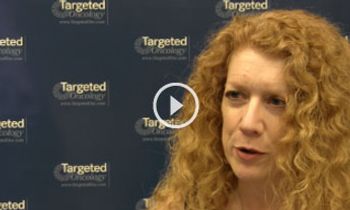
Lisa H. Butterfield, PhD, professor of medicine, surgery, and immunology, director, University of Pittsburgh Immunologic Monitoring and Cellular Products Laboratory, and president of the Society for Immunotherapy of Cancer, discusses the SARC028 study, which explored the efficacy of pembrolizumab (Keytruda) in advanced soft tissue and bone sarcomas.
Patients with intermediate- or high-risk gastrointestinal stromal tumors were less likely to experience recurrence after 5 years of treatment with imatinib, according to results from the phase II PERSIST-5 trial.
Jonathan C. Trent, MD, PhD, recently discussed the treatment considerations he makes when treating patients with gastrointestinal stromal tumors (GIST). Trent discussed his treatment decisions based on 2 case scenarios during a <em>Targeted Oncology</em> live case-based peer perspectives dinner.
There are more than 70 subtypes that fall under the soft tissue sarcoma (STS) umbrella, according to the World Health Organization, and only account for approximately 1% of all cancers in adult patients. Yet, physicians continue to try to treat all sarcomas the same, making drug development for these types of tumors quite slow and frustrating.
A look back at all the FDA news that happened in the month of June, including in multiple myeloma, hematology, sarcoma, and lung cancer.
Advertisement
Advertisement
Trending on Targeted Onc
1
FDA Does Not Approve Ivonescimab for EGFR-Mutant NSCLC
2
Dr Dasari on Sequencing RLT, Cabozantinib, and Everolimus in NETs
3
Crossover to Bezuclastinib Plus Sunitinib Improves Disease Control in Pretreated GIST
4
New ACS Guidelines Push for Earlier Prostate Cancer Screening
5