



SARCOMA
Latest News
Advertisement
Latest Videos


CME Content









Advertisement
More News

The combination of doxorubicin, balstilimab, and zalifrelimab has some early signals of activity in both immune hot and cold sarcoma subtypes with manageable toxicity.
Correlative work is ongoing following positive results from the phase 1 study of cabozantinib with nivolumab and ipilimumab.

No progression-free survival advantage was shown with milademetan compared with trabectedin in the phase 3 MANTRA study.
Matthew A. Ingham, MD, discusses the key takeaways from an article he co-authored regarding novel therapeutics in uterine sarcoma.
In season 4, episode 5 of Targeted Talks, Alice P. Chen, MD, discusses important studies that are investigating treatment options for alveolar soft part sarcoma.
According to Alice P. Chen, MD, the phase 2 study of atezolizumab alone or atezolizumab plus bevacizumab has a unique design.

A patient treated with the second highest dose level of FHD-609 had a grade 4 adverse event. Enrollment in the study of the agent in patients with synovial sarcoma or SMARCB-1 deleted tumors has been halted.
TP-1287, an investigational oral phosphate prodrug of the CDK9 inhibitor alvocidib, has been granted an orphan drug designation by the FDA for patients with Ewing sarcoma.

Data from an analysis of the combined NRG-RTOG 0630/9514 trials show that pathologic complete response can be used as a prognostic factor for clinical outcomes in future research of patients with soft tissue sarcoma.

Neeta Somaiah, MD, discusses new and upcoming targeted therapies for sarcomas at the Inaugural Miami Cancer Institute Precision Medicine Oncology Symposium.
Matthew Ingham, MD, highlights a recent clinical study in the sarcoma space and discusses what else is being evaluated for this patient population.
In an interview with Targeted Oncology, Neeta Somaiah, MD, explained how targeted therapies have started to re-shape the treatment of sarcomas and the potential role of immunotherapy in the future.
Both pediatric brain cancers and sarcomas have an extremely dismal outcome in the relapse setting, according to Catherine Bollard, MD. A new Cancer Grand Challenge aims to address the issue with the development of new therapies.
Matthew Ingham, MD, discusses some of the most recent clinical updates in the sarcoma space.

A phase 1 trial showed efficacy of a novel T-cell therapy targeting MAGE-A4 in solid tumors, particularly synovial sarcoma.
In an interview with Targeted Oncology, Matthew A. Ingham, MD, explains the uniqueness of uterine sarcomas and how years of research around these tumors have led to advances in precision medicine for patients.
Investigators in the IT-01 trial of INT230-6 as monotherapy or combined with ipilimumab showed safety and potential efficacy in patients with sarcoma.
With an overall response rate of 38.6% and a consistent safety profile of that seen in prior trials, afamitresgene autoleucel continues to show clinical responses in patients with late-stage synovial sarcoma.
Matthew Ingham, MD, discusses understanding the genomics of sarcomas and how molecular testing can be useful in this space.
Fifty percent of patients with advanced soft tissue sarcoma enrolled in the phase 1b study of camsirubicin and pegfilgrastim had stable disease.
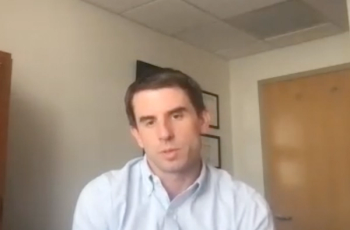
Matthew Ingham, MD, discusses the unique biology of uterine sarcomas.
A suspected unexpected serious adverse reaction to seclidemstat led the developer to pause a phase 1/2 evaluating the agent in patients with Ewing and FET-rearranged sarcoma.
Twelve-week safety data from the phase 2 ENVASARC trial of envafolimab alone and in combination with ipilimumab in patients with undifferentiated pleomorphic sarcoma and myxofibrosarcoma support proceeding with enrollment of patients in the trial.
The FDA has granted an orphan drug designation to DUNP19 for patients with osteosarcoma.
The FDA granted an orphan drug designation to AVA6000 for the treatment of patients with soft tissue sarcoma.
Advertisement
Advertisement
Trending on Targeted Onc
1
FDA Does Not Approve Ivonescimab for EGFR-Mutant NSCLC
2
Dr Dasari on Sequencing RLT, Cabozantinib, and Everolimus in NETs
3
Crossover to Bezuclastinib Plus Sunitinib Improves Disease Control in Pretreated GIST
4
New ACS Guidelines Push for Earlier Prostate Cancer Screening
5