
SARCOMA
Latest News

Avapritinib NDA Being Split in Two, PDGFRA+ GIST Indication Continuing Review
By Lisa Astor
Advertisement
Latest Videos







































Advertisement
More News

Ripretinib demonstrated a significantly improved progression-free survival compared with placebo in patients with gastrointestinal stromal tumors being treated in the fourth-line setting or beyond, according to topline results from the phase III INVICTUS trial. An NDA for ripretinib is planned for the first quarter of 2020.

The FDA has granted a priority review to a New Drug Application for avapritinib as a treatment for adult patients with <em>PDGFRA</em> exon 18–mutant gastrointestinal stromal tumors, regardless of prior therapy, and in the fourth-line setting for GIST.
A new drug application for tazemetostat, an EZH2 inhibitor, has been granted a priority review by the FDA for the treatment of patients with metastatic or locally advanced epithelioid sarcoma not eligible for curative surgery based on data from the epithelioid sarcoma cohort of a phase II trial.
Based on the ongoing and positive data observed with VEGFR targeted therapies, novel tyrosine kinase inhibitors and those already approved for other disease indications may become available to patients with bone and soft tissue sarcomas.
A new drug application for tazemetostat was submitted to the FDA for the treatment of patients with epithelioid sarcoma who are not eligible for curative surgery, according to Epizyme, the manufacturer of the EZH2 inhibitor.
A scheduled meeting of the FDA's Oncologic Drugs Advisory Committee supported the indication of pexidartinib as a treatment for adult patients with symptomatic tenosynovial giant cell tumor. The panel voted 12 to 3 in favor of the CSF1R inhibitor.
Pomalidomide was granted a breakthrough designation by the FDA for use as treatment for both patients with HIV-positive Kaposi sarcoma who have had prior chemotherapy and patients with HIV-negative Kaposi sarcoma.
The PDGFRα antagonist olaratumab (Lartruvo) will be withdrawn from the market for the treatment of patients with advanced soft tissue sarcoma due to disappointing findings in the phase III ANNOUNCE trial, according to Eli Lilly and Company.
The FDA has granted a breakthrough therapy designation to the investigational agent selumetinib for the treatment of pediatric patients ≥3 years old with symptomatic and/or progressive, inoperable neurofibromatosis type 1
In phase I findings presented during the 2019 AACR Annual Meeting, HER2-directed CAR T-cell therapy and lymphodepletion chemotherapy was found to be safe and effective as a treatment for pediatric and adult patients with advanced HER2-positive sarcoma.
No new patients with advanced soft tissue sarcoma should be treated with the combination of olaratumab plus doxorubicin, according to a statement from the FDA.

Hans Gelderblom, MD, PhD, discusses the correlation between the overall response rate by Tumor Volume Score and RECIST 1.1 criteria in patients with advanced tenosynovial giant cell tumors treated with pexidartinib.
The primary endpoint of overall survival benefit with the combination of olaratumab plus doxorubicin was not met for patients with advanced or metastatic soft tissue sarcoma in the phase III ANNOUNCE clinical trial.
Results from a phase II trial of abemaciclib presented at the 2018 CTOS Annual Meeting showed that the majority of patients with dedifferentiated liposarcoma remained progression free at 12 weeks following abemaciclib treatment.
The addition of olaratumab to doxorubicin-based chemotherapy resulted in similar response and stable disease rates between patients with advanced soft tissue sarcoma and a good performance status, but provided an improved safety profile that favored the olaratumab cohort, according to results reported at the 2018 CTOS Annual Meeting.
Avapritinib showed substantial clinical activity in patients with gastrointestinal stromal tumors with <em>KIT</em> and <em>PDGFRA</em> mutations, according to findings from the phase I NAVIGATOR trial presented at the 2018 CTOS Annual Meeting. To date, patients with GIST who harbor these mutations have typically been resistant to all available therapies.
Half of the patients with inflammatory myofibroblastic tumor (IMFT) demonstrated a response to crizotinib (Xalkori), according to results from the EORTC phase II "CREATE" study 90101 reported at the 2018 CTOS Annual Meeting.
The investigational agent avapritinib demonstrated encouraging response rates in patients with advanced gastrointestinal stromal tumors and PDGFRα D842V-driven GIST, according to findings presented during the 2018 Annual Meeting of the Connective Tissue Oncology Society in Rome, Italy.
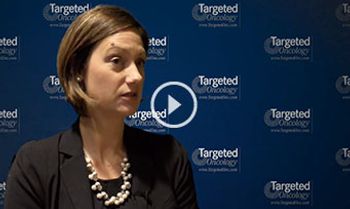
During the 2018 Annual Meeting of the Connective Tissue Oncology Society, Anette Duensing, MD, assistant professor of pathology at University of Pittsburgh, discusses the need for further investigation into how treatment type impacts perceived cognitive function in patients with gastrointestinal stromal tumor.

During the 2018 Annual Meeting of the Connective Tissue Oncology Society, Jason Roszik, PhD, MBA, of the MD Anderson Cancer Center, discusses the use of next-generation sequencing in intimal sarcoma.<br />
Patrick Schöffski, MD, MPH, discussed the key findings from the CREATE trial, the next steps for research into inflammatory myofibroblastic tumor, and the regulatory challenges for approval of drugs for rare cancers.
Practice-changing improvements in disease-free survival and overall survival rates were seen for patients with pediatric rhabdomyosarcoma with the addition of a course of low-dose maintenance chemotherapy administered after standard-of-care intensive chemotherapy.
A new drug application for larotrectinib has been granted a priority review by the FDA for the treatment of adult and pediatric patients with locally advanced or metastatic solid tumors with an <em>NTRK</em> gene fusion, according to Bayer and Loxo Oncology, the codevelopers of the pan-TRK inhibitor.
When findings of larotrectinib, a pan-TRK inhibitor co-developed by Bayer and Loxo Oncology, that generated significant excitement for the treatment of both adult and pediatric patients with TRK fusion cancers, were presented during the 2017 ASCO Annual Meeting, the small molecule was lauded as a future standard of care for patients with advanced solid tumors harboring a TRK fusion.
In a precision medicine success story, crizotinib (Xalkori) demonstrated a 50% objective response rate and a 100% disease control rate in patients with <em>ALK</em>-positive advanced, inoperable inflammatory tumors, in findings from the CREATE study presented at the 2018 AACR Annual Meeting.
Advertisement
Advertisement
Trending on Targeted Oncology - Immunotherapy, Biomarkers, and Cancer Pathways
1
Denosumab Biosimilar Approved For Existing Oncology Indications
2
Plinabulin Receives FDA Fast Track Designation in Post-ICI NSCLC
3
FDA Oncology Recap: Approvals, Designations, and Decisions in September 2026
4
Giredestrant Plus Everolimus Improves PFS in ER+ Advanced Breast Cancer
5