The discovery of two unique molecular targets known to speed skin-cancer growth has researchers excited that they might soon understand and develop genetic therapies geared toward some of medicine’s most untreatable melanomas.

The discovery of two unique molecular targets known to speed skin-cancer growth has researchers excited that they might soon understand and develop genetic therapies geared toward some of medicine’s most untreatable melanomas.

Most cases of BCC are curable with such approaches as surgery and radiation. In some cases, however, BCC can progress to a point of local invasion for which surgery and radiation therapy are not indicated.
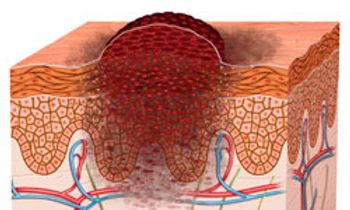
Although the diagnosis of late-stage melanoma is still associated with a poor prognosis, an encouraging number of new therapies have been developed during the last 3 years.

TargetedOnc.com interviewed senior member Jeffrey S Weber, MD, PhD, from the Moffitt Cancer Center, University of South Florida, Tampa.
Although basal cell carcinoma (BCC) is the most common type of skin cancer, it typically does not advance beyond locally contained disease.
Antoni Ribas, MD, PhD, professor of medicine, Jonsson Comprehensive Cancer Center, University of California, Los Angeles, discusses the outlook for BRAF inhibitors in melanoma.

At the 10th International Meeting of the Society for Melanoma Research, researchers provided insight into combination treatments and immunotherapies for the treatment of melanoma.
Georgina Long, BSc, PhD, MBBS, FRACP, medical oncologist, translational researcher, Melanoma Institute Australia, The University of Sydney, discusses the treatment of melanoma with emerging targeted therapies.
Adil Daud, MD, clinical professor, medicine, dermatology, University of California, San Francisco, discusses the challenges of treating patients with metastatic melanoma with BRAF inhibitor monotherapy.