
scout

Videos

A panelist emphasizes that recent real-world retrospective data from 103 first-line luspatercept-treated patients closely align with, and even slightly exceed, COMMANDS trial results—demonstrating significant hemoglobin improvements and transfusion independence—thereby reinforcing luspatercept’s effectiveness and practical value in routine clinical care for erythropoiesis-stimulating agent–naïve, low-risk patients with myelodysplastic syndrome.

1 expert in this video

An expert discusses how CT scans and bone scans remain the standard imaging approach for most patients with metastatic castration-resistant prostate cancer (mCRPC), whereas prostate-specific membrane antigen (PSMA) PET scans are primarily reserved for selecting patients for specific treatments such as lutetium Lu 177 vipivotide tetraxetan (Pluvicto), though they may offer better sensitivity for detecting soft tissue disease in radium-223 candidates.

A panelist highlights that updated COMMANDS trial data demonstrate luspatercept’s robust efficacy in erythropoiesis-stimulating agent–naive patients with low-risk myelodysplastic syndrome—achieving high rates of durable transfusion independence and hemoglobin improvement across subgroups—with emerging evidence suggesting potential long-term survival benefits and a favorable safety profile.

1 expert in this video

Panelist discusses how Bruton tyrosine kinase inhibitors fit into real-world practice with community physicians often using monotherapy, while emphasizing the importance of specialist knowledge to optimize combination therapy selection and considering infection risks in different treatment eras.

4 experts are featured in this series.

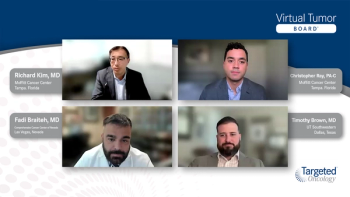
Panelists discuss how current NCCN guidelines for metastatic anal cancer recommend carboplatin-paclitaxel as preferred first-line therapy, with the recent addition of carboplatin-paclitaxel plus retifanlimab as category 2B evidence following FDA approval, while noting that induction chemotherapy for bulky disease remains case-specific without randomized data support.

4 experts are featured in this series.

Panelists discuss how a woman aged 55 years with T3N1M0 locally advanced squamous cell carcinoma represents a typical case for definitive chemoradiation therapy over surgical resection, emphasizing the importance of supportive care measures, including pain management, hydration monitoring, and patient education, to optimize treatment completion rates and minimize toxicity.

1 expert in this video

Panelist discusses how the SEQUOIA study demonstrated that zanubrutinib monotherapy maintains excellent progression-free survival in patients with high-risk chronic lymphocytic leukemia with TP53 mutation or 17p deletion, providing a valuable treatment option for this difficult-to-treat population.