
Ronald L. Paquette, MD, discusses characteristics of myelodysplastic syndrome and how they may impact a patient’s success in undergoing stem cell transplant.


Your AI-Trained Oncology Knowledge Connection!
Ronald L. Paquette, MD, discusses characteristics of myelodysplastic syndrome and how they may impact a patient’s success in undergoing stem cell transplant.
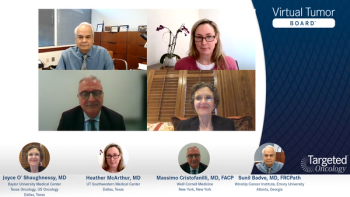
Heather McArthur, MD; Massimo Cristofanilli, MD, FACP; Sunil Badve, MD, FRCPath; and Joyce O’Shaughnessy, MD, share insight on applying data presented from the monarchE study and the use of adjuvant abemaciclib in clinical practice for high-risk, HR+ early breast cancer.

Sunil Badve, MD, FRCPath, and Heather McArthur, MD, evaluate best practices around Ki67 assessment when approaching treatment for HR+ early breast cancer.

Joyce O’ Shaughnessy, MD; Sunil Badve, MD, FRCPath; and Massimo Cristofanilli, MD, FACP, consider the role of adjuvant abemaciclib plus endocrine therapy for the treatment of patients with high-risk, node-positive, HR+ early breast cancer.
Heather McArthur, MD; Massimo Cristofanilli, MD, FACP; Sunil Badve, MD, FRCPath; and Joyce O’ Shaughnessy, MD, review the study design and clinical implications from the monarchE study for high-risk, HR+ early breast cancer.
Experts in breast cancer review the case of a 54-year-old postmenopausal woman with stage IIB, high-risk, HR+ early-stage breast cancer and discuss factors to consider when assessing risk for systemic occurrence.

Sumanta K. Pal, MD, explains what gastrointestinal cancer research needs to focus on in the near future.

Steven M. Albelda, MD, discusses introduction of chimeric antigen receptor T-cell therapy in the solid tumor space.

Thomas Marron, PhD, MD, discusses the end points of an exploratory study which examines the use of cemiplimab in hepatocellular carcinoma.
David W. Dougherty, MD, discusses how cancer centers can move forward following the negative effects caused by the COVID-19 pandemic.

Lori A. Leslie, MD, discusses her recent presentation around chimeric antigen receptor T-cell therapy for mantle cell lymphoma and indolent lymphomas.
Thomas Powles, MD, MBBS, MRCP, discusses the implications of the positive outcome of the phase 3 EV-301 trial of enfortumab vedotin in patients with urothelial cancers.
Jorge Nieva, MD, discusses how a future clinical trial of sintilimab injection plus chemotherapy should look in order to achieve FDA approval for the treatment of patients with nonsquamous non–small cell lung cancer.
Thomas Habermann, MD, discusses R-CHOP and how it can be improved upon as a treatment method for diffuse large B-cell lymphoma.
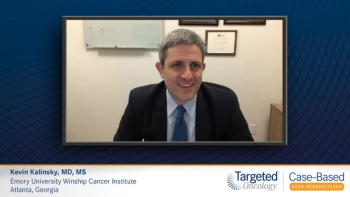
Guidance on how to treat a 67-year-old patient with ER-positive/PR-positive breast cancer, and additional therapies in the pipeline that have the potential to improve treatment.
An overview of CDK4/6 inhibitors available for patients with advanced or metastatic HR-positive breast cancer, and recommendations for managing common adverse events associated with therapy.
The rationale for treating patients with early-stage HR-positive breast cancer with abemaciclib and endocrine therapy.
Criteria used by breast oncologists to risk stratify patients who present with HR-positive breast cancer.
Kevin Kalinsky, MD, MS, presents a case of ER-positive/PR-positive breast cancer and highlights the prevalence of cases such as this in the United States.
Daneng Li, MD, discusses the results of the REFLECT trial of lenvatinib in hepatocellular carcinoma.
William H. Bradley, MD, discusses the 5-year follow-up of the SOLO-1 trial of olaparib maintenance in patients with BRCA1/2-mutated advanced ovarian cancer.
Richard Silver, MD, discusses the Interferon Initiative organized by the Myeloproliferative Neoplasm Research Foundation.

Vivek Subbiah discusses the phase 1/2 LIBRETTO-001 study which sought to evaluate the safety, tolerability, pharmacokinetics, and preliminary anti-tumor activity of selpercatinib in patients with advanced solid tumors.
Jorge Nieva, MD, discusses why he voted differently from the other members of the FDA’s Oncologic Drug Advisory Committee regarding sintilimab in combination with chemotherapy for the first-line treatment of patients with nonsquamous non–small cell lung cancer.
Bradley Monk, MD, FACCOG, FACS, discusses the creation and findings of the OUTBACK trial.
Tanya Dorff, MD, discusses the introduction of chimeric antigen receptor T-cell therapy into the prostate cancer landscape.
Rana R. McKay, MD, discusses KEYNOTE-564 and the future of adjuvant immunotherapy in renal cell carcinoma.

Andrew Seidman, MD, discusses the FeDeriCa trial of intravenous versus subcutaneous trastuzumab and pertuzumab for neoadjuvant treatment of HER2-positive breast cancer.
Julie Renee Brahmer, MD, MSc, discusses the issues with using tyrosine kinase inhibitors and immunotherapy in patients with locally advanced non–small cell lung cancer.
Rachel Wuerstein, MD, of the Unïversität Müchen, discusses the KAMILLA trial and the benefit of trastuzumab emtansine.
