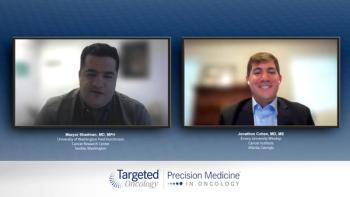
Two experts compare experiences and data concerning use of ibrutinib, acalabrutinib, and zanubrutinib in B-cell lymphomas.


Your AI-Trained Oncology Knowledge Connection!
Two experts compare experiences and data concerning use of ibrutinib, acalabrutinib, and zanubrutinib in B-cell lymphomas.
Solange Peters, MD, PhD, the president of the European Society of Medical Oncology, discusses the use of immunotherapy for the treatment of mesothelioma.
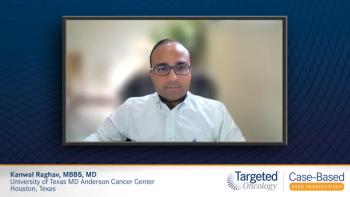
An expert breaks down therapy sequencing in metastatic colorectal cancer and provides some clinical pearls.
Kanwal Raghav, MBBS, MD, explains the rationale for using regorafenib for metastatic colorectal cancer and reviews data from 2 clinical trials.
An oncologist reviews the maintenance therapy options in metastatic colorectal cancer and what clinical findings can lead to a change in therapies.
Kanwal Raghav, MBBS, MD, presents the case of a 72-year-old woman with metastatic colorectal cancer and describes the first-line therapy options.
Rachel Wuerstein, MD, of the Unïversität Müchen, discusses the differences between the global and Asian cohorts in the KAMILLA trial (NCT01702571), which evaluates the benefit of trastuzumab emtansine (T-DM1, Kadcyla) in patients with HER2-positive breast cancer who have received prior anti-HER2 and chemotherapy-based treatment.

Jason Westin, MD, discusses the current standard of care in diffuse large B-cell lymphoma.

Krina K. Patel, MD, MSc, discusses how she chooses treatment for her patients with early or late relapsed/refractory multiple myeloma.
PARP inhibitors are a common treatment for ovarian cancer, but mechanisms of resistance have yet to be fully understood.
Marcia Brose, MD, discusses the efficacy and safety data of a phase 2 trial examining lenvatinib dose reductions in patients with RAI-DTC.
Andrew Gianoukakis, MD, and Lori Wirth, MD, examine post-hoc analysis data from the phase 3 SELECT trial.
Drs Shadman and Cohen provide an overview of clinical trials utilizing the BTK inhibitor, ibrutinib, for B-cell lymphomas.
Mazyar Shadman, MD, MPH, and Jonathon Cohen, MD, MS, introduce available BTK inhibitors used as targeted therapy in B-cell malignancies.
The doctors switch their monoclonal antibody conversation’s focus to longcastuximab tesirine for the treatment of relapsed/refractory diffuse large B-cell lymphoma.
The discussion of tafasitamab as a monoclonal antibody therapy option for relapsed/refractory diffuse large B-cell lymphoma continues.
Considerations for future unmet needs and novel therapies in multiple myeloma, followed by practical advice for community oncologists.
In the context of multiple myeloma, Peter Voorhees, MD, considers the role of doublet vs triplet therapy, initial therapy selection, and monitoring treatment response.
Peter Voorhees, MD, reflects on practical implications of the MAIA trial and how best to manage a patient with newly diagnosed multiple myeloma.
Updated results from the MAIA trial, which tested the addition of daratumumab to lenalidomide-dexamethasone therapy in patients with transplant-ineligible newly diagnosed multiple myeloma.
Expert insight on the optimal management of transplant-ineligible newly diagnosed multiple myeloma in light of available therapies and clinical data.
Peter Voorhees, MD, provides a broad overview on risk assessment and the goals of therapy in multiple myeloma management.
Implications for using plinabulin as prophylaxis against chemotherapy-induced neutropenia alone or in combination with other therapies based on data revealed by the Protective-1 and Protective-2 trials.
An overview of the Protective-1 trial of single-agent plinabulin vs pegfilgrastim after docetaxel in patients with advanced breast cancer, advanced non–small cell lung cancer, and hormone-refractory prostate cancer.

Moshe Levy, MD discusses the ongoing phase 3b study of asciminib in patients with chronic myeloid leukemia in chronic phase.

Srdan Verstovsek, MD, PhD, a professor of Medicine and a hematologic oncologist at the University of Texas MD Anderson Cancer Center, discusses unmet clinical needs in myelofibrosis.
Dr Andrew Gianoukakis reviews the study design and key efficacy data of the phase 3 DECISION and SELECT trials.
Andrew Gianoukakis, MD, reviews the NCCN guidelines for the treatment of patients with thyroid cancer.
Dr Andrew Gianoukakis, explores considerations surrounding systemic therapy in patients with RAI-refractory differentiated thyroid cancer.
Marcia Brose, MD and Lori Wirth, MD, discuss molecular testing considerations in patients with radioiodine-refractory DTC.
