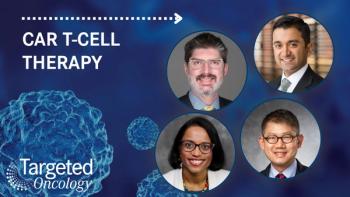
Multiple oncologists share their perspectives on what is still limiting access to CAR T-cell therapies in 2026.

Peter Voorhees, MD, discusses the AQUILA study's impact on treating patients with high-risk smoldering multiple myeloma, paving the way for new therapies.
In an interview with Targeted Oncology, Peter Voorhees, MD, of Atrium Health Levine Cancer Institute in Charlotte and Wake Forest University School of Medicine in Winston-Salem, North Carolina, pinpoints the treatment gap in high-risk smoldering multiple myeloma (HR-SMM) that the phase 3 AQUILA study (NCT03301220) of subcutaneous daratumumab and hyaluronidase-fihj (Darzalex Faspro) sought to address, ultimately resulting in the agent’s
Read the full interview
Prior to the AQUILA study, there was no clear standard of care nor regulatory approvals for therapy for SMM. The lingering, motivating question at the time was whether intervention prior to the development of active multiple myeloma (MM), rather than after its development, was valuable for long-term clinical outcomes.
Voorhees details 2 precursor randomized trials in patients with SMM that supported this path of investigation, as follows:
These trials set the stage for the AQUILA trial and established the target population for the trial and FDA approval: those who have a 50% likelihood of developing active MM during the first 2 years of monitoring.