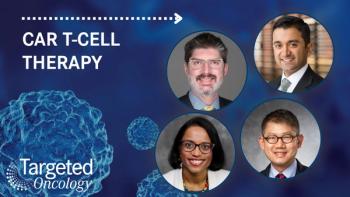
Multiple oncologists share their perspectives on what is still limiting access to CAR T-cell therapies in 2026.

Discover the nuances of CAR T-cell therapy eligibility and its advantages over traditional chemotherapy for long-term patient outcomes.
Manali Kamdar, MD, MBBS, University of Colorado Anschutz, emphasizes a critical distinction in the evaluation of patients for CAR T-cell therapy. Kamdar believes it is absolutely important to highlight that the definitive determination of CAR T eligibility should ideally be conducted at a specialized CAR T-cell treatment center. She asserts that outside of a very small group of severely frail patients, the criteria for determining who is eligible for CAR T-cell therapy are far less restrictive than many in the community oncology setting might believe.
In her outreach and discussions, Kamdar frequently communicates a straightforward litmus test to her community oncology partners and her patients: "If I could give you light chemotherapy, and if I think you are eligible for that, then I think you're eligible for CAR T-cell therapy." This statement underscores the crucial point that CAR T-cell therapy is not comparable to traditional, high-intensity chemotherapy. In fact, she points out that CAR T-cell therapy typically carries way less toxicity than the conventional cytotoxic regimens often employed in the cancer setting.
Kamdar acknowledges that the procedure represents a significant undertaking, primarily involving an approximate 14-day mandatory stay at the specialized treating center for monitoring and acute management of potential adverse effects. However, she stresses that this short-term commitment is for a potentially substantial long-term gain, especially around cure for the patient.
A central tenet of her guidance is the firm belief that transplant eligibility is not the same as CAR T eligibility. Historically, autologous and allogeneic stem cell transplant (SCT) necessitated a much higher standard of fitness and organ function to withstand the rigorous conditioning and recovery phases. She maintains that applying these stringent, outdated SCT criteria to CAR T-cell therapy unnecessarily and unjustly excludes patients who could benefit from this highly effective, less toxic, and potentially curative treatment modality.
To reinforce this perspective, Kamdar references ongoing research and publications that aim to provide clearer guidance on CAR T eligibility. These studies, some of which are already published and others forthcoming, are essential for educating the broader oncology community. Ultimately, her message to the treating physician network is distilled into a succinct, powerful phrase: "If patients recur, please refer." This call to action encourages timely referral to a specialized center upon disease relapse, ensuring that patients are fully and fairly evaluated by experts who understand the true, broad scope of CAR T-cell eligibility.