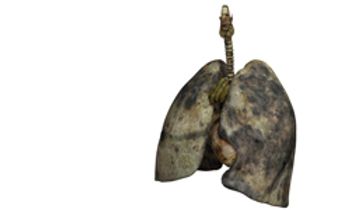
Available therapies for patients with lung cancer are associated with a number of significant toxicities that must be effectively managed by oncologists.

Available therapies for patients with lung cancer are associated with a number of significant toxicities that must be effectively managed by oncologists.

Only about 5% of patients with cancer are recruited into oncology clinical trials, raising a concern that unless this improves, progress in the development new treatments for cancer may be delayed.
The definition of liquid biopsy has expanded to include the collection of cfDNA, along with various species of cell-free RNA and exosomes, all of which are capable of providing information on the disease status of cancer patients.
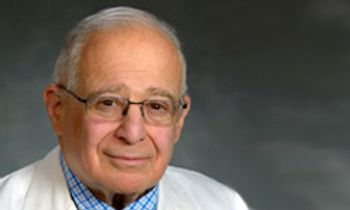
Early detection in lung cancer is strongly linked to better survival. In a landmark decision the CMS recently approved national coverage for lung cancer screening with LDCT for high-risk smokers.
Benjamin P. Levy, MD, director of thoracic medical oncology, Mount Sinai Health System, discusses maintenance therapies for patients with non-small cell lung cancer.

Roman Perez-Soler, MD, chairman and chief, department of medical oncology, Montefiore Medical Center, deputy director, Albert Einstein Cancer Center, discusses the challenges oncologists still face in lung cancer.
Maria E. Arcila, MD, acting director, Diagnostic Molecular Pathology Laboratory, Memorial Sloan Kettering Cancer Center, discusses diagnostic platforms for lung cancer.

Blocking activin-A, a protein that is secreted by non-small cell lung cancer (NSCLC) cells, may prevent cancer metastasis, according to research conducted at the University of Virginia (UVA).