Christopher Melani, MD, discusses the unmet needs remaining in the mantle cell lymphoma space.


Your AI-Trained Oncology Knowledge Connection!
Christopher Melani, MD, discusses the unmet needs remaining in the mantle cell lymphoma space.
Cristian Tomasetti, PhD, discusses the clinical questions that exist among physician who treat patient with stage II colon cancer.
Jesus G. Berdeja, MD, director of multiple myeloma research at Sarah Cannon Research Institute and hematology specialist at Tennessee Oncology, discusses the results of the CARTITUDE-1 trial for chimeric antigen receptor T-cell therapy with the newly-approved agent ciltacabtagene autoleucel for relapsed/refractory multiple myeloma.
Alexander Drilon, MD, discusses targeted therapies for the patients with NTRK gene fusion-positive cancers.

Courtney DiNardo, MD, concludes with discussing some challenges faced when treating patients with AML and shares some advice for community oncologists treating acute myeloid leukemia.
A review of the safety outcome data of venetoclax plus azacitidine from the VIALE-A trial.
Dr Courtney DiNardo details the dosing recommendations for venetoclax plus azacitidine and the importance of bone marrow assessments.
Dr Courtney DiNardo reviews the efficacy data from the VIALE-A trial and explains the rationale for combining venetoclax with azacitidine as a treatment option for patients with AML.
Centering discussion on a patient case of HER2+ breast cancer with brain metastases, experts consider optimal treatment regimens in this setting.
Focusing on the HER2CLIMB regimen, experts consider appropriate treatment options for patients with HER2+ metastatic breast cancer in the third-line setting and beyond.
Courtney DiNardo, MD, describes how the treatment options for patients with newly diagnosed acute myeloid leukemia differs for patients under and over 60 years of age.
Tanios S. Bekaii-Saab, MD, FACP, discusses the unmet needs that are hoped to be filled by the phase 1/2 KRYSTAL-1 study.
Mazyar Shadman, MD, MPH, discusses the phase 1/2 clinical trial of MB-106 for patients with CD20 positive B-cell malignancies.

John L. Marshall, MD, discusses the situations where patients could benefit from fam-trastuzumab deruxtecan-nxki as second-line treatment for locally advanced or metastatic HER2-positive gastric cancer.

Mark Markowski, MD, PhD, discusses the design of a phase 1B/2 study of sabizabulin in men with metastatic castration-resistant prostate cancer who have had treatment and progression on an androgen receptor–targeting agent.
Sophia Kamran, MD, discusses potential toxicities limiting the addition of immunotherapy to trimodal therapy for patients with urothelial cancer.
Lajos Pusztai, MD, DPhil, discusses multiple analyses of the phase 3 KEYNOTE-522 clinical trial of pembrolizumab plus chemotherapy administered in the neoadjuvant or adjuvant setting to patients with triple-negative breast cancer versus placebo plus chemotherapy.
Aaron T. Gerds, MD, MS, discusses the clinical trial development of momelotinib, a JAK1/JAK2 inhibitor that is being investigated for the treatment of patients with myelofibrosis.
Karen L. Reckamp, MD, discusses the Lung-MAP nonmatched substudy S1800A for patients with non–small cell lung cancer who were previously treated with immune checkpoint inhibitors and develop resistance.

Nathan Pennell, MD, PhD, discusses a first-in-human trial of a novel RET inhibitor for patients with non–small cell lung cancer and medullary thyroid cancer.
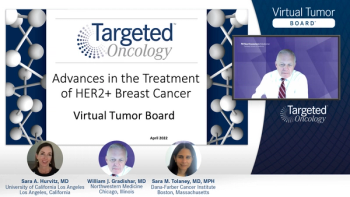
Expert oncologists share brief notes on their real-world experience managing HER2+ metastatic breast cancer with trastuzumab deruxtecan.
Comprehensive discussion on the presence and management of interstitial lung disease in patients being treated for HER2+ metastatic breast cancer.

Marcin Kortylewski, PhD, discusses some of the goals and findings of his research on blocking STAT3 in acute myeloid leukemia cells.

Neil Vasan, MD, PhD, discusses how the results of the TRAIN-2 trial impacted the treatment of patients with HER2-positive breast cancer.

Jeffrey S. Miller, MD, discusses the findings of a study of the Tri-Specific Killer Engager platform for the activation of natural killer cells for the treatment of refractory acute myeloid leukemia and other cancers.

Nakhle Saba, MD, discusses the significance of the key findings of the ELEVATE-TN trial of acalabrutinib with or without obinutuzumab for patients with chronic lymphocytic leukemia.
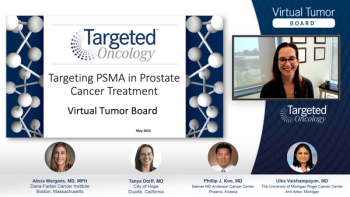
Tanya Dorff, MD, reviews guidelines for initial risk stratification of patients with localized prostate cancer, and the choices in imaging strategies.
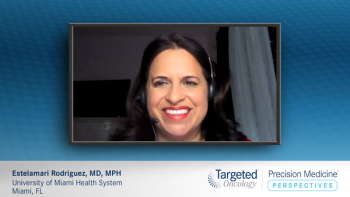
In the fourth interview of the series, Dr. Estelamari Rodriguez from the University of Miami Health System considers unmet needs in extensive-stage small cell lung cancer and discusses the role of reactive and proactive approaches to the management of chemotherapy-induced myelosuppression.
Amaia Lujambio Goizueta, PhD, discusses the unanswered questions currently circulating the hepatocellular carcinoma field.
Shared insight on the DESTINY-Breast03 trial, which analyzed trastuzumab deruxtecan therapy in patients with HER2+ metastatic breast cancer.
