Factors that affect the use of maintenance therapy, including anti-CD20 maintenance therapy, for newly diagnosed follicular lymphoma, and recommendations for assessing response to therapy.


Your AI-Trained Oncology Knowledge Connection!
Factors that affect the use of maintenance therapy, including anti-CD20 maintenance therapy, for newly diagnosed follicular lymphoma, and recommendations for assessing response to therapy.
The rationale for treating newly diagnosed follicular lymphoma with the anti-CD20 monoclonal antibody, obinutuzumab, in the first-line setting.
Goals of therapy and variables that affect how patients with newly diagnosed follicular lymphoma are managed with chemoimmunotherapy in the frontline setting, including during COVID-19.
Recommendations for assessing and risk stratifying patients with newly diagnosed follicular lymphoma, with special considerations regarding the current role of molecular testing.
Similarities between the management of a hypothetical case of newly diagnosed follicular lymphoma compared with what is done in real-world practice.

Marshall Posner, MD, discusses a study exploring the use of HB-201 and HB-202 vaccines in patients with HPV16-positive cancers.

Erika Hamilton, MD, discusses the mechanism of action of rebastinib, which is currently being explored in combination with weekly paclitaxel 1b/2 study of patients with platinum-resistant ovarian cancer.

Richard Anderson, MD, PhD, discusses ways to preserve fertility in patients who are undergoing or have complete treatment for lymphoma.

Martin Dietrich, MD, PhD, discusses the role MET alterations play as oncogenic drivers of non–small cell lung cancer.

Dana Chase, MD of Arizona Oncology, discusses frontline treatment of ovarian cancer and the challenges faced in the community oncology setting.

Carole Miller, MD, discusses the REVEAL trial design, an observational study on mortality and causes of death in patients with polycythemia vera.

In the fourth video of the series, Jorge Garcia, MD, FACP, considers PSMA-positive cells as a therapeutic target in men with metastatic castration-resistant prostate cancer and discusses the implications of the VISION trial for the therapeutic landscape.

Alexander Spira, MD, PhD, FACP, discusses the prognosis of patients with EGFR- exon 20 mutated non-small cell lung cancer.
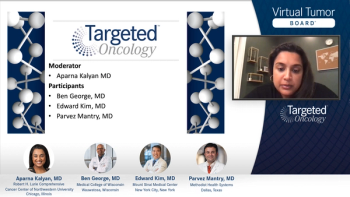
Expert perspectives on the case of a 70-year-old man who presents and is diagnosed with solitary hepatocellular carcinoma measuring greater than 3cm.

Clinical pearls regarding molecular testing and treatment selection in metastatic cholangiocarcinoma.
Implications for treating select patients with metastatic cholangiocarcinoma with ivosidenib as second-line therapy.
Insight pertaining to the use of infigratinib and pemigatinib, FGFR inhibitors, as second-line therapy for metastatic cholangiocarcinoma.
An overview of the standard of care for patients with metastatic cholangiocarcinoma, and the significance of conducting clinical trials that increase the number and types of therapies available to patients with fewer adverse events and better results.
Recommendations for conducting molecular testing and biopsies to learn more about patients who present with metastatic cholangiocarcinoma.
Dr Afsaneh Barzi explains why screening measures for cholangiocarcinoma are so important to patient outcomes.
An overview of potential strategies being explored to improve frontline therapy with R-CHOP for patients with relapsed/refractory diffuse large B-cell lymphoma.
Reactions to the management of metastatic cholangiocarcinoma and prediction of patient response to treatments used in early lines of therapy.
Drs John M. Burke and Marin F. Xavier consider the potential utilization of tafasitamab plus lenalidomide plus R-CHOP chemotherapy vs R-CHOP chemotherapy alone as relapsed/refractory diffuse large B-cell lymphoma treatment.
Afsaneh Barzi, MD, PhD, shares impressions of the overall care for an elderly man with metastatic cholangiocarcinoma and recommends how to care for patients who experience treatment-related adverse events from initial therapy.
Jyoti Patel, MD, and Karen Reckamp, MD, discuss strategies for identifying ALK rearrangements in patients with advanced NSCLC and which patients should be tested for these alterations.
Karen Reckamp, MD, provides an overview of ALK gene rearrangements and their clinical significance in patients with advanced NSCLC.

Michael Wang, MD, discusses the growing awareness of chimeric antigen receptor T-cell therapy among community oncologists and patients with mantle cell lymphoma.

Alicia K. Morgans, MD, MPH, discusses how to handle cardiovascular risk factors associated with androgen deprivation therapy in men with non-metastatic castration-resistant prostate cancer.

Nino Balanchivadze, MD, FACP, discuses the rates of acute kidney injury in the KEYNOTE-189 study, which evaluated pembrolizumab and carboplatin/pemetrexed in patients with metastatic non–small cell lung cancer.

Evanthia Roussos Torres, MD, PhD, discusses the phase 1 study of the efficacy of entinostat administered in combination with nivolumab and ipilimumab for the treatment of locally advanced, metastatic, unresectable, or HER2-negative breast cancer.