
Commentary|Videos|January 19, 2026
Breakthroughs in Oncology: Validating Real Gains in Cancer Survival
Author(s)Rebecca Siegel, MPH
Fact checked by: Sabrina Serani
Recent cancer statistics reveal significant survival rate improvements for aggressive cancers, highlighting advancements in treatment and a shift in oncology outcomes.
Advertisement
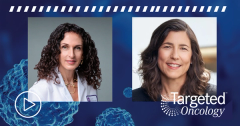
In part 2 of an interview with Targeted Oncology. Rebecca Siegel, MPH, cancer epidemiologist and senior scientific director of Surveillance Research at the American Cancer Society, discusses the 2026 cancer statistics report, of which she was the primary author.
The most striking finding in recent oncological research is the significant gain in survival rates for cancers previously considered highly fatal, as well as for those diagnosed at an advanced stage. While survival statistics are often complex and nuanced, the current data suggests a genuine shift in the effectiveness of modern medicine.
Understanding the Nuance of Lead-Time Bias
To accurately interpret these findings, one must account for lead-time bias. This phenomenon occurs when screening or advanced imaging detects a cancer earlier than it would have been found through symptoms, but without actually extending the patient's life. In such cases, the "survival clock" begins ticking earlier, which can artificially inflate survival statistics.
With the advent of high-resolution imaging, incidental detection has become common. Many asymptomatic cancers—those showing no physical signs—are now identified during routine checkups or unrelated scans. Because this earlier diagnosis moves the start date of a patient’s survival period without necessarily delaying the date of death, researchers must be cautious not to mistake earlier detection for improved treatment outcomes.
Evidence of Genuine Progress
Despite these statistical challenges, the study reveals improvements that are undeniably "real" rather than just a result of earlier detection. The evidence lies in the dramatic survival surges for specific, aggressive malignancies:
- Myeloma: Once considered a highly fatal blood cancer, the survival rate for myeloma has remarkably doubled.
- Regional-Stage Lung Cancer: Survival rates for lung cancer that has spread to nearby tissues (regional stage) have also doubled, a feat previously thought improbable for such a lethal disease.
These specific gains are particularly telling because they involve cancers that are typically aggressive. When survival rates double for these conditions, it serves as a clear indicator that therapeutic interventions, rather than just early screening, are driving the change.
A New Era of Cancer Treatment
The most surprising aspect of the recent findings is the sheer scale of progress across a wide variety of cancers. This shift marks a transition in the oncology landscape, where advanced-stage disease is no longer an automatic death sentence. The extraordinary gains observed this year are a testament to the efficacy of the latest generation of targeted therapies and immunotherapies. These medical advancements are not only keeping patients alive longer but are doing so by fundamentally changing the trajectory of some of the most challenging diseases in modern medicine.
REFERENCE
Siegel RL, Kratzer TB, Wagle NS, Sung H, Jemal A. Cancer statistics, 2026. CA Cancer J Clin. 2026;e70043. doi:10.3322/caac.70043
Advertisement
Related to this article
Recap the 4 late-breaking phase 3 trials from ESMO 2026 Presidential Symposium I in melanoma, bladder cancer, small cell lung cancer, and prostate cancer.

At Rutgers Cancer Institute, neuro-oncologists met to discuss the latest trends in precision brain cancer care with FET-PET imaging, advanced molecular testing, and same-day multidisciplinary clinics.
Four oncologists share their perspectives on what is still limiting access to CAR T-cell therapies in 2026.

Breakthrough targeted therapies—from KRAS and PROTACs to CAR T—plus ctDNA monitoring and personalized vaccines push earlier detection and smarter cancer treatment.

J. Thaddeus Beck, MD, discusses how the shift from intravenous to subcutaneous formulations is changing oncology practice, from clinic logistics to patient preferences.
Gary Simmons, DO, MSHA, discusses outpatient CAR T-cell therapy in the community, the operational and payer bottlenecks his practice has faced, and advice for colleagues.
Advertisement
Advertisement
Trending on Targeted Oncology - Immunotherapy, Biomarkers, and Cancer Pathways
1
Late-Breaking Phase 3 Data Headline ESMO 2026 Presidential Symposium I
2
Personalized mRNA Vaccine Intismeran Plus Pembro Cuts Melanoma Recurrence
3
Vopimetostat Plus Daraxonrasib Yields 82% ORR in MTAP-Deleted PDAC
4
Sunvozertinib Now Available in US for EGFR Exon 20 Insertion NSCLC
5