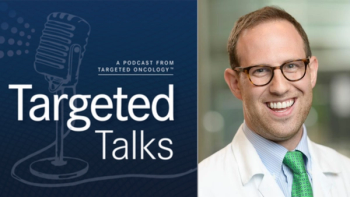
Benjamin Herzberg, MD, discusses KRAS-mutant non–small cell lung cancer, upfront biomarker testing, and the emerging RAS inhibitor toolkit on Targeted Talks.

Genetic testing reshapes community oncology, expanding hereditary screening to guide personalized surveillance, identify high-risk families, and shift care toward cancer prevention.
In an interview with Targeted OncologyTM, Ranjit Goudar, MD, of Virginia Oncology Associates, discusses how genetic testing has transformed community oncology over the past 15 years and why its expanding role is shifting the focus from treating cancer to preventing it.
Goudar explains that hereditary cancer testing has become increasingly integrated into routine oncology practice, with community oncologists now ordering many tests directly rather than relying solely on genetic counselors. At the same time, patients are increasingly arriving with genetic test results obtained through other specialists, requiring oncology teams to provide long-term risk assessment and management.
According to Goudar, advances in multigene panel testing, broader eligibility criteria, improved insurance coverage, and lower out-of-pocket costs have made germline testing more accessible than ever. He highlights that approximately 10% of patients with cancer harbor clinically significant germline mutations, underscoring the importance of universal testing recommendations for several tumor types. Looking beyond patients with active malignancies, Goudar describes how community oncology practices are expanding hereditary cancer programs to identify and manage individuals at elevated cancer risk, including unaffected family members. He shares how Virginia Oncology Associates now cares for thousands of high-risk patients annually, reflecting a growing emphasis on personalized surveillance and early detection.
Finally, Goudar discusses the broader vision for community oncology: leveraging genetic testing to reduce cancer incidence through individualized screening strategies, risk-reducing interventions, and future prevention approaches. As hereditary cancer programs continue to evolve, he explains why community practices are uniquely positioned to lead efforts that improve cancer prevention and outcomes for patients and their families.