
Commentary|Videos|April 10, 2025
Exploring AFM13: Nieto on R/R Lymphoma Treatment Progress
Author(s)Yago Nieto, MD, PhD
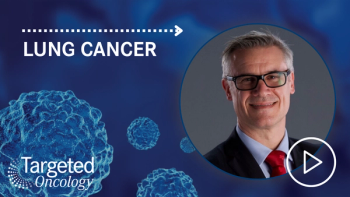
Yago Nieto, MD, PhD, discusses AFM13, how it works, and its effect as a bispecific antibody that targets CD30 and CD16.
Advertisement
Yago Nieto, MD, PhD, professor of stem cell transplantation & cellular therapy, The University of Texas MD Anderson Cancer Center, Houston, discusses AFM13, how it works, and its effect as a bispecific antibody that targets CD30 and CD16.
“AFM13 is a bispecific antibody conjugate that targets both CD30, which is expressed on many types of lymphomas. It's universally expressed on Hodgkin's lymphoma cells, also on other T-cell lymphomas and some B-cell lymphomas. And on the other hand, AFM13 also binds CD16, which is a marker of natural killer [NK] cells,” explains Nieto.
AFM13 activates NK cells to kill CD30+ cells.1 First, the NK cells are activated with cytokines, expanded in the presence of artificial antigen-presenting cells and complexed with AFM13 prior to being infused into a patient. Additionally, precomplexed AFM13-NK cells are more readily able to find and eliminate CD30-positive lymphoma cells.
In this video, Nieto also explains how NK cells function in the immune response against cancer, and what advantages they offer in cell therapy compared with T cells.
“A big advantage of allogeneic NK cells over allogeneic T cells is that NK cells do not cause graft-vs-host disease, even in settings of deep HLA mismatch, as it was in our trial. So, that makes the product much easier to manage and much safer,” adds Nieto.
Currently,
According to findings published in Nature Medicine, the combination led to an overall response rate (ORR) of 92.9% and a complete response (CR) rate of 66.7%. At a median follow-up of 20 months, the 2-year event-free survival (EFS) and overall survival (OS) rates of 26.2% and 76.2%, respectively.
REFERENCE
1. Nieto, Y, Banerjee, P, Kaur, I, et al. Allogeneic NK cells with a bispecific innate cell engager in refractory relapsed lymphoma: a phase 1 trial. Nat Med. 2025. doi:10.1038/s41591-025-03640-8
Advertisement
Related Content
Advertisement


Latest CME

































Advertisement
Advertisement
Trending on Targeted Oncology - Immunotherapy, Biomarkers, and Cancer Pathways
1
NCCN Survey Finds Persistent Cancer Drug Shortages Across US Centers
2
Risk-Adapted Quadruplet Therapy Sustains 5-Year Survival Benefit in High-Risk Myeloma
3
FDA Grants Final Approval to Cabozantinib Capsule Formulation
4
Subcostal Robotic Surgery Cuts Thoracic Pain
5