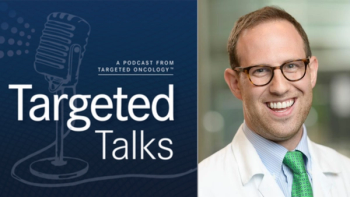
Benjamin Herzberg, MD, discusses KRAS-mutant non–small cell lung cancer, upfront biomarker testing, and the emerging RAS inhibitor toolkit on Targeted Talks.

Innovative advancements in cell therapy enhance NK cells for solid tumors, aiming for effective treatments while prioritizing patient safety and clinical success.
In an interview with Targeted Oncology, Katy Rezvani, MD, PhD, vice president and head, Institute for Cell Therapy Innovation and Discovery, Department of Institute for Cell Therapy Innovation and Discovery, Division of Cancer Medicine, The University of Texas MD Anderson Cancer Center, discusses the antitumor effectiveness of chimeric antigen receptor-natural killer (CAR-NK) cell therapy.
Our core mission is focused on refining and enhancing a pre-existing cell therapy platform based on Blood Derived Natural Killer (NK) cells—specifically, what we call Blood-derived Current-Case Cells. This is a deliberate effort to, in a sense, 'dull down' or stabilize the foundational aspect of the platform we've already established, ensuring its safety and consistent performance. However, simultaneously, the main thrust of our work is to continuously integrate novel elements into these NK cells.
These new elements are specifically designed to significantly improve the potency of the cells against cancer. This could involve, for instance, incorporating advanced genetic modifications to enhance their homing ability to the tumor site, increase their persistence in the body, or boost their ability to recognize and destroy malignant cells. A critical balancing act, however, is maintaining vigilance regarding toxicities. Any enhancement in potency must not compromise patient safety. We are moving forward with extreme caution, aiming for a therapeutic sweet spot that offers maximum efficacy with minimal adverse effects.
Ultimately, the immediate aim of this research is to rigorously test these enhanced cells. Our first testing phase will be in preclinical models of solid tumors. We prioritize what are known as orthotopic models. These are highly relevant and physiologically accurate animal models where the cancer is implanted or developed in the specific organ that one would expect to be affected in a human patient. For example, if we are targeting pancreatic cancer, the tumor would be established in the pancreas. This modeling approach provides a much stronger predictor of how the therapy will perform clinically compared to models where the tumor is placed in a non-native site.
Following successful preclinical validation, our ultimate goal is to seamlessly translate these findings into clinical trials. This journey from the lab bench to the patient bedside is what drives our team.
The broader landscape of cell therapy is incredibly dynamic, making this an exceptionally exciting field right now. This is due to a confluence of factors. First, there is the sheer volume of compelling data being generated across numerous institutions, rapidly advancing our understanding of immunology and oncology. Second, and perhaps more transformative, is the increasing accessibility of sophisticated gene engineering tools. These technologies—such as CRISPR and other methods for targeted genetic modification—were not available for clinical translation in the past. Now, they are enabling us to engineer immune cells with unprecedented precision and efficacy.
The field is moving at a breakneck pace, and we are very enthusiastic about the prospects of our platform. We look forward to taking these promising therapeutic candidates to the clinic as quickly as possible, but always prioritizing safety above all else. Our motivation stems from the desire to make a meaningful impact in solid tumors. While cell therapies, like CAR T-cells, have achieved remarkable success in hematological malignancies (blood cancers), they have historically lagged behind in effectively treating solid tumors. We believe our enhanced NK cell platform offers a compelling path to overcoming the unique challenges presented by the solid tumor microenvironment and hope to significantly shift that paradigm.