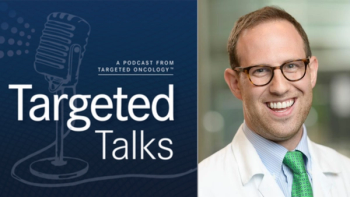
Benjamin Herzberg, MD, discusses KRAS-mutant non–small cell lung cancer, upfront biomarker testing, and the emerging RAS inhibitor toolkit on Targeted Talks.

APP-led benign hematology consults boost access in community oncology—cut wait times, expand capacity, and show how teams scale safely.
As community oncology practices continue to face growing patient demand and workforce constraints, advanced practice providers (APPs) may play an increasingly important role in expanding access to care. At the
The study demonstrated substantial growth in APP-led consult volume, reductions in time to first appointment, and increased clinical capacity across multiple community oncology settings. According to Vella, the findings suggest that APP-led consult models may offer a scalable approach to addressing access challenges while supporting high-quality, patient-centered care in benign hematology.
Vella explains how participating practices successfully scaled APP-led consult programs through a combination of structured education, standardized resources, and close physician collaboration. To support implementation, the team developed educational modules, disease-specific guidance, and practical tools covering workup recommendations, treatment considerations, and coding information, helping APPs build confidence in managing benign hematology referrals.
Vella also addresses common barriers to adoption, including physician concerns about transitioning new consult responsibilities. She highlights the importance of identifying a physician champion to help guide implementation, refine workflows, and ensure appropriate patient triage while fostering trust among clinical team members.
Finally, she discusses the safeguards and collaborative structures that helped maintain consistency and quality across participating sites. Practices initially focused on lower-complexity conditions, allowing teams to establish workflows, identify potential gaps, and refine processes before broader expansion.