
Enfortumab vedotin-ejfv plus pembrolizumab improves survival in patients with previously untreated locally advanced or metastatic urothelial carcinoma.

Enfortumab vedotin-ejfv plus pembrolizumab improves survival in patients with previously untreated locally advanced or metastatic urothelial carcinoma.

Positive results have been reported from phase 1/2 KEYMAKER-U03B study, and belzutifan plus lenvatinib is being further investigated in the phase 3 LITESPARK-011 study (NCT04586231).

With encouraging overall response and disease control rates, lenvatinib plus pembrolizumab has the potential to be a frontline treatment option for non–clear cell renal cell carcinoma.

According to new COSMIC-021 data, atezolizumab combined with cabozantinib may be active in patients with urothelial carcinoma.
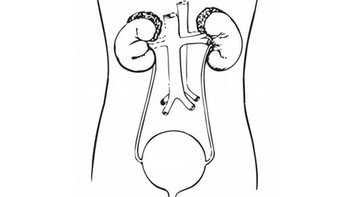
In patients with muscle-invasive bladder cancer treated in the phase 2 HCRN GU16-257 trial, the combination of transurethral resection of the bladder tumor with nivolumab and chemotherapy showed promise.

LuPSMA added to standard of care led to a nearly 40% reduction in the risk of death versus standard of care alone in the phase 3 VISION study.
Improved outcomes for younger African American patients is associated with increased prostate-specific antigen screening.
Localized metastatic lesions were detected with a high correct localization rate (CLR) and positive predictive value (PPV) with the investigational prostate-specific membrane antigen (PSMA)–targeted PET imaging agent 18F-DCFPyL.
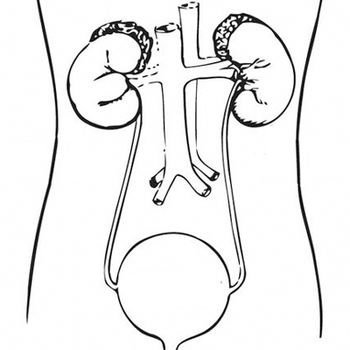
According to findings from the phase 1b COSMIC-021 trial presented at the 2020 ASCO Virtual Scientific Program, cabozantinib and atezolizumab demonstrated clinically meaningful activity in patients with metastatic castration-resistant prostate cancer, including those with high-risk clinical features.

Encorafenib plus cetuximab with or without binimetinib continued to show an overall survival benefit compared with cetuximab plus irinotecan-based regimens as treatment of patients with BRAF-mutated metastatic colorectal cancer in the updated findings from the phase 3 BEACON CRC clinical trial.

“Ide-cel demonstrated frequent, deep, and durable responses in heavily pretreated, highly relapsed/refractory patients with myeloma. Overall, ide-cel provides an attractive option for the treatment of patients with triple-class exposed relapsed/refractory myeloma."

“The PFS advantage in favor of continuous dosing was observed in younger and older patients, men and women, patients with and without prior immune checkpoint inhibitor therapy, and in patients with normal and elevated baseline LDH levels."

In the phase III VELIA trial, the addition of veliparib to frontline induction chemotherapy expanded the number of complete responses and CA-125 responses in patients with high-grade serous ovarian cancer compared with chemotherapy alone, according to results from an exploratory analysis.
Following its success in the phase III PRIMA study, frontline niraparib maintenance demonstrated positive patient-reported outcomes, as well as met biomarker-defined and other secondary endpoints, according to 3 analyses to be reported as part of the Society of Gynecologic Oncology 2020 Annual Meeting.
To enhance outcomes for patients with indolent non-Hodgkin lymphoma, an in-depth review of the available data is required. As a start, Sonali M. Smith, MD, University of Chicago Medicine, reviewed the clinical trial findings that are currently informing treatment selection in the frontline iNHL paradigm, at 24th Annual International Congress on Hematologic Malignancies.

A pathologic complete response rate of 44% was observed with a neoadjuvant durvalumab (Imfinzi)-based regimen administered to patients with triple-negative breast cancer, according to results of a phase I/II study presented in a poster at the 2019 San Antonio Breast Cancer Symposium.
In patients with triple-negative breast cancer or those with PD-L1–positive breast cancer across several subtypes, durvalumab as maintenance therapy, may improve outcomes compared with chemotherapy, according to an exploratory analyses from the phase II randomized SAFIR02-IMMUNO trial presented at the 2019 San Antonio Breast Cancer Symposium.
Frontline treatment with palbociclib demonstrated positive progression-free survival n real-world patients with HR-positive/HER2-negative metastatic breast cancer and may lead to an overall survival benefit , according to data from the pivotal PALOMA-2 trial.
Patients with HER2-positive metastatic breast cancer who had received prior anti-HER2 therapies continued to experience a progression-free survival benefit with margetuximab and a trend toward overall survival compared with trastuzumab when either agent was combined with chemotherapy, according to updated findings from the phase III SOPHIA trial.
In the phase II HER2CLIMB trial, a 34% reduction in the risk of death was observed with the addition of tucatinib to the combination of trastuzumab and capecitabine in patients with heavily pretreated unresectable locally advanced or metastatic HER2-positive breast cancer compared to the combination alone, according to results from the phase II HER2CLIMB trial presented at the 2019 San Antonio Breast Cancer Symposium.

In the phase III CANDOR trial, the addition of daratumumab to carfilzomib and dexamethasone reduced the risk of disease progression or death by 37% compared with carfilzomib and dexamethasone alone in patients with relapsed/refractory multiple myeloma, according to findings from the phase III CANDOR trial presented at the 2019<br /> American Society of Hematology Annual Meeting.
Data from the phase Ib/II CARTITUDE-1 trial that were presented at the 2019 ASH Annual Meeting demonstrated the anti-BCMA CAR T-cell therapy JNJ-4528 achieved a 100% overall response rate with responses in 29 patients with heavily pretreated relapsed/refractory multiple myeloma.<br />

Immunotherapy combination regimens have revolutionized the first-line treatment paradigm for patients with clear cell renal cell carcinoma, explained Robert J. Motzer, MD, at the <em>37th Annual</em> CFS.
There are at least two dozen different B-cell maturation antigen-directed therapies being explored in clinical trials, Sham Mailankody, MBBS, told attendees at the 37 Annual CFS. Mailankody, an assistant attending physician at Memorial Sloan Kettering Cancer Center in New York, New York, highlighted the most promising anti-BCMA agents across several modalities, including CAR T-cell therapy, bispecific antibodies, and antibody-drug conjugates.

Findings from part 1 of the phase II/III RESILIENT trial of irinotecan hydrochloride liposome injection in second-line treatment of small cell lung cancer showed that for close to 50% of patients, disease control was maintained at 12 weeks. These data were presented at the 2019 World Conference on Lung Cancer.
The combination of atezolizumab plus carboplatin and nab-paclitaxel demonstrated a clinical overall survival benefit in a subgroup of patients with advanced squamous non–small cell lung cancer and a high level of PD-L1 expression in the phase III IMpower131 trial. Final data for this study was presented at the 2019 World Conference on Lung Cancer.
The review period has been extended by the FDA for a supplemental biologics license application for atezolizumab as a frontline treatment for patients with metastatic nonsquamous non–small cell lung cancer who do not have <em>EGFR</em> or <em>ALK</em> aberrations, in combination with carboplatin and nab-paclitaxel.

The combination of atezolizumab and nab-paclitaxel has been approved by the European Commission as a frontline treatment for adult patients with unresectable, locally advanced, or metastatic PD-L1–positive triple-negative breast cancer, a result of the positive outcomes in the phase III IMpassion130 trial.

The FDA has drafted new industry recommendations for sponsors to encourage male inclusion in clinical trials for breast cancer.<br />
The phase III IMvigor130 study showed significant improvement in progression-free survival with the combination of Atezolizumab and chemotherapy in patients with previously untreated locally advanced or metastatic urothelial carcinoma, according to a recent press release from manufacturer, Genentech.