The FDA converted the accelerated approval of pembrolizumab in TMB-high solid tumors to traditional approval, redefining TMB-high as at least 13 mut/Mb.

Sabrina Serani is the managing editor for Targeted Oncology, covering breast, lung, and brain cancers. Contact her at sserani@targetedonc.com.
The FDA converted the accelerated approval of pembrolizumab in TMB-high solid tumors to traditional approval, redefining TMB-high as at least 13 mut/Mb.
Following an end-of-phase 2 meeting with the FDA, Rgenta plans to start a phase 3 trial of oral RGT-61159 in adenoid cystic carcinoma in the first quarter of 2027.
Lyudmila Bazhenova, MD, discusses the FDA’s expanded approval of taletrectinib for ROS1-positive non–small cell lung cancer.

J. Thaddeus Beck, MD, discusses how the shift from intravenous to subcutaneous formulations is changing oncology practice, from clinic logistics to patient preferences.

Gary Simmons, DO, MSHA, discusses outpatient CAR T-cell therapy in the community, the operational and payer bottlenecks his practice has faced, and advice for colleagues.
Preview the late-breaking studies at ESMO Congress 2026, from KRAS inhibitors and ADCs to bispecifics and perioperative immunotherapy across tumor types.
For Hispanic Heritage Month, Narjust Florez, MD, discusses lung cancer risk, biomarker testing, and trial access in Hispanic and Latinx patients.

Theodore Wagener, PhD, of The Ohio State University discusses the design of the phase 2 DREAM LUNG study of psilocybin-assisted therapy for depression in non–small cell lung cancer.

Daniel Heng, MD, discusses how belzutifan plus lenvatinib fills an unmet need after immunotherapy in RCC, with insights on managing hypoxia and anemia and on sequencing.
The FDA approved tucatinib with trastuzumab and pertuzumab as maintenance therapy in HER2-positive breast cancer, based on median PFS of 24.9 vs 16.3 months in HER2CLIMB-05.

Lyudmila Bazhenova, MD, explains why the updated taletrectinib label does not change her practice and reviews new WCLC subgroup data in ROS1+ NSCLC.

Komal Jhaveri, MD, discusses the FDA approval of imlunestrant plus abemaciclib for ESR1-mutated breast cancer, EMBER-3 data, and what's next.

Sarah Premji, MD, of Sarah Cannon Research Institute, discusses community trial access, biomarker-driven drug development, and key breast cancer studies to watch.

Komal L. Jhaveri, MD, discusses the unmet need, EMBER-3 data, and future directions after the FDA approved imlunestrant plus abemaciclib for ESR1-mutated breast cancer.
Submission of a new drug application for zipalertinib plus chemotherapy has begun under the FDA's RTOR program, based on phase 3 REZILIENT3 data showing a 6-month PFS gain.
Giredestrant plus everolimus reduced the risk of progression or death by 44% in the ITT population and 62% in ESR1-mutated disease in phase 3 evERA data published in NEJM.
Resection with cesium-131 tile-based radiation therapy prolonged time to surgical bed recurrence vs resection with stereotactic radiation in the phase 3 ROADS trial.
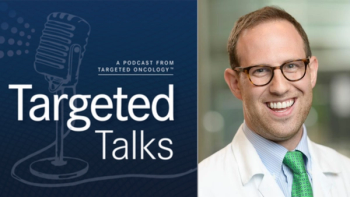
Benjamin Herzberg, MD, discusses KRAS-mutant non–small cell lung cancer, upfront biomarker testing, and the emerging RAS inhibitor toolkit on Targeted Talks.
Closing sessions at IMS 2026 featured MRD-guided treatment strategies, real-world CAR T-cell data, and mixed results on cilta-cel neurotoxicity prevention in myeloma.
Etentamig significantly improved response and survival over standard therapy in the phase 3 CERVINO trial, headlining day 3 of IMS 2026 myeloma coverage.
At IMS 2026, 7-year GEM2014MAIN data showed that half of patients who stopped MRD-guided maintenance remained progression free, and new data from DREAMM 9, MIDAS, and novel bispecific antibody studies were presented.
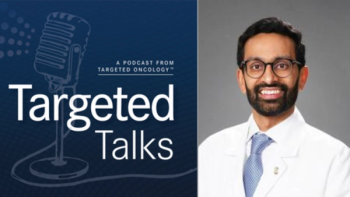
Dr Raj Singh previews key ASTRO 2026 data, from FMISO PET-guided de-escalation in HPV-positive head and neck cancer to SRS vs whole brain radiotherapy trials in brain metastases.
At IMS 2026, mezigdomide plus elranatamab yielded a 100% ORR in MELT-MM, while other abstracts covered cevostamab, anito-cel vs cilta-cel, and linvoseltamab in HR-SMM.
How a community center launches CAR T and bispecific care: managing CRS/ICANS outpatient, closing access gaps, adapting to REMS.

Updated TRUST-I and TRUST-II data show durable taletrectinib responses in ROS1+ NSCLC regardless of prior chemotherapy or fusion partner.

David DiBardino, MD, explains how intratumoral radioenhancer therapy works, why standardization remains a challenge, and what early CONVERGE study data suggest for locally advanced NSCLC.
Drs Aditya Shreenivas and Razelle Kurzrock break down a 200,000-tumor real-world study on HER2 IHC, ERBB2 alterations, and pan-cancer testing implications.
A single blood draw 3 to 9 weeks into immunotherapy predicted survival outcomes in metastatic non–small cell lung cancer, according to a new Johns Hopkins study.

Jonathan Villena-Vargas, MD, explains how a subcostal robotic approach avoids intercostal nerve damage, cutting pain post thoracotomy and reducing opioid use.
New data set reveals Asian American breast cancer survival advantage persists despite reproductive, lifestyle, neighborhood, and treatment factors, highlighting crucial ethnic and nativity differences.
Published: January 29th 2026 | Updated: March 17th 2026

Published: April 21st 2025 | Updated: June 25th 2025
January 12th 2024