


AML
Latest News

Advertisement
Latest Videos


















































Advertisement
More News

In the phase II biomarker-driven trial combining retinoic acid receptor alpha agonist SY-145 with azacitidine, newly diagnosed adult patients with RARA-positive acute myeloid leukemia who were unfit for intensive chemotherapy continued to show responses to the combination and demonstrate tolerability of the regimen, according to a press release from Syros Pharmaceuticals.

John DiPersio, MD, PhD, discusses targeted therapies for myeloid malignancies using DARTs, Bites, and antibody–drug conjugates, a topic he presented during the 2019 Society for Hematologic Oncology Annual Meeting.
Bemcentinib, a first-in-class AXL inhibitor, has been approved for a fast track designation by the FDA for the treatment of elderly patients with relapsed or refractory acute myeloid leukemia, according to a press release from BerGenBio.<br />
Ivosidenib in combination with azacitidine demonstrated promising efficacy in addition to being well tolerated in patients with newly diagnosed <em>IDH1</em>-mutant acute myeloid leukemia who were ineligible for intensive chemotherapy.
Among patients with acute myeloid leukemia and myelodysplastic syndrome who completed myeloablative allogeneic hematopoietic stem cell transplantation, the predictive utility of testing circulating tumor DNA was comparable with that of mutation persistence evaluation in matched bone marrow samples, according to a study published recently in Blood.
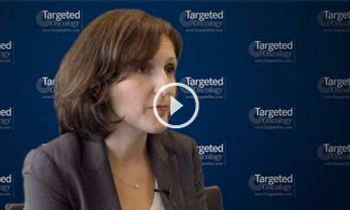
Gail Roboz, MD, discusses the use of FLT3 inhibitors as treatment of patients with acute myeloid leukemia, which can be a heterogenous and difficult-to-treat disease. There is a lot of optimism for new drugs and targets in AML, but the disease itself remains tough to treat, according to Roboz.
In an interview with <em>Targeted Oncology </em>during the 2019 SOHO Annual Meeting, John F. DiPersio, MD, PhD, discussed the challenges in research surrounding immunotherapies for AML, including DARTs, BiTEs, ADCs, and CARs.
In the phase III QUAZAR AML-001 trial, an investigational oral azacitidine therapy, CC-486, induced a statistically significant improvement in overall survival compared with placebo when used as a maintenance therapy in the treatment of patients with newly diagnosed acute myeloid leukemia who achieved a complete response or CR with incomplete blood count recovery following treatment with induction chemotherapy.
The FDA has granted a fast track designation to magrolimab for the treatment of patients with acute myeloid leukemia and myelodysplastic syndrome.
The addition of ixazomib to a combination of mitoxantrone, etoposide, and cytarabine demonstrated a promising rate of responses among patients with relapsed or refractory acute myeloid leukemia, according to the results of a phase I/II trial.
In an interview with <em>Targeted Oncology</em>, Robert L. Redner, MD, highlighted the new agents available for the treatment of AML and some of the ongoing studies that could impact clinical practice.
In an interview with <em>Targeted Oncology, </em>James McCloskey, MD, explained the need for consideration of elderly patients when designing clinical trials for <em>IDH</em>-mutated AML and other considerations when treating this patient population.
Patients with relapsed or refractory acute myeloid leukemia typically have low response rates to chemotherapy. However, some subsets of patients, particularly those with targetable mutations, may have long-term survival when given a novel FLT3 inhibitor like gilteritinib, as seen in the ADMIRAL trial, says Mark J. Levis, MD, PhD.
In an interview with Targeted Oncology, Richard M. Stone, MD, discussed the biggest controversies across a number of patient populations in AML. He also highlighted some areas of research he finds particularly exciting for the treatment of patients with AML.

The FDA has granted an orphan drug designation to MB-102, a CD123-directed CAR T-cell therapy, for the treatment of patients with acute myeloid leukemia.


Acute Myeloid Leukemia with Myelodysplastic-Related Cytogenetics
Over the past 2 years, the amount of FDA-approved frontline treatments for patients with acute myeloid leukemia have increased. These emergent treatments have caused a shift in the standard of care for patients with AML and inspiring analyses of regimens that researchers believe can improve outcomes for AML treatment.

Naval G. Daver, MD, discusses how the efficacy compares between first- and second-generation FLT3 inhibitors in acute myeloid leukemia.
In an interview with Targeted Oncology, Mark J. Levis, MD, PhD, discussed the findings from the follow-up analyses of the ADMIRAL trial that were presented at the 2019 ASCO Annual Meeting. He explained what these findings mean for the patient and what questions future research will aim to answer.
<em>FLT3</em> mutation analysis in laboratories has brought on reimbursement barriers in clinical oncology. Jordan Clark, chief commercial officer, Diaceutics, a diagnostic development and commercialization company, spoke to <em>Targeted Oncology</em> about the cause of reimbursement issues and how the problem affects all parties involved.
Advertisement
Advertisement
Trending on Targeted Oncology - Immunotherapy, Biomarkers, and Cancer Pathways
1
Plinabulin Receives FDA Fast Track Designation in Post-ICI NSCLC
2
FDA Oncology Recap: Approvals, Designations, and Decisions in September 2026
3
Denosumab Biosimilar Approved For Existing Oncology Indications
4
CEPHEUS and Frontline Treatment in Newly Diagnosed Multiple Myeloma
5