


GENITOURINARY CANCERS
Latest News
Advertisement
Latest Videos










































Advertisement
More News
Interim results reveal padeliporfin VTP therapy as a promising, safe treatment for low-grade upper tract urothelial cancer, preserving kidney function.
Sophia Kamran, MD, discussed the updated AUA guidelines on salvage therapy for patients with prostate cancer and their implications.

The PSMAddition trial shows 177Lu PSMA-617 significantly delays progression in mHSPC when added to hormone therapy, with a positive trend in overall survival.

Darolutamide is now an FDA-approved treatment option alone or in combination with docetaxel for metastatic castration-sensitive prostate cancer.

Alexander Kenigsberg, MD, discusses a new option for treating prostate cancer: robotic high-intensity focused ultrasound.
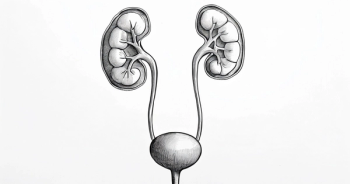
Lisa Herms, PhD, discussed findings from a retrospective analysis from the US community oncology setting on biomarker testing for bladder cancer.
Mack Roach III, MD, discussed a study on artificial intelligence’s generalizability for prostate cancer across racial groups.

Mack Roach III, MD, discusses concerns about how tariffs and restrictions on international collaboration could negatively affect cancer research and treatment.
Colin P.N. Dinney, MD, PhD, discussed updated analyses of the BOND-003 and CORE-001 trials in bladder cancer.
The FDA issued an RTF for sBLA of nogapendekin alfa plus BCG for BCG-unresponsive NMIBC papillary disease, following prior positive feedback.
Neal Shore, MD, FACS, discusses sasanlimab and its potential impact for community oncologists when treating patients with high-risk non–muscle invasive bladder cancer.
Jason M. Hafron, MD, discusses IsoPSA, a novel prostate-specific antigen assay for patients with a PSA > 4ng/ml who are facing a decision on prostate biopsy.

In an interview, Stacy Loeb, MD, discussed a study analyzing prostate cancer misinformation on social media.
Jethro C.C. Kwong discusses a novel artificial intelligence-based model, PROGRxN-BCa.
The first patient has been enrolled in a trial evaluating ClarityDX Prostate’s impact on early prostate cancer detection, biopsy reduction, and healthcare efficiency.
Experts developed consensus recommendations through the modified Delphi process for metastatic prostate cancer management during the 2024 US Prostate Cancer Conference.
The gene therapy nadofaragene firadenovec demonstrated strong clinical activity in Japanese patients with BCG-unresponsive non–muscle-invasive bladder cancer.
At AUA 2025, experts will present on novel bladder cancer therapies, advanced renal cell carcinoma comparisons, frailty in prostate cancer, and more.

During a live event, Matthew Galsky, MD, discussed adjuvant nivolumab in muscle-invasive bladder cancer and the benefit in patients with high PD-L1.

Nivolumab plus ipilimumab showed a strong median overall survival (OS) advantage at 12 months and a trend toward overall prolonged OS vs SOC in non-clear cell renal cell carcinoma.
A supplemental biologics license application has been submitted to the FDA for nogapendekin alfa plus Bacillus Calmette-Guérin in papillary non-muscle invasive bladder cancer.
During a live event, Matthew Galsky, MD discussed neoadjuvant and adjuvant options for a patient case including nivolumab or dose-dense MVAC.
The FDA has approved bevacizumab-nwgd, a biosimilar to bevacizumab, for intravenous use across multiple cancer types.
Cedric Pobel, MD, discusses how the results of the PEACE-1 trial support the use of radiotherapy plus standard of care and abiraterone in low-volume metastatic castration-sensitive prostate cancer.

Hedyeh Ebrahimi, MD, MPH, discusses updated data from a phase 1 study of CBM588, cabozantinib, and nivolumab in metastatic renal cell carcinoma.
Advertisement
Advertisement
Trending on Targeted Oncology - Immunotherapy, Biomarkers, and Cancer Pathways
1
Denosumab Biosimilar Approved For Existing Oncology Indications
2
Plinabulin Receives FDA Fast Track Designation in Post-ICI NSCLC
3
FDA Oncology Recap: Approvals, Designations, and Decisions in September 2026
4
Giredestrant Plus Everolimus Improves PFS in ER+ Advanced Breast Cancer
5