

GIST
Latest News
Advertisement
Latest Videos















































Advertisement
More News

Cabozantinib demonstrated clinical activity in patients with advanced carcinoid and pancreatic neuroendocrine tumors, according to the results of a single-arm phase II study.
In an analysis of 2 randomized trials,patients with advanced gastric or gastroesophageal juncture cancer derived a survival benefit from treatment with the monoclonal antibody ramucirumab, regardless of their age.<br />
Supporting the concept of post-progression survival and the influence of different patterns of progression, a new analysis showed patients with advanced HCC had a worse survival following progression if they developed new extrahepatic lesions as opposed to other types of progression.
Continuing trastuzumab beyond progression may improve survival in patients with HER2-positive advanced gastric or gastroesophageal junction adenocarcinoma who progress on first-line trastuzumab plus platinum-based chemotherapy.
Engaging in moderate physical activity daily was shown to reduce mortality and cancer progression in patients with metastatic colorectal cancer.
Patients with malignant gastric outlet obstruction who received surgical palliation maintained their quality of life and improved solid food intake for at least 3 months after surgery.
A novel combination regimen of ramucirumab plus pembrolizumab demonstrated modest activity in patients with previously treated gastric or gastroesophageal juncture cancer.
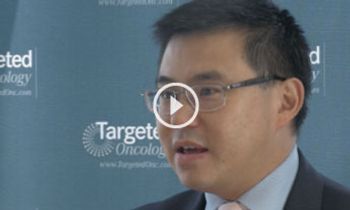
Ian Chau, MD, discusses interim safety and clinical activity results in patients with advanced gastric or gastroesophageal junction adenocarcinoma from a multi-cohort phase I study of ramucirumab plus pembrolizumab.
A watch-and-wait approach is emerging as a potential treatment strategy for patients with rectal cancer, according to the results of real-world data from a large observational study .
Pathologic complete response (pCR) rates were improved by switching neoadjuvant chemotherapy regimens based on PET imaging after induction chemotherapy in patients with esophageal and gastroesophageal junction (GEJ) cancers, according to findings from the phase II CALGB 80803 study.
According to findings from the phase III ONO-4538-12 trial, treatment with nivolumab (Opdivo) reduced the risk of death by 37% compared with placebo for patients with advanced gastric or gastroesophageal junction (GEJ) cancer following second or later-line chemotherapy.
Christophe Mariette, MD, PhD, surgical oncologist and professor of surgery, University Hospital of Lille in France, discusses a nationwide study investigating the impact of age and comorbidities on postoperative mortality after esophageal and gastric cancer surgery.
Tanios Bekaii-Saab, MD, professor of Medicine at Mayo Clinic, discusses optimizing sequencing beyond disease progression in colorectal cancer (CRC).
Maria Ignez Braghiroli, MD, discusses a study that parsed out patients with solely NRAS-mutated colorectal cancer, what the current treatment paradigm is for these patients, and how the mutation status of a patient with colorectal cancer may affect their treatment.

The combination of PEGPH20 with nab-paclitaxel and gemcitabine demonstrated improvements in progression-free survival compared with nab-paclitaxel/gemcitabine alone for untreated patients with advanced pancreatic cancer.
Tanios Bekaii-Saab, MD, discusses questions regarding regorafenib and TAS-102 in mCRC, compares the mechanisms of action and toxicities of both therapies, and shares his views on the optimal sequencing of the 2 agents.
Multidisciplinary tumor boards led to higher utilization of guideline-recommended curative therapies, which was associated with improved overall survival (OS) for patients with early-stage hepatocellular carcinoma.
Alan P. Venook, MD, discusses several of the big queries that remain in mCRC and the possible explanations for survival differences between left- and right-sided tumors. He also explained how answering these questions could pave the way for more novel treatment approaches.
The FDA has granted a priority review to a supplemental biologics license application (sBLA) for pembrolizumab (Keytruda) for previously treated patients with advanced microsatellite instability-high (MSI-H) cancer.

Tim F. Greten, MD, senior investigator, Thoracic and Gastrointestinal Oncology Branch, and head, Gastrointestinal Malignancy Section, National Cancer Institute Center for Cancer Research, discusses the possibility for immunotherapy in liver cancer.

Howard S. Hochster, MD, professor of Medical Oncology, and Yale Cancer Center Associate Director (for Clinical Sciences), discusses steps that can be taken to tackle some of the challenges that remain in the field of pancreatic cancer.

Early evidence suggests that the combination of locoregional therapy with an immune checkpoint inhibitor is a safe and effective strategy to pursue for patients with advanced hepatocellular carcinoma (HCC), according to a leading liver immunology expert.
Dafna Bar-Sagi, PhD, vice dean for science and chief scientific officer of NYU Langone Medical Center, and a senior member of its Perlmutter Cancer Center, was recently named a recipient of the Outstanding Investigator Award from the National Cancer Institute (NCI).

Maria Ignez Braghiroli, MD, medical oncologist, Instituto do Câncer do Estado de São Paulo, discusses how mutation status effects individualization of treatment in metastatic colorectal cancer (mCRC).
Charles S. Fuchs, MD, MPH, has been appointed the new director and physician-in-chief of Smilow Cancer Hospital at Yale Cancer Center (YCC) in New Haven, Connecticut.
Advertisement
Advertisement
Trending on Targeted Oncology - Immunotherapy, Biomarkers, and Cancer Pathways
1
Plinabulin Receives FDA Fast Track Designation in Post-ICI NSCLC
2
FDA Oncology Recap: Approvals, Designations, and Decisions in September 2026
3
Denosumab Biosimilar Approved For Existing Oncology Indications
4
CEPHEUS and Frontline Treatment in Newly Diagnosed Multiple Myeloma
5