



Liquid Biopsies
Latest News
Advertisement
Latest Videos














































Advertisement
More News

In an interview with <em>Targeted Oncology</em>, Kieron Dunleavy, MD, examined the role of liquid biopsy throughout the course of disease for all lymphomas, and specifically for patients with mantle cell lymphoma, and how its role may change in the future.
During an interview with <em>Targeted Oncology</em>, Aditya Bardia, MD, MPH, discussed the current role of both liquid biopsy and NGS in breast cancer management, improvements that are needed, and research that shows a promising future.
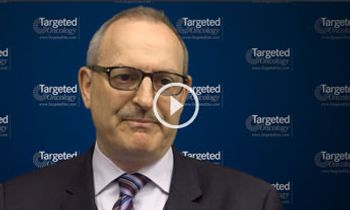
David Polsky, MD, PhD, discusses the findings from a liquid biopsy analysis of the COMBI-d trial, which is a phase III trial investigating the combination of dabrafenib and trametinib or dabrafenib alone in patients with BRAF V600E/K–mutant melanoma. Investigators found an association between the presence of baseline circulating tumor DNA (ctDNA) and a poor prognosis with the treatment of BRAF inhibitors.
In an interview with <em>Targeted Oncology</em>, David Polsky, MD, PhD, discussed the findings from this analysis in patients with <em>BRAF</em>-mutant, unresectable, metastatic melanoma. He highlighted the next steps necessary for validating these findings and potentially using ctDNA to help inform treatment decisions for patients with metastatic melanoma.
Alain Borczuk, MD, discusses the current role for liquid biopsies versus tissue biopsies in lung cancer and the challenges that need to be overcome in this space.
Charu Aggarwal, MD, MPH, the Leslye M. Heisler Assistant Professor for Lung Cancer Excellence at Perelman School of Medicine, University of Pennsylvania, and other researchers conducted a prospective study using next-generation sequencing as a biomarker to predict response and progression-free survival rates in patients with non–small cell lung cancer receiving pembrolizumab monotherapy. The data were presented during the 2019 ASCO Annual Meeting.
To move the treatment of colon cancer forward, investigators are identifying better biomarkers for response to adjuvant chemotherapy and as early indicators of chemotherapy success, said Jeanne Tie, MD, MBChB, to an audience at the ASCO: Medical Crossfire®: How to Use Liquid Biopsies in Oncology Care hosted by Physicians’ Education Resource®, LLC.
A new study shows comparability between liquid biopsy and tissue biopsy in both diagnostics and monitoring of non–small cell lung cancer (NSCLC). However, based on the results, liquid biopsies may be preferable to help oncologists make swifter decisions that help manage the disease.<br />
During an interview with <em>Targeted Oncology</em>, lead study author Dhruvajyoti Roy, PhD, the director of technology at Laboratory for Advanced Medicine, Inc., shared information about the study, commented on other liquid biopsy research presented by peers at ASCO and provided insight as to what these data mean for the future of cell-free DNA methylation.

Paul K. Paik, MD, discusses the benefits to using liquid biopsy compared to a tissue biopsy, particularly in the phase II VISION trial in which patients with non–small cell lung cancer harboring MET alterations were treated with tepotinib. Patients were divided into 2 cohorts based on whether they were enrolled with either a liquid biopsy or tumor biopsy.
By testing circulating tumor DNA at critical time points throughout neoadjuvant chemotherapy and cystectomy, clinicians may be able to better predict which patients with advanced bladder cancer would likely benefit from additional systemic therapies, according to results of a study published in the <em>Journal of Clinical Oncology</em>.
For detecting genetic drivers and molecular aberrations in patients with metastatic non–small cell lung cancer, performing biopsies with comprehensive cell-free DNA, or liquid biopsies, may be a viable substitute for tissue-based biopsies.
Benjamin P. Levy, MD, discusses the evolution of liquid biopsies in all solid tumors, especially in non–small cell lung cancer (NSCLC) where they are used routinely.

Pashtoon M. Kasi, MD, MBBS, MS, discussed the current role of liquid biopsies in patients with CRC, GI, and other types of cancers. He also highlights the advantages to making treatment decisions based on results from liquid biopsies.
Geoffrey R. Oxnard, MD, discusses testing error underlying liquid biopsy discordance. He also highlights steps clinicians can take to optimize liquid biopsies and where he sees this evolving in the treatment landscape for patients with cancer.
A new single-center report published in <em>JCO Precision Oncology </em>offers a proof of concept for using circulating tumor DNA to guide clinical decisions in high-grade serous ovarian cancer.

Significantly higher response rates were seen in patients with <em>ALK</em>-positive non–small cell lung cancer who had been treated with at least 1 prior ALK tyrosine kinase inhibitor before receiving lorlatinib and who harbored an <em>ALK </em>resistance mutation compared with those who did not have an <em>ALK </em>mutation.

Kristen Ciombor, MD, MSCI, discusses the promise of liquid biopsies in the rapidly evolving mCRC paradigm and the potential implications of the COLOMATE trial.
Aditya Bardia, MBBS, MPH, discusses the potential role of circulating tumor cells and circulating tumor DNA testing in patients with breast cancer.
In addition to confirming the utility of liquid biopsies to reliably detect guideline-recommended biomarkers in patients with stage IV NSCLC, findings from the NILE study also showed liquid biopsies have a quicker turnaround time compared with standard tissue-based assays, said senior study author Vassiliki A. Papadimitrakopoulou, MD.
During the 2019 AACR Annual Meeting, Vassiliki Papadimitrakopoulou, MD, professor of medicine, Department of Thoracic/Head and Neck Medical Oncology, The University of Texas MD Anderson Cancer Center in Houston, discusses findings from the NILE study and what they mean for the clinical utility of liquid biopsies for the detection of biomarkers in NSCLC.
Naiyer A. Rizvi, MD, explained, in a presentation at the European Society of Medical Oncology 2019 International Congress on Targeted Anticancer Therapies, that plasma assays for determining TMB are becoming more diagnostically relevant.
Guardant360—a 73-gene next-generation sequencing panel—detected all of the guideline-recommended biomarkers in patients newly diagnosed with metastatic non–small cell lung cancer at a similar rate, but in a faster turnaround time than tissue genotyping, according to data from the NILE study.
Massimo Cristofanilli, MD, discusses the clinical utility of liquid biopsies—specifically focusing on CTCs and cfDNA—and highlights ongoing research in the space.
In a presentation during the 2nd Annual Precision Medicine Through Plasma: Using Liquid Biopsies in Contemporary Oncology Care symposium, Bob T. Li, MD, MPH, explained ctDNA’s growing importance in lung cancer, given the disease’s challenging prognosis.
Advertisement
Advertisement
Trending on Targeted Oncology - Immunotherapy, Biomarkers, and Cancer Pathways
1
FDA Oncology Recap: Approvals, Designations, and Decisions in September 2026
2
Plinabulin Receives FDA Fast Track Designation in Post-ICI NSCLC
3
Denosumab Biosimilar Approved For Existing Oncology Indications
4
CEPHEUS and Frontline Treatment in Newly Diagnosed Multiple Myeloma
5