Richard Furman, MD, discusses how survival times for patients with chronic lymphocytic leukemia have increased dramatically in the past decade, thanks to an ever-expanding armamentarium of novel agents and more patients now being diagnosed earlier.

Richard Furman, MD, discusses how survival times for patients with chronic lymphocytic leukemia have increased dramatically in the past decade, thanks to an ever-expanding armamentarium of novel agents and more patients now being diagnosed earlier.
Novel agents and treatment strategies continue to expand the armamentarium in follicular lymphoma, explained John P. Leonard, MD, in a session at the <em>36th Annual </em>CFS<span style="font-size:10.8333px">.</span>
The high durable response rates seen with CAR T-cell therapies have helped fill a high unmet need for patients with relapsed/refractory diffuse large B-cell lymphoma, with questions remaining on the optimal way to use these agents following the FDA approval of 2 therapies in the past year, explained Anas Younes, MD, during a presentation at the <em>36th Annual </em>CFS.
Metastatic urothelial cancer is a relatively chemotherapy-sensitive malignancy. With contemporary cisplatin-based combination chemotherapy regimens, objective responses are achieved in approximately 50-60% of patients and complete radiographic responses are achieved in approximately 10-20% of patients.

H. Jack West, MD, a thoracic oncologist of Swedish Cancer Institute at Swedish Medical Center, discusses appropriate treatment for patients with stage IV adenocarcinoma who do not harbor oncogenic drivers.
For decades and even to this day, the foundation of metastatic bladder cancer therapy has been cytotoxic chemotherapy. In fact, until recently, the most significant breakthrough in treatment was in the 1980s, when cisplatin-based therapies, specifically MVAC, became the new standard of care.
Head and neck squamous cell cancer is relatively uncommon in the United States compared to other malignancies like non-small–cell lung cancer and breast cancer. There are about 500,000 cases worldwide every year.
Today, oncologists and their patients face disruptive changes in healthcare practice, medical research, governmental oversight and regulation, business practices, and physician –patient communication—changes brought on by the growth and merging of the fields of information technology, medical technology, medical practice, biology, and physics.
From the perspective of a patient and that patient’s family, it is completely understandable that the single most important goal of an antineoplastic strategy is to prolong survival and, if possible, produce a cure.
Ovarian cancer is the most lethal of the gynecologic malignancies. Over 22,000 new cases of ovarian cancer are diagnosed each year in the United States, resulting in more than 14,000 deaths per year.
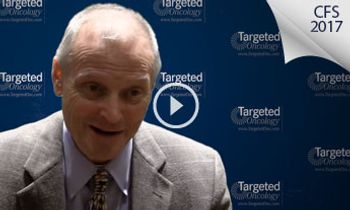
John L. Marshall, MD, chief, Division of Hematology/Oncology, Medstar Georgetown University Hospital director, Otto J. Ruesch Center for the Cure of Gastrointestinal Cancer, discusses the evolving paradigm of gastrointestinal cancers.

John O. Mascarenhas, MD, associate professor of medicine, Icahn School of Medicine at Mount Sinai Hospital, discusses the optimal use of ruxolitinib (Jakafi) and the improved understanding of JAK2 inhibition of polycythemia vera.
The goal of selecting optimal antiemetic therapy continues to be a moving target with the emergence of newer agents and patient-related risk factors, as well as the rapid evolution of guidelines for the management of chemotherapy-induced nausea and vomiting.
Over the past few years, remarkable advances have been achieved in the field of CLL by rationally targeting pathways overexpressed and used by the malignant clone for proliferation and survival. These developments have been achieved by a better understanding of the underlying biology and the disease process.
Checkpoint-based immune therapies have revolutionized the therapy of solid tumors by achieving breakthrough improvements in melanoma, lung cancer, renal cancer, bladder cancers, and head and neck tumors, among others.

Electronic health records have been heralded as a means of launching oncology into a precise and personalized world of medicine, but they have failed in many respects.
With olaparib approved and niraparib and rucaparib advancing through clinical development, PARP inhibition is becoming a valuable option in the ovarian cancer armamentarium.
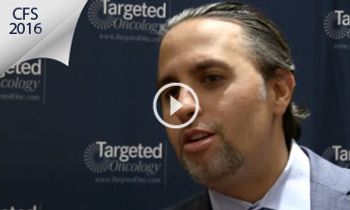
Omid Hamid, MD, chief, Translational Research and Immunotherapy, director, Melanoma Therapeutics, discusses current and emerging immunotherapeutic strategies in the field of melanoma during an interview at the 34th Annual Chemotherapy Foundation Symposium<sup>TM</sup>.

Findings from a highly anticipated, randomized, phase II trial could possibly pave the path for the FDA approval of the first targeted therapy for patients with triple-negative breast cancer (TNBC), explains Linda T. Vahdat, MD.<br />

Linda T. Vahdat, MD, PhD, Breast Cancer Research Program Leader at Meyer Cancer Center, Weill Cornell Medicine and NewYork-Presbyterian, discusses the current progress being made with glembatumumab vedotin in triple-negative breast cancer (TNBC) and what the future holds for this agent.
The use of neoadjuvant chemotherapy for the treatment of advanced ovarian cancer has risen dramatically in recent years, improving quality of life for patients and reducing morbidity, but challenges remain for oncologists looking to deploy this treatment approach in clinical practice.

When it comes to adverse events and duration of response, next-generation BTK inhibitors in chronic lymphocytic leukemia compare favorably with ibrutinib.
Immune checkpoint inhibitor development is progressing as treatments for patients with acute myeloid leukemia and myelodysplastic syndrome, with a number of studies currently assessing new combination strategies.

Ruben A. Mesa, MD, chair, Division of Hematology and Medical Oncology, deputy director, professor of Medicine, Mayo Clinic, discusses the NCCN Clinical Practice Guidelines for myeloproliferative neoplasms (MPNs) and who the recommendations will transition over the next year. Mesa spoke on the topic during an interview at the 34th Annual Chemotherapy Foundation Symposium™, held November 9-11, 2016 in New York City.
Studies testing immune checkpoint inhibitors in combination with other agents for the treatment of both Hodgkin and non-Hodgkin lymphoma are garnering attention among researchers.
The availability of several new treatments has dramatically transformed the treatment paradigm for multiple myeloma in the past few years.
The key to inducing durable responses with immunotherapy in multiple myeloma may depend on the effective use of combination strategies, particularly for the use of monoclonal antibodies.
Neoadjuvant chemotherapy is increasingly used in advanced ovarian cancer, even though it has not been shown to improve survival versus primary cytoreduction.

Dr. Deirdre Cohen talks about the increasingly big role of immunotherapies in the treatment of patients with gastric cancers.

While immune checkpoint inhibitors initially showed promise in patients with ovarian cancer, results still need to be validated by larger randomized trials.