
Holly Pederson, MD, and Elisha Hughes, MD, discussed the use of a polygenic risk score to identify why Black women incur higher rates of triple-negative breast cancer at younger ages.

Holly Pederson, MD, and Elisha Hughes, MD, discussed the use of a polygenic risk score to identify why Black women incur higher rates of triple-negative breast cancer at younger ages.

Sarah Sammons, MD, highlights the need for further investigation into trastuzumab deruxtecan in breast cancer treatment.

Erika Hamilton, MD, discusses the different classes of endocrine therapies and how they compare to one another.

Josep M. Llovet, MD, PhD, discussed the updated data from the LEAP-012 trial in intermediate-stage hepatocellular carcinoma.

Mark R. Litzow, MD, discusses the methods and design used in the ECOG-ACRIN E1910 trial.
Jacob E. Berchuck, MD, discusses the potential of liquid biopsies to enhance clinical decision-making regarding PSMA-directed therapies.

Erika Hamilton, MD, discusses how novel endocrine therapies improve treatment for metastatic breast cancer.
Erika Hamilton, MD, discusses some of the most promising endocrine therapies in breast cancer.

Janelle Vicens, DNP, APRN, FNP-BC, and Sandra Sepulveda, AGPNP-BC, MSN, BMTCN, discussed what went into developing this Malignant Hematology and Bone Marrow Transplant APP Fellowship.
Jacob Stein, MD, MPH, discusses how nab-sirolimus improves outcomes for patients with advanced perivascular epithelioid cell tumors compared with other treatments or no treatment options.
Noah S. Kalman, MD, MBA, discusses the most common types of thyroid cancer and their respective prognoses.

Following discussions on ado-trastuzumab emtansine and fam-trastuzumab deruxtecan-nxki, Tanya Gupta, MD, discusses sacituzumab govitecan and its approval from the FDA in the breast cancer space.

In an interview with Targeted Oncology, Erika Hamilton, MD, discussed emerging endocrine therapies that are advancing breast cancer treatment.
John Seymour, MD, discusses the development and clinical application of BCL-2 inhibitors for the treatment of CLL.
Tanya Gupta, MD, evaluates fam-trastuzumab deruxtecan-nxki and its role in breast cancer treatment.

In an interview with Targeted Oncology, Hina Saeed, MD, discussed how AI and radiomics are changing the landscape of radiation oncology.
Tanya Gupta, MD, discusses the use of ado-trastuzumab emtansine for the treatment of patients with HER2-positive breast cancer.
Sarah Sammons, MD, discusses some of the problems seen with brain metastasis in HER2-positive metastatic breast cancer.
Rebecca A. Shatsky, MD, discussed the I-SPY2.2 trial, its novel design, and its implications for the treatment of patients with breast cancer.
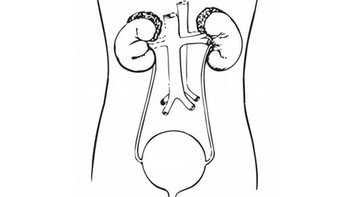
Bertram Yuh, MD, MISM, MSHCPM, discussed how single-port robotic surgery has changed treatment paradigms for patients with prostate cancer.
Robert L. Ferris, MD, PhD, highlights groundbreaking advancements presented at the recent World Congress on Lung Cancer held in San Diego, California.
Cyrus M. Khan, MD, highlights some of the most recent and significant advancements in chronic lymphocytic leukemia treatment.

Sergio A. Giralt, MD, discusses what the most commonly used conditioning regimens for patients with myelodysplastic syndrome undergoing transplants are.
Saad Z. Usmani, MD, MBA, FACP, FASCO, discusses the safety data from the phase 3 CEPHEUS trial in newly diagnosed multiple myeloma.

Aniket Bankar, MD, discusses why rusfertide is considered a promising therapeutic approach for patients with polycythemia vera.

Peter Schmid, MD, PhD, discusses the background, methods, and design of the phase 3 KEYNOTE-522 trial.

Anil Parwani, MD, PhD, discusses how he sees artificial intelligence technology contributing to personalized medicine and helping to tailor treatment plans for individual patients in the future.

In an interview with Targeted Oncology, Omar Nadeem, MD, discussed the first results from the Immuno-PRISM study in patients with high-risk smoldering myeloma.
In an interview with Targeted Oncology, Courtney Van Houzen, PharmD, shared her experience in bringing bispecific antibody treatments to a community setting.
John M. Burke, MD, examines how new obesity treatments, such as GLP-1 agonists, might influence future cancer rates.