Lawrence Fong, MD, discusses the systemic antitumor effect and clinical response in a phase II trial of intratumoral electroporation of plasmid interleukin-12 (IL-12) in patients with advanced melanoma.

Lawrence Fong, MD, discusses the systemic antitumor effect and clinical response in a phase II trial of intratumoral electroporation of plasmid interleukin-12 (IL-12) in patients with advanced melanoma.

Of the many signaling cascades being targeted for therapeutic intervention in cancer, one of the most important and best understood is the MAPK pathway, particularly the RAS/RAF/MEK/ERK cascade.
Igor Puzanov, MD, medical oncologist, Vanderbilt-Ingram Cancer Center, discusses the potential to partner T-VEC with a targeted agent for the treatment of patients with melanoma.

Several advances in the treatment of metastatic melanoma have occurred in the last 5 years, one of which has been the approval by the FDA of targeted treatments for patients with melanomas harboring a BRAF mutation.
Mario Sznol, MD, professor, Internal Medicine, Yale Cancer Center, discusses the potential for immunotherapy combinations for the treatment of melanoma.

Unlike many other types of tumors, melanoma can be detected early in its progression by visual, noninvasive methods.
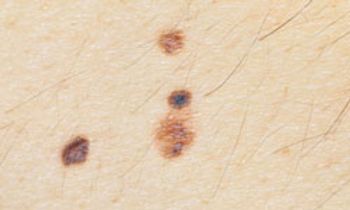
Only in the last 2 decades or so have sufficient data become available to statistically associate high mitotic rate with survival in melanomas.

Since the FDA approval of ipilimumab, there has been considerable interest in the potential for other immune system checkpoints, such as PD-L1 and its receptor, PD-1, to serve as therapeutic targets in metastatic melanoma.