Co-hosts Kristie L. Kahl and Andrew Svonavec highlight what to look forward to at the 67th Annual ASH Meeting in Orlando.


Your AI-Trained Oncology Knowledge Connection!
Co-hosts Kristie L. Kahl and Andrew Svonavec highlight what to look forward to at the 67th Annual ASH Meeting in Orlando.

Che-Kai Tsao, MD, MS, discusses new approaches that could change the standard of care for metastatic hormone-sensitive prostate cancer.
Peter Voorhees, MD, discusses the AQUILA study's impact on treating patients with high-risk smoldering multiple myeloma, paving the way for new therapies.

This discussion looks ahead at how the role of PD-1 inhibitors may continue to evolve in the treatment of esophageal squamous cell carcinoma (ESCC) and gastric or gastroesophageal junction (GEJ) cancers.
This discussion provides a forward-looking discussion on how the role of PD-1 inhibitors may continue to evolve in the management of esophageal squamous cell carcinoma (ESCC) and gastric or gastroesophageal junction (GEJ) cancers.
This discussion highlights several emerging therapeutic approaches that are shaping future directions in advanced gastric and gastroesophageal junction (GEJ) cancers.
This discussion outlines several emerging therapeutic approaches currently under investigation for advanced gastric and gastroesophageal junction (GEJ) cancers.
This discussion reviews the dosing flexibility available for PD-1 inhibitors used in advanced gastric and gastroesophageal junction (GEJ) cancers.
This discussion reviews the dosing flexibility available for PD-1 inhibitors used in advanced gastric and gastroesophageal junction (GEJ) cancers.
This discussion reviews the key safety considerations for checkpoint inhibitors used in advanced esophageal squamous cell carcinoma (ESCC) and gastric or gastroesophageal junction (GEJ) cancers.
This discussion reviews key safety considerations for immune checkpoint inhibitors used in advanced esophageal squamous cell carcinoma (ESCC) and gastric or gastroesophageal junction (GEJ) cancers.
This discussion reviews the ongoing HERIZON-GEA-01 trial, a global, randomized Phase 3 study evaluating zanidatamab as a potential first-line treatment for HER2-positive gastric and gastroesophageal junction (GEJ) adenocarcinoma.
This discussion reviews the ongoing HERIZON-GEA-01 trial, a global Phase 3 study evaluating zanidatamab as part of first-line therapy for HER2-positive gastric and gastroesophageal junction (GEJ) adenocarcinoma.
This discussion summarizes the KEYNOTE-811 trial, which evaluated the addition of pembrolizumab to trastuzumab and platinum-based chemotherapy for patients with previously untreated, HER2-positive gastric or gastroesophageal junction (GEJ) adenocarcinoma.
This discussion reviews the KEYNOTE-811 trial, which evaluates the addition of pembrolizumab to trastuzumab and chemotherapy in the first-line treatment of HER2-positive gastric and gastroesophageal junction (GEJ) adenocarcinoma.
This discussion provides a focused overview of the RATIONALE-305 trial, which evaluated tislelizumab in combination with platinum-based chemotherapy as first-line treatment for patients with previously untreated, HER2-negative gastric or gastroesophageal junction (GEJ) adenocarcinoma.

Emerging MRD tests show promise in enhancing breast cancer treatment by improving risk stratification and clinical outcomes for patients.
Expert explores innovative strategies for managing early stage breast cancer, focusing on minimal residual disease and potential treatment adjustments.
Early-stage breast cancer patients face challenges with ctDNA detection, highlighting the need for clinical trials to improve outcomes and reduce recurrence risks.
Explore the advancements in minimal residual disease (MRD) assays, comparing tumor-informed and tumor-agnostic methods for enhanced cancer detection and treatment strategies.
Panelists reflect on clinical experience with immunotherapy combinations, the role of biomarkers, and the future of personalized melanoma treatment.
Andrew M. Brunner, MD, discusses challenges and progress in identifying treatment for patients with transfusion-dependent myelodysplastic syndromes.
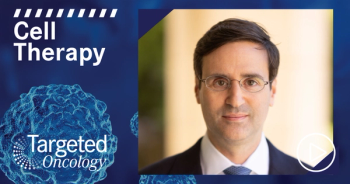
Dr. Christian S. Hinrichs discusses the future of specialized cell therapies, predicting broader access for community clinics similar to CAR T cell treatments.
Dr. Hinrichs emphasizes the critical need for early referrals and screenings for patients considering advanced cell therapies, enhancing treatment outcomes.
Panelists discuss real-world data comparing outcomes of different immunotherapy combinations for advanced melanoma.
Dr. Christian S. Hinrichs discusses promising results from a phase 2 study on engineered TCR-T cell therapy for HPV-associated cancers.
This discussion provides a focused summary of the RATIONALE-305 trial, which evaluated tislelizumab in combination with platinum-based chemotherapy as first-line treatment for patients with previously untreated, HER2-negative gastric or gastroesophageal junction (GEJ) adenocarcinoma. The discussion highlights the global, randomized design of the study and its key finding: adding tislelizumab to chemotherapy produced a statistically significant improvement in overall survival compared with chemotherapy alone. The benefit was observed in the intent-to-treat population and was greater in tumors expressing PD-L1 based on the trial’s predefined TAP scoring. Experts also note that the safety profile of the tislelizumab regimen was manageable and consistent with expectations for PD-1 inhibitors plus chemotherapy, with no new or unexpected toxicities reported. Overall, the segment underscores how the results of RATIONALE-305 support the role of tislelizumab-based therapy as an important emerging option in first-line treatment of advanced gastric or GEJ adenocarcinoma.
This discussion explores how tislelizumab’s unique Fc-region engineering may influence its activity in gastric cancer, particularly in patients with peritoneal metastases. Tislelizumab is designed to minimize binding to Fc-gamma receptors on macrophages, a modification intended to reduce macrophage-mediated clearance of activated T cells and help support a sustained anti-tumor immune response. This mechanism is scientifically relevant in the peritoneal cavity, where macrophages are abundant and can contribute to an immunosuppressive microenvironment. By limiting interaction with these cells, tislelizumab may offer a theoretical advantage in this difficult-to-treat subgroup. While this rationale is grounded in mechanistic biology, clinical validation is still needed to determine the extent of benefit in patients with peritoneal metastases. This segment highlights the scientific foundation behind tislelizumab’s design and its potential implications for addressing unmet needs in advanced gastric cancer.