

Videos
Martin E. Gutierrez, MD, director, Drug Discovery/Phase I Unit, and co-chief and medical oncologist, Divisions of Thoracic Oncology and Gastrointestinal Oncology, John Theurer Cancer Center, Hackensack University Medical Center, discusses the early findings for H3B-6527, an FGFR4 inhibitor, as a treatment of patients with hepatocellular carcinoma (HCC) or intrahepatic cholangiocarcinoma
Evan Y. Yu, MD, discussed the key takeaways from the phase Ib/II KEYNOTE-365 trial, which evaluated different novel pembrolizumab (Keytruda) combinations in patients with metastatic castration-resistant prostate cancer.
Charu Aggarwal, MD, MPH, the Leslye M. Heisler Assistant Professor for Lung Cancer Excellence at Perelman School of Medicine, University of Pennsylvania, and other researchers conducted a prospective study using next-generation sequencing as a biomarker to predict response and progression-free survival rates in patients with non–small cell lung cancer receiving pembrolizumab monotherapy. The data were presented during the 2019 ASCO Annual Meeting.
Ana Oaknin, MD, head of the Gynecologic Tumors Unit, Vall d’Hebron University Hospital, and principal investigator, Gynecological Malignancies Group, explains the rationale for analyzing anti–PD-1 monotherapy with dostarlimab in patients with microsatellite instability–high and microsatellite stable endometrial cancer.


Karim Fizazi, MD, PhD,head of the Department of Cancer Medicine, Institut Gustave Roussy, University of Paris-Sud, gives highlights on the updated findings from the phase III ARAMIS trial using darolutamide for the treatment of patients with nonmetastatic castration-resistant prostate cancer, recently presented during the 2019 ASCO Annual Meeting. <br />
Pancreatic cancer with <em>BRCA1</em>and <em>BRCA2 </em>mutations has shown positive responses to the PARP inhibitor olaparib in preliminary trials.





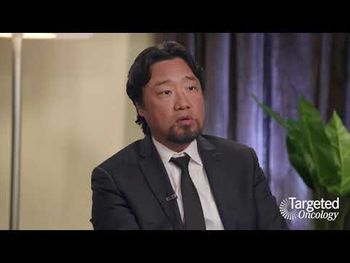


Jurgen Wolf, MD, discusses the importance of broad genomic testing to identify alterations in patients with advanced non–small cell lung cancer (NSCLC). By identifying molecular alterations and driver mutations early on, patients can receive matched targeted therapies at a time in the course of disease when the treatments would have the greatest impact.
Advertisement
Advertisement
Trending on Targeted Oncology - Immunotherapy, Biomarkers, and Cancer Pathways
1
Tarlatamab Shows Activity in SCLC With Brain Metastases in Real-World Cohort
2
Generic Larotrectinib Capsules Gain Tentative FDA Approval
3
FDA Grants Rare Pediatric Disease Designation to Opaganib for Neuroblastoma
4
ASCO 2026 Highlights: Breast & Lung Cancer Advances With Ajaz Khan, MD
5