
Commentary|Videos|January 20, 2026
Addressing Systemic Disparities and Targeted Marketing in Cancer Care
Author(s)Rebecca Siegel, MPH
Fact checked by: Sabrina Serani, Cheney Gazzam Baltz
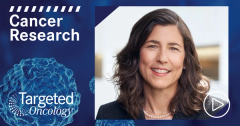
Rebecca Siegel, MPH, highlights alarming cancer disparities among American Indian, Alaska Native, and Black populations, emphasizing systemic issues over individual choices.
Advertisement

In part 3 of an interview with Targeted Oncology, Rebecca Siegel, MPH, cancer epidemiologist and senior scientific director of surveillance research at the American Cancer Society (ACS), discusses the ACS Cancer Facts & Figures 2026 report, of which she was the lead author.
The American Indian and Alaska Native (AIAN) populations face the highest cancer mortality rates and the least favorable survival trends in the United States. A primary driver of this disparity is their high incidence of lung cancer, which is intrinsically linked to smoking rates that remain significantly higher than the national average. Although public discourse often stigmatizes individuals with lung cancer, experts emphasize that these health outcomes are largely driven by predatory corporate strategies and systemic neglect rather than individual choice alone.
The Roles of Targeted Marketing and Poverty
Tobacco companies have historically employed aggressive, highly calculated marketing tactics to target marginalized groups, including people of color, low-income communities, and those living on tribal reservations. This targeted advertising, combined with disproportionate levels of poverty and significant geographic barriers to health care, creates a cycle of addiction and late-stage diagnosis.
In many tribal regions, the geographic distance to specialized oncology centers is a prohibitive barrier. Furthermore, the Indian Health Service (IHS), the federal agency responsible for providing health care to the AIAN population, is chronically and severely underfunded. This lack of resources means that many clinics are unable to offer even basic preventive services, such as routine breast cancer screenings or modern diagnostic imaging, leading to many cancers being caught only in their most advanced, less treatable stages.
Disparities in the Black Population
Significant disparities also persist within the Black population, which experiences the second-highest burden of cancer mortality. This is most starkly illustrated in prostate cancer outcomes. Black men face a disproportionate risk, with death rates that are 2 to 4 times higher than those of any other racial or ethnic group.
Although the biological reasons for the higher incidence of aggressive prostate cancer in Black men are not yet fully understood, the disparity in death rates is largely attributed to unequal access to high-quality care. When adjusted for equivalent access to treatment and early screening, these survival gaps often narrow, suggesting that the survival gap is a reflection of structural inequities in the health care delivery system rather than inherent biological differences alone. Addressing these outcomes requires not only medical innovation but also a concerted effort to address funding gaps in community-based health services.
REFERENCE
Siegel RL, Kratzer TB, Wagle NS, Sung H, Jemal A. Cancer statistics, 2026. CA Cancer J Clin. 2026;76(1):e70043. doi:10.3322/caac.70043
Advertisement
Related to this article
Recap the 4 late-breaking phase 3 trials from ESMO 2026 Presidential Symposium I in melanoma, bladder cancer, small cell lung cancer, and prostate cancer.

At Rutgers Cancer Institute, neuro-oncologists met to discuss the latest trends in precision brain cancer care with FET-PET imaging, advanced molecular testing, and same-day multidisciplinary clinics.
Four oncologists share their perspectives on what is still limiting access to CAR T-cell therapies in 2026.
Breakthrough targeted therapies—from KRAS and PROTACs to CAR T—plus ctDNA monitoring and personalized vaccines push earlier detection and smarter cancer treatment.
J. Thaddeus Beck, MD, discusses how the shift from intravenous to subcutaneous formulations is changing oncology practice, from clinic logistics to patient preferences.
Gary Simmons, DO, MSHA, discusses outpatient CAR T-cell therapy in the community, the operational and payer bottlenecks his practice has faced, and advice for colleagues.
Advertisement
Advertisement
Trending on Targeted Oncology - Immunotherapy, Biomarkers, and Cancer Pathways
1
Late-Breaking Phase 3 Data Headline ESMO 2026 Presidential Symposium I
2
Vopimetostat Plus Daraxonrasib Yields 82% ORR in MTAP-Deleted PDAC
3
Personalized mRNA Vaccine Intismeran Plus Pembro Cuts Melanoma Recurrence
4
Sunvozertinib Now Available in US for EGFR Exon 20 Insertion NSCLC
5