
Opinion|Videos|January 23, 2026
Later-Line and Combination Therapies in cGVHD and Future Directions
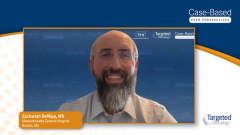
Author(s)Zachariah DeFilipp, MD
Explore innovative combination strategies for chronic GVHD treatment, focusing on emerging therapies and their potential to enhance patient outcomes.
Advertisement
Episodes in this series
Segment 7 addresses third-line and later treatment strategies as the patient develops progressive sclerotic skin disease and new pulmonary involvement despite ruxolitinib. Dr. DeFilipp discusses FDA-approved options in this setting, particularly belumosudil, a ROCK2 inhibitor, and axatilimab, an anti-CSF1R monoclonal antibody. Both agents demonstrated response rates exceeding 70% in registrational trials and target inflammatory and fibrotic pathways relevant to advanced cGVHD.
The segment emphasizes that no head-to-head data are available to define a preferred agent, making route of administration, patient preference, prior therapies, and disease manifestations key determinants of choice. Oral convenience often favors belumosudil, whereas axatilimab may appeal to patients seeking to reduce pill burden.
Dr. DeFilipp also explores real-world use of combination strategies, noting that maintaining ruxolitinib while adding another agent may preserve partial benefit and avoid disease flare. He concludes by highlighting ongoing trials investigating earlier use of targeted agents, with the goal of reducing steroid dependence, preventing fibrosis, and fundamentally altering the long-term course of chronic GVHD.
Advertisement
Related to this article

Giredestrant plus everolimus reduced the risk of progression or death by 44% in the ITT population and 62% in ESR1-mutated disease in phase 3 evERA data published in NEJM.

The oral azacitidine/cedazuridine combination was compared with subcutaneous azacitidine in the phase 3 portion of the AZTOUND trial.

Adding zabilugene almadenorepvec to standard gemcitabine/nab-paclitaxel extends survival and response in newly diagnosed metastatic pancreatic cancer, with manageable safety signals.
Late 2026 FDA oncology rulings may reshape care—from CSF-1R and ALK drugs to oral SERDs and BCMA CAR T breakthroughs.
Resubmitted FDA filing advances off-the-shelf EBV-specific T-cell therapy tab-cel for relapsed EBV+ PTLD after transplant, with longer follow-up.

Resection with cesium-131 tile-based radiation therapy prolonged time to surgical bed recurrence vs resection with stereotactic radiation in the phase 3 ROADS trial.

Degevma was approved for skeletal-related events in adults with bone metastases, giant cell tumor of bone, and the treatment of hypercalcemia of malignancy.
FDA fast-tracks plinabulin plus docetaxel for post-immunotherapy non-squamous NSCLC, as DUBLIN-4 phase 3 targets survival gains.
Advertisement
Advertisement
Trending on Targeted Oncology - Immunotherapy, Biomarkers, and Cancer Pathways
1
Denosumab Biosimilar Approved For Existing Oncology Indications
2
Plinabulin Receives FDA Fast Track Designation in Post-ICI NSCLC
3
FDA Oncology Recap: Approvals, Designations, and Decisions in September 2026
4
Giredestrant Plus Everolimus Improves PFS in ER+ Advanced Breast Cancer
5