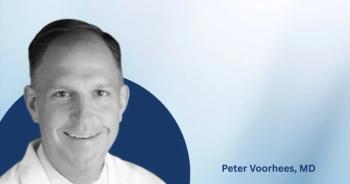
In an interview, Peter Voorhees, MD, discusses his presentation of the CERVINO trial data from the International Myeloma Society meeting.

Damon R. Reed, MD, compared the carefully considered off-label use of trastuzumab deruxtecan with a clinical trial experience in 2 rare sarcoma subtypes.
Although hundreds of drugs targeting numerous actionable alterations have been developed across the cancer landscape, matching targeted therapies to other diseases where the same alterations play a role is far from straightforward. The logistics and expenses of clinical trial development can lead to rare diseases being overlooked, blocking the advancement of clinical data on a drug’s efficacy and denying patients access to life-changing treatment.
For this reason, off-label treatment may be used in patients with few other options, but this is an uncommon option with its own barriers. The antibody-drug conjugate trastuzumab deruxtecan (T-DXd, Enhertu), targeting the ERBB2 oncogene in HER2-positive or HER2-low breast cancer, has shown success in other malignancies with high HER2 expression as well, leading to interest from sarcoma specialists. In a commentary published in JCO Oncology Advances, Emily Slotkin, MD; Damon R. Reed, MD; and their colleagues at Memorial Sloan Kettering Cancer Center discussed a unique pairing of experiences with the same drug in 2 sarcoma subtypes where it had not been approved before: one a small clinical trial in osteosarcoma, and the other a case series of off-label T-DXd in desmoplastic small round cell tumor (DSRCT).1
In an interview with Targeted OncologyTM, Reed, head of the Solid Tumor Oncology Division in Pediatrics at Memorial Sloan Kettering Cancer Center, discussed his takeaways from the comparison between the 2 paths used to ensure patients in need could access T-DXd outside an approved indication. Although he stressed that off-label treatment is not a substitute for the rigor of clinical trials, the complementary role it plays is valuable to understand as precision oncology identifies more ways to individualize cancer treatment.
Damon R. Reed, MD: There [are] a lot of stakeholders involved in the development of new agents for rare sarcomas. It's best to think about all the variables for context. For example, there are major differences in our off-label discussion if we are talking about an FDA-approved and generic drug that's been around 50 years vs a preclinical medicine that has no FDA indication and has never been given to a person before. Sometimes people conflate those two very different things. There [are] lots of stakeholders in trials and off-label use, and the patients should be considered first. The other stakeholders are the physicians, pharmacists, hospital research teams, clinical trialists, regulators, institutional review boards, sponsors, and payers.
Aligning all those stakeholders to the patient's wishes is a major challenge. It's a lot easier when the safety signal is very clear. It gets more difficult the less known about the agent, the more expensive the agent is, and the more disagreement there is amongst the stakeholders concerning the agent’s use in the context of the goals for drug development. Aligning the massive teams with different incentives and goals can be a challenge.
T-DXd is an amazing drug that had a
My personal story with this molecule dates back about 7 years, when I was involved in a concept proposal to do this study in osteosarcoma. We worked with the company, the Cancer Therapy Evaluation Program, and the FDA, and we wrote a very careful, prescriptive trial [NCT04616560] where everyone was aligned. It took a few years to get that trial from the idea stage to a patient, and we treated 9 patients with osteosarcoma with the drug. We developed a new assay to see if we could find patients with HER2 staining, and we were trying to enrich for patients who had osteosarcoma and had HER2 activity.
Unfortunately, 8 patients came off [treatment] before or at the first evaluation...about 6 weeks later.… After that, without responses, the decision was made that [there] was not enough signal to move forward, and so that study closed.2
[We achieved] milestones like publishing, presenting the results, [and] enrolling patients, but unfortunately, the thing that was missing in that trial was a clear clinical benefit, which is the primary reason for doing these trials.
My other experience with T-DXd in sarcomas is more observational. There was a preclinical signal with both mouse models and with patient RNA sequencing [RNAseq] data for DSRCT seen at MSK Kids through extraordinary efforts here to more deeply characterize pediatric cancers.3 This finding was a team effort, and the translation of it was led by Emily Slotkin, MD, who is the other author of the commentary, and is, without a doubt to me, the world expert on this disease. She was trying to do the same thing that we were doing with osteosarcoma by aligning stakeholders and trying to get access to treat DSRCT. She was not having the same success, for reasons beyond her control. There were more data supporting T-DXd use in DSRCT than in osteosarcoma, but it's a rare tumor, and it just didn't align for all the stakeholders to proceed with a clinical trial for DSRCT 7 years ago.
I want to be very clear that no one set out to treat 19 patients with off-label use of a drug instead of a trial. We would have preferred to do a trial.
Dr Slotkin had a patient who was not doing particularly well, and the expression of HER2 in her tumor was rather high, and since this was FDA approved and had a safety profile in breast cancer…we did not think it was investigational enough that we needed to get an IRB [institutional review board]. She did proceed and found a way to get it paid for and proceeded to give the patient the medicine under Dr Slotkin's care.
What she saw and what the patient experienced in terms of benefit was enough that it was offered to other patients, and it seemed in real time better to continue to offer this to other patients off-label rather than wait for a clinical trial, and so she treated 19 patients. There was clear clinical benefit, but there was no clinical trial, just off-label use. That decision not to wait for everything to happen benefited patients.
We did not identify a concerning or new safety signal in either experience.2,3 We had more formal rules around the clinical trial, but we did not think that the verbal aspect of consent was that much different. We have written consent for off-label usage at our institution in pediatrics as well, though admittedly, there was no IRB involved in off-label usages because it's under the scope of typical medical practice.
We found efficacy to be dramatically different activity between the off-label use in DSRCT and the osteosarcoma clinical trial. Other academic metrics were also tracked, and the key findings were presented at a conference quicker in the off-label setting, and the publication also occurred quicker. We also found that the off-label use provided the critical data that the preclinical data could not, which convinced stakeholders to develop a trial in DSRCT. Without the off-label usage, I don't know that we would have ever had a clinical trial.
I want to be very clear that no one set out to treat 19 patients with off-label use of a drug instead of a trial. We would have preferred to do a trial.... If you're sitting across from a single patient, and there's an agent that you have access to, and the trial isn't just going to align for that single patient, that patient is going to run out of time. We try to ask questions and consider all the areas of those aspects without making a very firm recommendation.
When we say off-label, that means that we are only talking about agents that are FDA-approved for some indication. In order to be FDA-approved, they must have gone through phase 1, phase 2, and often phase 3 trials. There is a known safety and efficacy signal. Physicians can prescribe those off-label for anything.
I think it's a creative and promising way to investigate agents in our patients who want to, and are very well informed, where we think that there might be some benefit. I wouldn't want it to be instead of an active clinical trial that's available, but in a case where people have tried their hardest to get access through a clinical trial, and one does not exist, off-label use is definitely justified with the appropriate guardrails, and the experience that Dr Slotkin pioneered...was successful. I hope that people learn from it and are able to also get better access for our patients through a similar process. It was very careful and academic as well, which is important.
We are more than a decade into next-generation sequencing [NGS]. We have a good sense in the sarcoma community of when NGS is beneficial. When the sarcoma diagnosis isn't particularly clear, sequencing at the DNA and RNA level can reveal translocations and mutations that can clarify a diagnosis, and sometimes even get a patient to match [to a] therapy. Sometimes that's a dramatic difference. If you find a fusion of a kinase, often the therapy goes from being cytotoxic and with a poor response, to a very targeted therapy with lower [adverse events] and much more benefit.
The antibody-drug conjugates specifically have now brought in a new level of need that is still unmet in terms of what exactly is the biomarker and what's the best assay. We have been using RNAseq in a research perspective to try to identify targets, and in this case, that was a source of HER2 being interesting in DSRCT. We did not find the HER2 immunohistochemical protein staining to be as tightly tied to benefit as RNA expression…. That's an open question, what the right panel test is to try to get matched patients to investigational therapies for antibody-drug conjugates.
Some experts have thought we would need to do protein assays and immunohistochemistry rather than RNAseq…. But that is part of the struggle and challenges…what is the biomarker that would help? For T-DXd, it's not totally clear that HER2 is the biomarker, certainly in sarcomas. From what I've seen presented in breast cancers, it's not a linear relationship between HER2 expression and antitumor activity.
My advice would be, if there is an agent that an individual clinician feels has a risk-benefit analysis, where the risk is relatively low, and the benefit is potentially high, and there are patients willing and eager to try that, it's amazing what you could learn from a few patients that you could never generate with all the preclinical evidence in the world.
The complicated thing...is you have to be clear when you are trying to do clinical care, and when you're doing research. If you're thinking, "It would be cool to give a patient this agent, and I could write a paper about it," that is a completely wrong way to approach off-label usage of an agent. If you think this could help this patient, that is a great first step, and then you have to go through the risk and benefit.
I have the great benefit of working with many sarcoma experts here at Memorial Sloan Kettering Cancer Center, and in this case, there were a lot of checks and balances internally and a lot of discussions amongst care teams and even people outside the sarcoma field to say, "We're going to do this. What do you think?"
In this case, there was a shared belief amongst people that this agent in this rare tumor was the best suite of evidence that we had in the preclinical space that this could be beneficial, and that was the reason we tried it. I would not say that we are…doing 50 different off-label uses in 50 different cancers, and any hint of an activity [would] lead us to treat 19 patients. It's quite the opposite. We felt like we had an overwhelming case to get access to this drug for a clinical trial, and we were unsuccessful in doing that, and so we were forced to do it this way.
Access to agents is always going to [require] advocacy or education in sarcomas. We'll always be worse off for access, and so will our patients. We must try to continue to advocate and move on that.… The incentives are not perfectly aligned, and that is the challenge with rare diseases.