
Commentary|Videos|June 2, 2026
Targeting the IL-2 Pathway to Overcome Immunotherapy Resistance in Melanoma
Author(s)Meredith McKean, MD
Fact checked by: Jonah Feldman
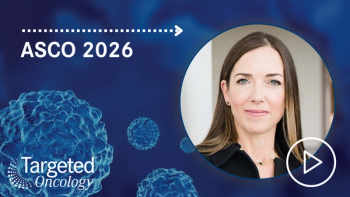
Meredith McKean, MD, discusses promising results from a trial of imneskibart with low-dose IL-2 and nivolumab in advanced melanoma.
Advertisement
Meredith McKean, MD, MPH, director of Melanoma & Skin Cancer Research for Sarah Cannon Research Institute, discusses the findings of a phase 1/2 study presented at the ASCO 2026 Annual Meeting evaluating imneskibart, an investigative monoclonal antibody, in combination with low-dose subcutaneous interleukin-2 (IL-2) and nivolumab (Opdivo). This novel therapeutic approach specifically targets the IL-2 pathway to inhibit regulatory T cells (Tregs) while simultaneously stimulating natural killer (NK) cells and effector T cells to mount an anti-tumor response.
This combination regimen addresses a critical therapeutic gap in advanced melanoma care. Clinicians frequently face challenges trying to find an effective immunotherapy once a patient relapses or proves to be primary refractory to standard frontline combinations, such as ipilimumab (Yervoy) plus nivolumab or nivolumab/relatlimab (Opdualag). Outside of standard targeted therapies, the only other approved option in this refractory space is the tumor-inflitrating therapy lifileucel (Amtagvi), which remains accessible only to a limited patient population.
A major highlight of the study is its favorable safety profile. High-dose IL-2 therapy has historically been restricted by severe toxicities, including fever, chills, and life-threatening hypotension that required intensive hospital monitoring. In contrast, the imneskibart-based regimen proved to be well tolerated and highly manageable. Patients experienced routine fever and chills but did not experience life-threatening hypotension. Crucially, the treatment was delivered entirely in an outpatient setting without any mandatory hospital admissions.
The early efficacy signals are equally promising. Among the 12 evaluable patients who had already experienced progression on standard checkpoint inhibitors, the combination achieved a partial response rate of 33.3% (4 out of 12 patients). These responses were notably deep and durable. Moving forward, the trial continues to enroll refractory patients, including those with BRAF mutations who have progression on or refused targeted inhibitors, with next steps focused on evaluating long-term pharmacodynamic measures to better understand the therapy's mechanism of action.
Advertisement
Related Content
Advertisement


































Advertisement
Advertisement