Multiple oncologists share their perspectives on what is still limiting access to CAR T-cell therapies in 2026.

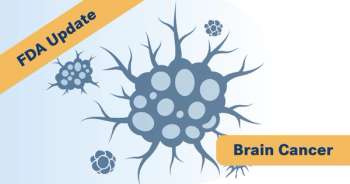
At Rutgers Cancer Institute, neuro-oncologists met to discuss the latest trends in precision brain cancer care with FET-PET imaging, advanced molecular testing, and same-day multidisciplinary clinics.
Although standard of care for primary brain tumors has not changed much in decades, the field is moving quickly in new directions using novel imaging, molecular targeting, and multidisciplinary approaches. At the second Annual International Brain & Spine Tumor Symposium on September 24, 2026, hosted by the Rutgers Cancer Institute and RWJBarnabas Health in New Brunswick, New Jersey, experts gathered to share a vision for how neuro-oncology could adopt the individualized approach that has proved successful in many other cancers.
“Brain tumors need to be treated like other cancers. They need a personalized approach,” said Morana Vojnic, MD, MBA, in an interview with Targeted OncologyTM during the symposium.
Vojnic, director of neuro-oncology at Rutgers Cancer Institute and system leader for neuro-oncology at RWJBarnabas Health, explained why
Morana Vojnic, MD, MBA: This is our second annual International Brain & Spine Tumor Symposium we're organizing here at Rutgers and [RWJBarnabas Health] in collaboration. We're trying to highlight [what] happened in neuro-oncology in the last 12 months. We have approximately 16 guest speakers. 13 are in person, and we're hearing several different talks of novel technologies [and] novel therapies people are developing. We are discussing the recent FDA approvals, how the field has changed, and where the field is going in the future.
What we're trying to highlight as an institution is the importance of tertiary brain tumor care. For primary and secondary brain tumors…a tertiary center where there is multidisciplinary care composed of neuro-oncology, medical oncology, radiation oncology, and neurosurgery in…a [NCI]-designated center is of crucial importance for the best outcomes.
In addition, we're trying to emphasize the importance of advancing the field [such as] the importance of clinical trials, because realistically, the standard of care for primary brain tumors has not changed much in the past few decades. Therefore, the importance of advancing the field and clinical trials is highlighted, and that's what we're trying to emphasize: all the clinical trials we also have available here at Rutgers and at [RWJBarnabas Health].
From the last 12 months, the highlight is the FDA approval of FET-PET. FET-PET is an imaging modality now approved for gliomas.1 When a patient with a glioma gets standard-of-care surgery and then radiation and chemotherapy, approximately 30% to 50% of them will develop pseudoprogression…meaning, because of the radiation therapy and the treatment the patient has gotten to the brain, there can be changes on the regular MRI that look like the tumor is coming back much sooner than anticipated. Back in the day, a lot of the times these patients would undergo another surgery, and then we would realize it is radiation necrosis or radiation treatment effect. We've been trying for years to develop these novel imaging modalities. We have MRI perfusion and MR spectroscopy, which are not ideal tests. The sensitivity between detecting an actual tumor vs radiation treatment effect is between 60% to 80% percent.
With the advent of advanced technologies and the approval of FET-PET, we have another modality we can use… [This] spares the patient change in treatment [and] gives you more confidence that you can stay on the current therapy, because realistically, if something is not a tumor, [then] over time, it's going to go away. If something is a tumor, [then] over time, it's going to grow. Giving these patients more time on the current treatment and delaying other treatment until true progression is very important, and not needing to do another procedure is very important. [That] is one major approval that happened in September this year that is important to highlight.
Another thing that is important to highlight is that our neuro-oncology guidelines and NCCN guidelines have recommendation for leptomeningeal disease.2 Leptomeningeal disease is a complication of cancer that happens when tumor cells spread inside the cerebrospinal fluid [CSF], so it goes to the central nervous system axis, and it can spread throughout the [CSF]. Typically, leptomeningeal disease carries a very poor prognosis, but we haven't been that good at not only detecting it—because of the sensitivity of the standard test—but also at being able to monitor it. MRI imaging is very subjective, and cytology is a very poor sensitivity test, so we've been relying on a combination or multitude of factors, which is not ideal.
Several assays have been developed, where you could detect circulating tumor cells in the [CSF] with different assays by looking at EpCAM [epithelial cell adhesion molecule] and other epithelial markers, or you could detect cell-free DNA within the [CSF], …By monitoring these concurrently with the standard testing, you can increase your sensitivity, increase your specificity, and for monitoring, you can…not only use MRI imaging, but also use these advanced technologies. It's important for medical oncologists to know when they have a patient with leptomeningeal disease or suspicion for leptomeningeal disease [that] standard testing is not sufficient. If available, other testing should be also done. The [CSF] should be assayed for advanced molecular testing and circulating tumor cell quantification because it does aid in future management of the patient.
When we talk about primary brain tumors, the WHO 2021 classification has changed even how we diagnose these patients. IDH-wild type astrocytoma does not exist anymore because now we know anybody with an astrocytoma who does not have an IDH mutation [has] glioblastoma.4 This was done over studies where we retrospectively looked at [patients] without the IDH marker vs [patients] with IDH1 or IDH2. The ones without did worse in terms of overall survival, whereas the ones with IDH1 or IDH2 did better.3,4
Now we know glioblastoma is a completely separate entity [that] cannot have the IDH mutation, and that has changed drastically our field, not only in terms of prognostication, but also looking backwards, all the clinical trials that were conducted for the field and for the disease, we have to specifically look at the subgroup analysis for those patients who [had] true glioblastomas, or for those patients who [had] IDH-mutant astrocytomas, and that applies also to the clinical trials where we were trying to ascertain IDH-mutant astrocytoma or astrocytoma grade 3 or grade 2 results. Now we have to retrospectively look at that.
That changed our field but also opened a lot of opportunity. Now we know somebody with an IDH mutation, if they have a low-grade IDH-mutant tumor, they could benefit from an IDH inhibitor, for example, or we have clinical trials. We have clinical trials open that even if it's a high-grade glioma with an IDH mutation, after completion of your standard treatment, where you would traditionally just be observed with MRIs, you could go on a clinical trial and get a drug that could potentially prolong your progression-free survival.
Molecular testing…has changed how we manage [patients] in the standard-of-care setting. For example,
At Rutgers, we've developed a robust neuro-oncology program, which is composed of several medical oncologists, neuro-oncologists, radiation oncologists, and neurosurgeons, neuropsychologists, palliative care [physicians], [and] psycho-oncologists.
We have a very big group, and we have a multidisciplinary clinic in addition to that, where we all are able to see the patients at the same time in the same clinic, in the even the same exam room, so it's convenient for the patient.
The reason why we do it like that is we were thinking about it from a patient perspective. If I would be told, "You have a brain tumor," what would you want to do? You would want answers right away. With our multidisciplinary approach, you get the opportunity to come in, and you get to see 3 specialists at the same time, one after another. They have talked about your case, and now they're talking to you and they're giving you recommendations, and they're all synchronized in what they're saying, and they're giving you opportunities right away: "You could do this [or] you could do this, and we have these clinical trials available for you." For the patients, that gives a sense of relief because they get all the information and all the answers right away. It decreases the anxiety but also gives confidence in the team because we communicate and talk to each other, and that's visible in this multidisciplinary approach.
A lot of institutions, including ours, have oncology multidisciplinary tumor boards where we discuss the cases, but it's different when you get to see the patient in a multidisciplinary clinic, everybody at the same time, because you're giving the recommendations to the patients, so you're decreasing that anxiety that any human being would have after being told they have a brain tumor.
The multidisciplinary approach is not only for clinics; it's also advancing the field. For example, at Rutgers, we have great collaborations with our translational research labs, and we do several studies that involve a clinical component and a translational component. We have collaborators doing experiments in mice and in cell lines, and exploring novel treatments or novel combination therapies, and then relaying that in the form of a clinical trial to clinic. It's not only advancing the field but also helping the patient and giving them opportunities for a disease that traditionally has not had many opportunities.
The field of neuro-oncology…is finally moving in a way where it's becoming more like other cancers. …Brain tumors need to be treated like other cancers. They need a personalized approach. Patients require advanced molecular testing because, [although] the field has not changed in a long time…the field is changing right now. Seeking out extra information to develop the field, and…to help your patient is very important.
What I'm most excited about is now that we have the advanced imaging modalities to be able to differentiate between tumor and treatment effect [and] now that we have advanced molecular diagnostic techniques, where we're able to sample the CSF and look at an expanding panel of genes and quantify the amount of tumor in the CSF, now that we know what is more going on, we can also try to predict and manage what's going to happen in the future. With all these novel therapies that are approved for other types of cancer, like antibody-drug conjugates, [chimeric antigen receptor T-cell therapy], vaccines, all these things are now moving in the primary brain tumor field, and therefore several trials are being conducted because we have more information on the biology of these tumors.
In the next 3 to 5 years, neuro-oncology will be more like the treatment of metastatic non–small cell lung cancer. Primary brain tumors…affect more than 15,000 [patients] in the United States per year. It's a rare disease, when thedefinition of rare is less than 200,000 cases a year, but you have primary brain tumors, [and] you have secondary brain tumors, which happen in 250,000 patients per year, and all of this is managed by a neuro-oncology team. Therefore, treating it as any other form of cancer that is widely more common is key to moving the field forward.
We’re trying to educate but also spread the word about we what we can do in neuro-oncology at Rutgers and at [RWJBarnabas Health]. This cancer center is one of the 12 freestanding NCI-designated cancer centers in the United States, and it's the only one in New Jersey. We have a large multidisciplinary team. We have advances in the field: preclinical, translational, and clinical. We have clinical trials available, and we're trying to educate the community and all our practitioners not only within the neuro-oncology field but also general medical oncology [and] surgery, to be aware of all the advances that are happening in the field and what we're doing, [and] how the field is going to move in the next few years.