
During a live virtual event, Martin F. Dietrich, MD, PhD, discussed the results of the EMPOWER-Lung 1 and EMPOWER-Lung 3 trials of cemiplimab for non–small cell lung cancer.

During a live virtual event, Martin F. Dietrich, MD, PhD, discussed the results of the EMPOWER-Lung 1 and EMPOWER-Lung 3 trials of cemiplimab for non–small cell lung cancer.

During a Targeted Oncology case-based roundtable event, Dipenkumar Modi, MD, and participants discussed the leading later-line therapy options for patients with diffuse large B-cell lymphoma.
During a live virtual event, Thomas Hutson, MD, PharmD, discussed the 4 frontline combination regimens including immunotherapies and tyrosine kinase inhibitors. This is the first of 2 articles based on this live event.
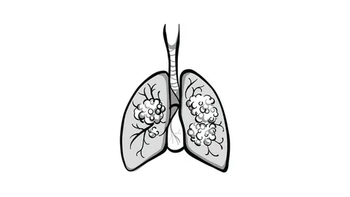
At a live virtual event, Devika Das, MD, discussed the use of immunotherapy for patients with extensive stage-small cell lung cancer (ES-SCLC) and for patients with non–small cell lung cancer.
During a Targeted Oncology case-based roundtable event, Hana F. Safah, MD, discussed risk factors for acute graft-versus-host disease and data supporting treatment for steroid-refractory disease.

During a Targeted Oncology case-based roundtable event, Chung-Han Lee, MD, PhD, discussed the approved frontline regimens for patients with advanced clear cell renal cell carcinoma.

During separate virtual live events, Sandy T. Liu, MD, and Moshe Ornstein, MD, MA, discussed what treatment they would choose for a patient with clear cell renal cell carcinoma and the trial data available in this setting.
During a Targeted Oncology case-based roundtable event, Elizabeth Ann Mittendorf, MD, discussed with participants their choice of treatment after progression for a patient with triple-negative breast cancer treated with adjuvant dose-dense doxorubicin plus cyclophosphamide with paclitaxel. This is the first of 2 articles based on this event.

During a Targeted Oncology case-based roundtable event, Sheela Tejwani, MD, discussed therapy options for a patient with metastatic castration-sensitive prostate cancer.

During a Targeted Oncology case-based roundtable event, Matthew Powell, MD, discussed trials supporting the use of the PARP inhibitors niraparib and olaparib for patients with BRCA-positive ovarian cancer.
During a live virtual event, Adam M. Schoenfeld, MD, discussed results of the KEYNOTE-407 trial of patients with advanced squamous non–small cell lung cancer in terms of PD-L1 expression. This is the second of 2 articles based on this event.
During a Targeted Oncology case-based roundtable event, Rana R. McKay, MD, discussed the case of a patient who progressed following treatment with axitinib and pembrolizumab for clear cell renal cell carcinoma.
During a live virtual event, Roby A. Thomas, MD, discussed the choice of therapy for a patient with metastatic castration-sensitive prostate cancer.
During a Targeted Oncology case-based roundtable event, Mohamed K. Mohamed, MD, PhD, discussed with participants the challenges of treating extensive-stage small cell lung cancer and their views of the CASPIAN and IMpower 133 trial results.
During a Targeted Oncology case-based roundtable discussion, Mehdi H. Hamadani, MD, discussed systemic therapy options for relapsed/refractory diffuse large B-cell lymphoma.
During a Targeted Oncology case-based roundtable event, Larry D. Anderson, MD, PhD, discussed the results of the DREAMM-2 trial and management of belantamab mafodotin for patients with multiple myeloma.
During a live virtual event, Ulka N. Vaishampayan, MBBS, discussed the choice of first-line therapy for clear cell renal cell carcinoma and whether the approach to treatment would change with other disease histologies.
During a live virtual event, Caitlin Costello, MD, discussed the rationale for choosing a triplet or quadruplet regimen for patients with transplant-eligible newly diagnosed multiple myeloma.
During a Targeted Oncology case-based roundtable event, Cyrus M. Khan, MD, discussed the data supporting the use of polatuzumab, bendamustine, and rituximab, tasfasitamab plus lenalidomide, and loncastuximab tesirine in patients with relapsed/refractory diffuse large B-cell lymphoma.

During a Targeted Oncology case-based roundtable event, Ghassan K. Abou-Alfa, MD, discussed therapeutic sequencing for patients with unresectable hepatocellular carcinoma and the use of lenvatinib versus sorafenib.
During a live virtual event, Christine Bestvina, MD, discussed the use of amivantamab and mobocertinib, 2 new targeted therapies for patients with non–small cell lung cancer and an EGFR exon 20 insertion.

During a Targeted Oncology case-based roundtable event, Pedro Barata, MD, MSc, discussed the case of a patient with clear cell renal cell carcinoma who progressed following frontline treatment with axitinib/pembrolizumab.
During a case-based roundtable event, David A. Rizzieri, MD, discussed the case of a 68-year-old patient with myelofibrosis.
Michael R. Bishop, MD, discussed a patient with graft-versus-host disease who first underwent a myeloablative conditioning regimen and peripheral blood stem-cell matched hematopoietic cell transplant as treatment.

Experts discuss the newest approaches for treating patients with diffuse large B-cell lymphoma.
During a live virtual event, Emmanuel S. Antonarakis, MD, discussed the VISION trial supporting the use of 177-lutetium-PSMA-617 for patients with metastatic castration-resistant prostate cancer. This is the second of 2 articles from this event.

Tiffany A. Traina, MD, discussed the ASCENT Trial examining patients with triple negative breast cancer.
During a Targeted Oncology case-based roundtable event Thomas E. Stinchcombe, MD, discussed the case of a 53-year-old patient with extensive-stage small cell lung cancer.
During a Targeted Oncology case-based roundtable event, Jan A. Burger, MD, PhD, discussed data supporting the use of ibrutinib, acalabrutinib, and zanubrutinib for first-line treatment of chronic lymphocytic leukemia.

During a Targeted Oncology case-based roundtable event, Rana R. McKay, MD, discussed updates to key trials in advanced clear cell renal cell carcinoma.