


AML
Latest News
Advertisement
Latest Videos













































Advertisement
More News
Midostaurin (Rydapt) has been recommended for approval by the European Medicines Agency's Committee for Medicinal Products for Human Use (CHMP) to treat adults with newly diagnosed acute myeloid leukemia (AML) who are FLT3 mutation–positive.
The Oncologic Drugs Advisory Committee voted 10-0 today to recommend approval of a biologics license application for tisagenlecleucel for the treatment of patients aged 25 or younger with relapsed/refractory B-cell acute lymphoblastic leukemia.
In a 6-1 vote, the FDA’s Oncologic Drugs Advisory Committee (ODAC) voted in favor of approving gemtuzumab ozogamicin in combination with daunorubicin and cytarabine for the treatment of patients with newly-diagnosed CD33-positive acute myeloid leukemia.
Blinatumomab (Blincyto) has been granted a full approval by the FDA as a treatment for adults and children with relapsed/refractory B-cell precursor acute lymphoblastic leukemia, regardless of Philadelphia chromosome status.
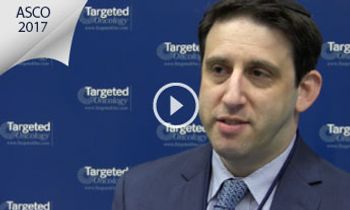
Eytan M. Stein, MD, internist, hematologic oncologist, Memorial Sloan Kettering Cancer Center, discusses the results of a phase I dose escalation and expansion study of enasidenib in mutant <em>IDH-2</em> relapsed or refractory acute myeloid leukemia (AML) during the 2017 ASCO Annual Meeting.
A new drug application from Jazz Pharmaceuticals has been accepted by the FDA for a novel CPX-351 injection (Vyxeos) for the treatment of acute myeloid leukemia.
Gail J. Roboz, MD, discusses the recent FDA approval of midostaurin and what else is emerging in the treatment landscape in AML.
Richard M. Stone, MD, discusses the impact that midostaurin could have for patients with AML, as well as ongoing research with the agent.
Midostaurin (Rydapt) has been approved by the FDA for the treatment of adult patients with newly diagnosed <em>FLT3</em>-positive acute myeloid leukemia (AML) in combination with standard cytarabine and daunorubicin induction and cytarabine consolidation.
The investigational tyrosine kinase inhibitor quizartinib is extremely promising as a monotherapy for patients with <em>FLT3-ITD–</em>positive relapsed acute myeloid leukemia.
Patients with hematologic malignancies who receive a hematopoietic stem cell transplant (HSCT) still risk treatment failure through relapse. As part of a conditioning regimen prior to allogenic HSCT, strategies are emerging to improve HSCT outcomes by reducing the risk of relapse. Several of these conditioning regimens were reviewed during a satellite symposium to the 2017 BMT Tandem Meetings.
Richard M. Stone, MD, discusses what is currently understood regarding the genetic landscape in acute myeloid leukemia (AML).
Andrew Wei, MBBS, PhD, discusses a study which explored the safety and efficacy of the novel BCL-2 inhibitor venetoclax in combination with low-dose cytarabine chemotherapy for treatment-naïve patients over the age of 65 with AML.

Mutations in isocitrate dehydrogenase 1 and 2 (<em>IDH1/2</em>) are not the mutations commonly found in cancer cells, according to a presentation from the 2017 AACR Annual Meeting.

Sudipto Mukherjee, MD, assistant staff, Gaussig Cancer Institute, Cleveland Clinic, discusses a study exploring eltrombopag to enhance platelet count recovery in elderly patients with acute myeloid leukemia (AML).
The researchers discuss the rationale for checkpoint-based therapies including antibodies to PD-1/PD-L1 and CTLA-4, an overview of clinical experience with these agents, and future considerations and combinations of these agents.
Clinical holds on several phase I trials of vadastuximab talirine in acute myeloid leukemia have been lifted by the FDA.
A new drug application for enasidenib has been granted a priority review by the FDA as a treatment for patients with relapsed or refractory <em>IDH2</em>-mutated acute myeloid leukemia.
Several phase I trials of vadastuximab talirine in acute myeloid leukemia have been placed on hold by the FDA, according to Seattle Genetics, the manufacturer of the antibody-drug conjugate.
The Society for Immunotherapy of Cancer (SITC) has announced that Paul M. Sondel, MD, PhD, will receive the 2017 Richard V. Smalley, MD Memorial Lectureship Award.
The combination of lirilumab and azacytidine was well tolerated and showed early signals of activity in heavily pretreated patients with acute myeloid leukemia (AML), according to phase Ib/II findings presented at the 2016 ASH Annual Meeting.
With treatment for newly diagnosed acute myeloid leukemia remaining essentially unchanged over the last 4 decades, researchers are hopeful that the addition of the investigational agent vadastuximab talirine to standard 7+3 induction therapy may improve survival for these patients.
An exploratory subgroup analysis of older patients with high-risk acute myeloid leukemia who took the liposomal formulation CPX-351 (Vyxeos) before allogeneic hematopoietic cell transplantation demonstrated that the drug improves overall survival and reduces the risk of early death.
Miguel Perales, MD, deputy chief, Adult Bone Marrow Transplant Service, and director, Adult Bone Marrow Transplantation Fellowship Program, gives an overview of the PROGRESS II trial in acute leukemia and myelodysplastic syndrome during the ASH Annual Meeting.
The FDA has granted a full approval and label update to ponatinib (Iclusig) for patients with chronic phase (CP), accelerated phase, or blast phase chronic myeloid leukemia (CML) or Philadelphia chromosome-positive acute lymphoblastic leukemia (Ph+ ALL).
Advertisement
Advertisement
Trending on Targeted Oncology - Immunotherapy, Biomarkers, and Cancer Pathways
1
Plinabulin Receives FDA Fast Track Designation in Post-ICI NSCLC
2
FDA Oncology Recap: Approvals, Designations, and Decisions in September 2026
3
Denosumab Biosimilar Approved For Existing Oncology Indications
4
CEPHEUS and Frontline Treatment in Newly Diagnosed Multiple Myeloma
5