

AML
Latest News
Advertisement
Latest Videos















































Advertisement
More News

CPX-351, a fixed-combination of daunorubicin and cytarabine, has been recommended for approval by the European Medicines Agency’s Committee for Medicinal Products for Human Use for the treatment of adult patients with newly diagnosed therapy-related acute myeloid leukemia or AML with myelodysplasia-related changes.
The FDA approved several indications in the month of June, including venetoclax (Venclexta) in chronic lymphocytic leukemia (CLL) and small lymphocytic leukemia (SLL), the combination of binimetinib (Mektovi) plus encorafenib (Braftovi) in melanoma, and bevacizumab (Avastin) in ovarian cancer. The FDA also accelerated approvals for pembrolizumab (Keytruda) in cervical cancer and in primary mediastinal large B-cell lymphoma, while also granting a priority review to glasdegib for acute myeloid leukemia.
Based on data from the phase II BRIGHT 1003 study, the FDA has granted a priority review to a new drug application for glasdegib for use in combination with chemotherapy for the frontline treatment of patients with acute myeloid leukemia, according to Pfizer, the developer of the investigational oral smoothened inhibitor.
William B. Donnellan, MD, was recently promoted to director of Leukemia/Myelodysplastic Syndrome Research at the Sarah Cannon Research Institute in Nashville, Tennessee. Donnellan has served as an investigator of hematologic malignancies since 2014 at the Sarah Cannon Research Institute.
Michael R. Grunwald, MD, discusses new and emerging agents in AML and ALL, as well as sequencing and toxicity challenges with these treatments.<br />

Alexander Perl, MD, an associate professor of medicine at the University of Pennsylvania, discusses the current challenges with CAR T-cell therapy for the treatment of patients with acute myeloid leukemia
An overall response rate of 41.6% (95% CI, 32.9-50.8) was induced with the use of ivosidenib in patients with <em>IDH1</em>-positive relapsed/refractory acute myeloid leukemia, according to data presented at the 2018 ASCO Annual Meeting and published simultaneously online in the <em>New England Journal of Medicine</em>.
In an ideal world, researchers conduct preclinical studies that generate a targeted therapy, which eventually makes its way through early, middle, and late-stage trial development and FDA approval. That smooth transition does not happen often, but early results involving an agent that affects 2 endogenous inhibitors of p53 look promising.

According to results presented at the 2018 ASCO Annual Meeting, moxetumomab pasudotox, a first-in-class recombinant immunotoxin targeting CD22, demonstrated deep and durable responses in a substantial proportion of pretreated patients with relapsed/refractory hairy cell leukemia.
Based on data from the ongoing phase III ADMIRAL study, a new drug application for gilteritinib has been granted a priority review by the FDA for the treatment of adult patients with <em>FLT3</em> mutation–positive relapsed or refractory acute myeloid leukemia, according to Astellas Pharma, the manufacturer of the FLT3 inhibitor.
The combination of prexigebersen, a Liposomal Grb2 Antisense oligodeoxynucleotide, and low-dose cytarabine was associated with an overall response rate of 47% in elderly patients with acute myeloid leukemia, according to findings from an ongoing phase II trial.
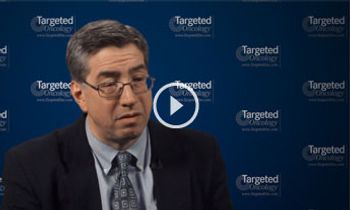
Daniel J. DeAngelo, MD, PhD, associate professor at the Harvard School of Medicine and a member of the Adult Leukemia Program at Dana-Farber Cancer Institute, highlighted the 4 FDA approvals in the last year for the treatment of patients with acute myeloid leukemia.
In results published in April in the New England Journal of Medicine, corresponding author Peter J. M. Valk, PhD, of the Department of Hematology, Erasmus University Medical Center, and colleagues found that MRD positivity was associated with a higher rate of relapse and a lower rate of relapse-free survival and overall survival for patients with newly diagnosed AML.
According to findings from the phase III QuANTUM-R study, overall survival was improved with quizartinib compared with chemotherapy in patients with <em>FLT3</em>-ITD–positive relapsed/refractory acute myeloid leukemia after first-line treatment with or without hematopoietic stem cell transplantation.<br />
The FDA approved several indications throughout the month of April 2018. A number of drugs were granted priority review and Fast Track designation. The FDA also halted all clinical trials using tazemetostat as treatment, and new initiatives were introduced to help ease the development of genetic and genomic-based tests. Check out our list of all FDA happenings from April 2018.
Based on data from the ongoing phase III ADMIRAL study, Astellas Pharma, the manufacturer of gilteritinib, has announced the submission of a new drug application to the FDA seeking approval for the FLT3 inhibitor as a treatment for adult patients with <em>FLT3</em> mutation–positive relapsed or refractory acute myeloid leukemia.





Advertisement
Advertisement
Trending on Targeted Oncology - Immunotherapy, Biomarkers, and Cancer Pathways
1
Plinabulin Receives FDA Fast Track Designation in Post-ICI NSCLC
2
FDA Oncology Recap: Approvals, Designations, and Decisions in September 2026
3
Denosumab Biosimilar Approved For Existing Oncology Indications
4
CEPHEUS and Frontline Treatment in Newly Diagnosed Multiple Myeloma
5