

AML
Latest News
Advertisement
Latest Videos













































Advertisement
More News

Studies have shown that older patients with either active, relapsed, or refractory acute myeloid leukemia have had lower survival rates, poor risk assessments, and limited therapeutic options. The standard care of these patients is salvage chemotherapy. Investigators are pretreating patients in this high-risk population with Iomab-B, a novel radiolabeled antibody–drug conjugate as part of a stem cell transplantation regimen in hopes of improving remission and survival outcomes.
According to results published in <em>The New England Journal of Medicine</em>, molecular minimal residual disease was associated with a higher rate of relapse and a lower rate of relapse-free survival and overall survival for patients with newly-diagnosed acute myeloid leukemia.

Several new indications were approved by the FDA in March, including blinatumomab (Blincyto) for MRD+ ALL, brentuximab vedotin (Adcetris) for Hodgkin lymphoma, and a 4-week nivolumab (Opdivo) dosing schedule across several indications. Here’s a look back on the FDA happenings for the month of March 2018.
Stuart L. Goldberg, MD, discussed the management of patients with acute myeloid leukemia as well as those with myelodysplastic syndrome.
Blinatumomab (Blincyto) has been granted an accelerated approval by the FDA for the treatment of patients with B-cell precursor acute lymphoblastic leukemia who are in remission but still have minimal residual disease.
New indications were approved by the FDA within the last month, including abemaciclib for HER2-negative breast cancer, durvalumab for non–small cell lung cancer, and abiraterone acetate for castration-sensitive prostate cancer.
The treatment paradigm of acute myeloid leukemia has not changed much in the last several decades, but with 4 new drugs approved by the FDA within the span of a few months, 2017 easily became the most promising year yet for the treatment of AML.
Based on findings from a phase I trial presented at the 2017 ASH Annual Meeting, ivosidenib (AG-120) has been granted a priority review designation by the FDA for the treatment of patients with relapsed/refractory <em>IDH1</em>-mutant acute myeloid leukemia.
Arsenic trioxide (Trisenox) has been approved by the FDA in combination with the all-trans retinoic acid agent tretinoin for the treatment of adults with newly-diagnosed low-risk acute promyelocytic leukemia with the t(15;17) translocation or <em>PML-RARA</em> gene expression.
Acute myeloid leukemia (AML) therapy is guided mainly by cytogenetic profile, such as chromosomal duplication or deletion, and molecular mutations. <em>FLT3</em> mutations are the most common genetic abnormalities detected in patients with AML and are usually associated with a high relapse rate and short overall survival. Given the dismal outcomes in patients with <em>FLT3</em>-mutant AML, a great effort has been underway over the last several years to develop clinically effective FLT3 inhibitors.
Based on results of a phase I trial presented at the 2017 ASH Annual Meeting, a new drug applicaton for ivosidenib has been submitted for FDA approval for the treatment of patients with relapsed/refractory IDH1-mutant acute myeloid leukemia, according to a statement from Agios Pharmaceuticals, the company developing the targeted therapy.
The label for nilotinib (Tasigna) has been updated by the FDA with a provision stating patients with Philadelphia chromosome-positive chronic myeloid leukemia in the chronic phase (Ph+ CML-CP) who have received the BCR-ABL tyrosine kinase inhibitor could be eligible to stop treatment after having recieved for at least 3 years and having achieved the specific predetermined criteria.<br /> <br />
Ivosidenib (AG-120), an IDH1 inhibitor, demonstrated an objective response rate (ORR) of 41.6% in patients with relapsed/refractory <em>IDH1</em>-mutant acute myeloid leukemia (AML), according to findings from a single-arm phase I study.
The Leukemia & Lymphoma Society (LLS) has awarded Barbara Savoldo, MD, PhD, with a $600,000, 3-year grant in support of her promising research into a CAR T-cell treatment with a “safety switch” that could alleviate potential side effects for patients with acute lymphoblastic leukemia being treated with the immunotherapy.
The American Society of Hematology has announced that James R. Downing, MD, of St. Jude Children’s Research Hospital will be awarded the 2017 E. Donnall Thomas Lecture and Prize for his discoveries related to the hematopathology and molecular biology of childhood leukemia.
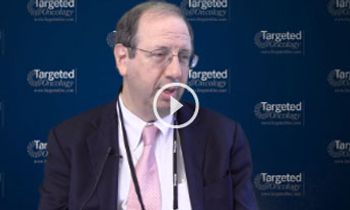
Richard M. Stone, MD, director of the Adult Leukemia Program, Dana-Farber Cancer Institute, and professor of medicine, Harvard Medical School, discusses monitoring minimal residual disease (MRD) in patients with acute myeloid leukemia (AML).
Although preclinical data are promising, there are many clinical challenges in developing CAR T-cell therapy in acute myeloid leukemia.
Gilteritinib has been granted Fast Track designation by the FDA for adult patients with FLT3 mutation-positive relapsed/refractory acute myeloid leukemia, according to Tokyo-based Astellas Pharma.
Midostaurin has received approval from the European Commission as a treatment for adults with newly diagnosed <em>FLT3</em>-positive acute myeloid leukemia and advanced systemic mastocytosis, including aggressive systemic mastocytosis, SM with associated hematological neoplasm, and mast cell leukemia.
Understanding of the role of BCL-2 in acute myeloid leukemia (AML) continues to evolve, even as BCL-2–targeted therapy improves outcomes in the disease, AML specialist Daniel Pollyea, MD, MS said at the 2017 Society of Hematologic Oncology Annual Meeting in Houston, Texas.
Harry Erba, MD, PhD, professor of medicine, director, University of Alabama (UAB) Hematologic Malignancy Program, UAB School of Medicine, discusses using MRD to guide therapy in acute myeloid leukemia (AML).

Updated findings from the registration trial of the first FDA-approved CAR T-cell therapy showed that 83% of patients with acute lymphoblastic lymphoma achieved complete remission with complete or incomplete hematologic recovery, as reported at the 2017 Society of Hematologic Oncology Annual Meeting.<br />
Results from a recent retrospective study published in the<em> Journal of Clinical Oncology</em><sup> </sup>revealed hospice enrollment is low and use of aggressive treatment is high for elderly patients with acute myeloid leukemia.
Advertisement
Advertisement
Trending on Targeted Oncology - Immunotherapy, Biomarkers, and Cancer Pathways
1
Plinabulin Receives FDA Fast Track Designation in Post-ICI NSCLC
2
FDA Oncology Recap: Approvals, Designations, and Decisions in September 2026
3
Denosumab Biosimilar Approved For Existing Oncology Indications
4
CEPHEUS and Frontline Treatment in Newly Diagnosed Multiple Myeloma
5