

Biomarker-Driven Lung Cancer
Latest News
Advertisement
Latest Videos
















































Advertisement
More News

Nasser H. Hanna, MD, discusses the key takeaways on the current role of consolidation immunotherapy in patients with lung cancer, which has become standard in this setting. He highlights questions that still need to be addressed in this space.

The addition of the dinutuximab injection to irinotecan did not improve overall survival in patients with relapsed/refractory small cell lung cancer, failing to meet the primary end point of the phase III DISTINCT trial, according to top-line results announced in a press release from United Therapeutics, developer of dinutuximab.

In a phase II trial, the combination of lenvantinib and pembrolizumab demonstrated a manageable safety profile and encouraging antitumor activity in patients with selected advanced solid tumors. The decision to combine the agents was based on preclinical data, which suggested that VEGF and FGF signaling may enhance the therapeutic efficacy of lenvatinib.

The New Drug Application for selpercatinib was granted FDA Priority Review for the treatment of patients with advanced RET fusion–positive non–small cell lung cancer, RET-mutant medullary thyroid cancer, and RET fusion–positive thyroid cancer, based on data from the phase I/II LIBRETTO-001 trial, Eli Lilly and Company announced in a press release.
Entrectinib led to clinically meaningful responses in patients with NTRK-fusion-positive solid tumors, according to results from a pooled analysis of the phase I ALKA-372-001, the phase I STARTRK-1, and the phase II STARTRK-2 studies.
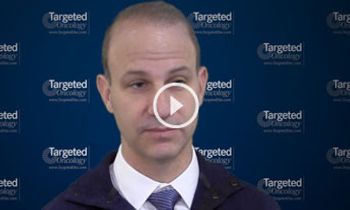
Benjamin P. Levy, MD, discusses the evolution of molecular drivers in non–small cell lung cancer over the last few years and which testing should be included in patients.
Bemcentinib in combination with pembrolizumab demonstrated clinical efficacy in the stage 1 portion of a phase II trial, which evaluated the combination in patients with non–small cell lung cancer who progressed on prior immune checkpoint inhibition, meeting the primary end point of the study.
For patients with non–small cell lung cancer, having a body mass index ≥30 at baseline could be independently associated with an improvement in overall survival with atezolizumab and could be considered a stratification factor in immune checkpoint inhibitor trials, according to a study published in JAMA Oncology.
In an interview with Targeted Oncology, Steven H. Kirtland, MD, FCCP, discussed the different factors that play a role in the decline of lung cancer mortality over the last few years. He highlighted how these advancements will continue to impact the survival of patients with lung cancer and his thoughts on the evolving landscape.
Integrating a geriatric assessment into the care of older adults who are receiving cancer treatment in communi­ty oncology practices improves patient and caregiver satisfaction and encourages commu­nication about aging-related concerns, accord­ing to results of a clinical trial that enrolled 541 patients with advanced cancer.

Robert C. Doebele, MD, PhD, shares his thoughts on what the next steps are for entrectinib in patients with <em>ROS1</em>-positive non–small cell lung cancer. In August of 2019, the FDA granted approval to this agent as treatment of patients with metastatic NSCLC who are <em>ROS1</em>-positive.
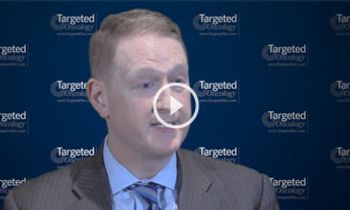
Kevin M. Sullivan, MD, discusses the current treatment options for patients with lung cancer harboring an <em>ALK</em> mutation.
Alterations of the NRG1 gene that are present at low rates in certain solid tumors have emerged as potentially actionable oncogenic drivers, with targeted therapies making their way to early clinical studies and into some basket trials.
The FDA has granted priority review to the Biologics License Application for nivolumab in combination with ipilimumab for the first-line treatment of patients with metastatic or recurrent non-small cell lung cancer with no EGFR or ALK genomic tumor aberrations, according to a press release from the Bristol-Myers Squibb Company.<br />
To support the commercialization of the blood-based companion diagnostic test Guardant360 companion diagnostic for AMG 510, Guardant Health, Inc, will collaborate with Amgen, developer of AMG 510, and pursue an FDA Pre-Market Approval as a companion diagnostic for AMG 510 in patients with metastatic non–small cell lung cancer with a KRAS G12C mutation, according to a press release.
The present and future benefits of telehealth in oncology can be observed through Tahoe For­est Cancer Center and its affiliation with the UC Davis Cancer Center, use of other remote clinics, and participation in virtual tumor boards. Even though there are roadblocks to telehealth reaching more locations and more patients, the potential benefit warrants the time needed to get over those hurdles.
Pralsetinib a highly-selected RET inhibitor, achieved a favorable overall response rate with prolonged durability in patients with RET fusion–positive non–small cell lung cancer who were previously treated with platinum-based chemotherapy, according to top-line results from the phase I/II ARROW trial, announced the Blueprint Medicines Corporation in a press release.
The combination of pembrolizumab and chemotherapy improved progression-free survival in patients with small cell lung cancer compared with chemotherapy alone, meeting 1 of the primary end points of the phase III KEYNOTE-604 study, according to a press release from pembrolizumab developer, Merck. Compared with a chemotherapy regimen of either etoposide plus cisplatin or cisplatin alone, the progression-free survival mprovement with pembrolizumab was significant.
The FDA granted approval to countless treatments across cancer types throughout 2019 until the end of the year, with a final approval on December 31<sup>st </sup>for the first BRCA targeted therapy in pancreatic cancer. Following the excitement for a new year of further advances, Targeted Oncology followers on Twitter shared their thoughts on some of the most impactful FDA approvals in 2019.
Justin F. Gainor, MD, discusses the latest advancements with immune checkpoint inhibitors for the treatment of patients with non—small cell lung cancer.
In December 2019, the FDA approved a number of new treatments in lung cancer, pancreatic cancer, urothelial carcinoma, breast cancer, and prostate cancer. A tissue complete assay was also approved by the FDA for use in a clinical trial evaluating pembrolizumab.
Osimertinib demonstrated a manageable toxicity profile and encouraging activity in patients with non–small cell lung cancer who harbor an uncommon EGFR mutation, according to results from a phase II clinical trial conducted in Korea.
Selpercatinib will be compared with the standard of care in the first ever phase III clinical trial in patients with advanced or metastatic treatment-naïve <em>RET</em> fusion-positive non–small cell lung cancer, according to a press release from Eli Lilly and Company.
A new drug application has been filed for accelerated approval with the FDA for lurbinectedin in patients with small cell lung cancer who have progressed after prior platinum-containing therapy, according to the manufacturer, PharmaMar.1 The filing was based on results from a phase II basket trial, presented at the 2019 ASCO Annual Meeting.
Pembrolizumab showed improvements in overall survival, progression-free survival, and objective response rate compared with pemetrexed or paclitaxel chemotherapy in patients with metastatic nonsquamous non–small cell lung cancer whose tumors are PD-L1–positive, regardless of their KRAS mutational status.
Advertisement
Advertisement
Trending on Targeted Oncology - Immunotherapy, Biomarkers, and Cancer Pathways
1
Plinabulin Receives FDA Fast Track Designation in Post-ICI NSCLC
2
FDA Oncology Recap: Approvals, Designations, and Decisions in September 2026
3
Denosumab Biosimilar Approved For Existing Oncology Indications
4
CEPHEUS and Frontline Treatment in Newly Diagnosed Multiple Myeloma
5