




CAR T-Cell Therapy
Latest News
Advertisement
Latest Videos

















































Advertisement
More News
Preclinical research indicates that anti-mesothelin chimeric antigen receptor T cells may be more effective than gavocabtagene autoleucel in mesothelin-expressing tumors.
Prolonged periods of radiographic and clinical improvement in children and young adults with H3K27M diffuse intrinsic pontine gliomas and spinal diffuse midline gliomas has been shown with GD2-directed chimeric antigen receptor T cells.
In pediatric patients with relapsed or refractory B-cell acute lymphoblastic leukemia who had a non-response to blinatumomab and a high-disease burden, worse outcomes were observed , according to retrospective research.

A phase 1 trial which will evaluate the safety and efficacy of chimeric antigen receptor T-cell therapy in ovarian cancer has begun.

Steve M. Albelda, MD, discusses the successes and downfalls of chimeric antigen receptor T cells in solid tumor research.

The FDA has granted approval to axicabtagene ciloleucel for the treatment of adult patients with large B-cell lymphoma that is refractory to first-line chemoimmunotherapy or relapses within 12 months of first-line chemoimmunotherapy, according to an announcement from the FDA.
Treatment with AUTO1, an investigational CD19-targeted chimeric antigen receptor T-cell therapy, is being evaluated in adult patients with relapsed or refractory B-cell acute lymphoblastic leukemia.
Chimeric antigen receptor expansion by day 10 could be an early biomarker to predict response and survival in patients with B-cell lymphoma.
Chimeric antigen receptor T cells manufactured using the Sleeping Beauty transposon in donor-derived cells and differentiated toward the cytokine-induced killer cell protocol induce a sustained response with minimal toxicities in patients with B-cell acute lymphoblastic leukemia.
Lisocabtagene maraleucel has demonstrated benefit to event-free survival for patients with relapsed/refractory large B-cell lymphoma.

The FDA has released a draft of new recommendations for the manufacture, development, and study design of chimeric antigen receptor T cells.
In an interview with Targeted Oncology, Steven M. Albelda, MD, discussed the introduction of chimeric antigen receptor T cells in solid tumor research and how it differs from what has been observed in hematologic malignancies.
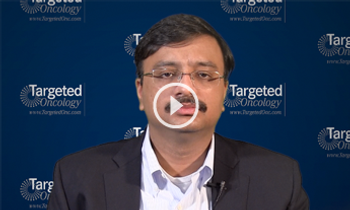
Nitin Jain, MD, discusses the significance of a study of UCART22, an allogeneic chimeric antigen receptor T-cell therapy for patients with relapsed/refractory B-cell acute lymphoblastic leukemia.

Jesus Berdeja, MD, discusses the safety profile observed with the newly approved chimeric antigen receptor T-cell therapy, ciltacabtagene autoleucel as observed in the phase 1/2 CARTITUDE-1 clincial trial.
In an interview with Targeted Oncology, Tanya Dorff, MD, discussed the exploration of chimeric antigen receptor T-cell therapy in prostate cancer, including recent findings from a phase 1 clinical trial.

Jesus Berdeja, MD, shares factors oncologists in the community should consider when referring patients for chimeric antigen receptorT-cell therapy with the newly approved agent ciltacabtagene autoleucel.
In an interview, Jesus Berdeja, MD, discussed the introduction of ciltacabtagene autoleucel into the treatment landscape for relapsed/refractory multiple myeloma, how it may differ from idecabtagene vicleucel, and the future of CAR T-cell use in the space.
Ciltacabtagene autoleucel had been granted FDA approval for the treatment of select patients with relapsed or refractory multiple myeloma.

Steven M. Albelda, MD, discusses introduction of chimeric antigen receptor T-cell therapy in the solid tumor space.
The FDA will conduct a speedy review of the supplemental biologics license application for lisocabtagene maraleucel as second-line treatment for adult patients with relapsed or refractory large B-cell lymphoma.

Following a report of low CD4-positive T cell counts in a patient’s peripheral blood, the FDA placed a clinical hold on a phase 1 study of LB1901.
Considering later lines of treatment such as chimeric antigen receptor T-cell therapy, make it difficult for chimeric antigen receptor T-cell therapy to find its optimal place in the armamentarium.
Clinical trial findings presented during the ASH annual meeting have the potential to change the management of diffuse large B-cell lymphoma, according to John M. Burke, MD.

The label for axicabtagene ciloleucel now includes prophylactic corticosteroids use in all approved indications.
Nitin Jain, MD, discusses the preliminary results of a study investigating allogeneic chimeric antigen receptor T-cell therapy with lymphodepletion in patients with relapsed/refractory B-cell acute lymphoblastic leukemia.
Advertisement
Advertisement
Trending on Targeted Oncology - Immunotherapy, Biomarkers, and Cancer Pathways
1
Plinabulin Receives FDA Fast Track Designation in Post-ICI NSCLC
2
FDA Oncology Recap: Approvals, Designations, and Decisions in September 2026
3
Denosumab Biosimilar Approved For Existing Oncology Indications
4
CEPHEUS and Frontline Treatment in Newly Diagnosed Multiple Myeloma
5