


CAR T-Cell Therapy
Latest News
Advertisement
Latest Videos












































Advertisement
More News

At 33.6 months' follow-up, patients with standard-risk multiple myeloma had improved progression-free survival outcomes with ciltacabtagene autoleucel vs standard of care.
Phase 1 data show EB103 delivers 100% complete responses at high dose with manageable toxicity, offering a safer, durable option for high-risk B-cell NHL.
FDA lifts Yescarta limits for relapsed primary CNS lymphoma, expanding CAR T access with phase 1 safety data—what to know about neuro risks.

Phase 2 data show varnim-cel delivers 83% responses with mostly mild CRS and minimal neurotoxicity, boosting CAR T access in India.
A real-world ciltacabtagene autoleucel (cilta-cel) study revealed a link between high lymphocyte peaks and failed bridging to parkinsonism and nonrelapse mortality, potentially guiding early intervention.
FDA grants orphan drug designation to CTD402, a promising CAR T therapy for relapsed T-cell leukemia and lymphoma, enhancing treatment accessibility.
Miguel-Angel Perales, MD, spoke with Targeted Oncology® about the problems the CAR T Vision group has identified and the key short-term and long-term steps being taken to expand the accessibility of CAR T-cell therapy.
FDA approves liso-cel, the first CAR T-cell therapy for relapsed marginal zone lymphoma, offering hope for improved patient outcomes.

During a live event, Thomas G. Martin, MD, discussed the importance of controlling disease and avoiding barriers to access so patients with multiple myeloma can receive CAR T-cell therapy.
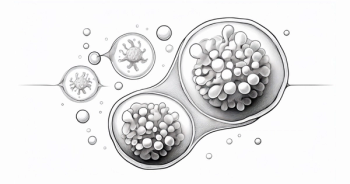
Axi-cel shows impressive long-term efficacy in treating relapsed/refractory indolent non-Hodgkin lymphoma, with potential curative outcomes for patients.
During a live event, Thomas G. Martin, MD, discussed updated findings from the CARTITUDE-1 trial of cilta-cel and what they signify for patients with no disease progression at 5 years.
In an interview with Targeted Oncology, Frederick L. Locke, MD, discussed how the elimination of the REMS program for CAR T-cell therapy came about and what effects he hopes this will have on patient access.

Community-based CAR T-cell therapy expands access to innovative cancer treatments, improving patient outcomes and reducing hospital stays for patients with blood cancers.
CAR T-cell therapy for DLBCL shows promise in outpatient settings, reducing hospital stays and improving patient quality of life while managing toxicities effectively.

Dr Katy Rezvani reveals groundbreaking insights on enhancing CAR-NK cell therapy's effectiveness against solid tumors through innovative genetic strategies.
Katy Rezvani, MD, PhD, explores innovative CAR-NK cell therapies, highlighting their potential to overcome challenges in treating solid tumors and enhancing cancer treatment efficacy.
Explore the complexities of CAR T-cell therapy, focusing on noncanonical toxicities like ICAHT and IEC-HS, and their management strategies.
Emerging CAR T-cell therapies, like DuoCAR20.19.22-D95, show promise in overcoming challenges in treating relapsed B-cell malignancies.

Brexu-cel demonstrated efficacy and safety even in patients with B-cell acute lymphoblastic leukemia with central nervous system involvement.
During a live event, Nathan Denlinger, DO, MS, discussed outcomes of the ZUMA-7 trial in diffuse large B-cell lymphoma.
During a live event, Jorge Monge, MD, discussed real-world evidence on the use of CAR T-cell therapy beyond the trial setting in multiple myeloma.

Allogene Therapeutics halts ALLO-647 trial in large B-cell lymphoma after a patient death raises safety concerns, impacting future research.
FDA prioritizes review of liso-cel, a groundbreaking CAR T-cell therapy for relapsed marginal zone lymphoma, promising improved patient outcomes.

FCARH143, a CAR T-cell therapy, delivered a 100% objective response rate in a phase 1 trial in patients with relapsed/refractory multiple myeloma.
Michael Caligiuri, MD, discusses the modulation of natural killer cells to enhance their ability to detect and destroy tumor cells.
Advertisement
Advertisement
Trending on Targeted Oncology - Immunotherapy, Biomarkers, and Cancer Pathways
1
FDA Oncology Recap: Approvals, Designations, and Decisions in September 2026
2
Plinabulin Receives FDA Fast Track Designation in Post-ICI NSCLC
3
Denosumab Biosimilar Approved For Existing Oncology Indications
4
CEPHEUS and Frontline Treatment in Newly Diagnosed Multiple Myeloma
5