



Colorectal Cancer
Latest News
Advertisement
Latest Videos















































Advertisement
More News

A recent study uncovered BRCA1 and BRCA2 mutations as possible risk markers for colorectal cancer.

The treatment of colorectal cancer (CRC) has remained a significant clinical challenge, since over 50% of patients present with or develop liver metastases, which is a leading cause of death; however, a recent phase III study showed promise for selective internal radiation therapy (SIRT) in combination with standard chemotherapy as a first-line treatment.
Screening for microsatellite instability in patients with colorectal cancer tumors is a significant step in determining which patients will benefit from immunotherapy, specifically pembrolizumab.
Many patients with metastatic colorectal cancer (CRC) will ultimately progress on standard first- and second-line therapy while maintaining a good performance status, placing importance on the optimal use of third-line treatments.

Michael J. Overman, MD, associate professor, Department of Gastrointestinal Medical Oncology, Division of Cancer Medicine, The University of Texas MD Anderson Cancer Center, discusses the potential role of immunotherapy as a treatment for patients with colorectal cancer.
Hendrik-Tobias Arkenau, MD, PhD, discusses the phase I JAVELIN trial as well as the future of treatments and immunotherapies in the treatment paradigm of gastrointestinal cancers.
The combination of nivolumab (Opdivo) and ipilimumab showed efficacy in a recent study looking at patients with colorectal cancer (CRC), according to Michael Overman, MD.

Barry M. Berger, MD, FACP, chief medical officer, Exact Sciences, discusses how the Cologuard test compares with other screening tools for colorectal cancer.
Colorectal cancer (CRC) patients that express amplified HER2 genes may be resistant to standard-of care therapy, says Kanwal Raghav, MD.
The United States Preventative Services Task Force (USPSTF) has updated its 2008 recommendation for colorectal cancer (CRC) screening to include 7 CRC screening tests for average-risk, asymptomatic adults between the ages of 50 and 75 to reduce the risk of CRC mortality.

Nivolumab (Opdivo) treatment provided antitumor responses in patients with microsatellite instability-high (MSI-H) metastatic colorectal cancer (mCRC), whether given as a single agent or in combination with ipilimumab (Yervoy). Interim data from the phase II CheckMate-142 trial was presented at the 2016 ASCO Annual Meeting.
Updated results of the prevalence of germline cancer susceptibility gene mutations in a clinic-based series of patients with colorectal cancer (CRC) were given in an oral presentation at the 2016 ASCO Annual Meeting.
Neratinib, an experimental TKI being developed for breast cancer, achieved a 36% clinical benefit rate in a phase II trial, according to a poster presented June 5, 2016 at the ASCO Annual Meeting in Chicago.
The combination of cobimetinib (Cotellic) and atezolizumab (Tecentriq) is safe and clinically active in advanced colorectal cancer and resulted in a higher clinical response rate in patients with microsatellite stable (MSS) colorectal cancer patients than either agent alone.
Regorafenib (Stivarga) and TAS-102 have never been compared head-to-head, but the two agents are similar and a sequencing strategy incorporating both is effective, says Tanios Bekaii-Saab, MD.
Survival outcomes in patients with KRAS wild-type metastatic colorectal cancer (mCRC) were significantly longer among those with tumors originating on the left versus the right side of the colon, according to a retrospective analysis of the phase III 80405 trial.
Precancerous colon polyps exhibit many of the same driver mutations that fuel the development of colorectal cancer (CRC), according to results of a study published in Cancer Prevention Research.

Sue Naeyaert, senior director of Biosimilars Policy, EMD Serono, discusses the long-term impact that biosimilars could potentially have on the field of oncology.
Navesh K. Sharma, DO, PhD, discusses the addition of Yttrium-90 resin microspheres to standard frontline FOLFOX-based chemotherapy with or without bevacizumab in patients with liver metastatic colorectal cancer.
Given the numerous available treatment options, the most important issue in frontline colorectal cancer (CRC) care is clarifying the goals of therapy, according to Wells Messersmith, MD.
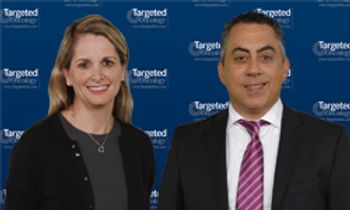
mCRC with Tanios Bekaii-Saab, MD and Tara Seery, MD



Advertisement
Advertisement
Trending on Targeted Oncology - Immunotherapy, Biomarkers, and Cancer Pathways
1
Plinabulin Receives FDA Fast Track Designation in Post-ICI NSCLC
2
FDA Oncology Recap: Approvals, Designations, and Decisions in September 2026
3
Denosumab Biosimilar Approved For Existing Oncology Indications
4
CEPHEUS and Frontline Treatment in Newly Diagnosed Multiple Myeloma
5